Watoria Guide
Japanese Haircare Guide: Shampoos, Treatments and Scalp Care
A practical guide to Japanese shampoos, conditioners, treatments and scalp-care products, with selection criteria for hair feel, scalp comfort, labels, usage and overseas buying.
- Quick Answer
- What You’ll Learn
- What the Reader Needs: Match the Product to the Job
- Step-by-Step Guidance: Choose a Shampoo by Scalp and Hair Behavior
- Key Differences and Trade-offs: Sulfates, Silicones and Conditioning Ingredients
- Treatments and Conditioners: Focus on Lengths, Ends and Rinsing
- Scalp Care: Keep the Goal Cosmetic and the Technique Gentle
- Safety, Compatibility and Japanese Ingredient Labels
- Buying Route: How to Reduce Counterfeit and Compatibility Risk
- A Simple Routine for Most Beginners
- FAQ
- Related Guides
- Official References
- Change One Haircare Variable at a Time
- Final Thoughts
- Keep exploring Japanese culture
- Continue to the best buying / booking route
- Continue exploring
- Discover more Japan
- Primary sources
Quick Answer
Start with the problem you actually want the product to solve: cleansing and scalp comfort for shampoo, slip and manageability for conditioner, extra conditioning for treatments, and targeted cosmetic care for scalp products. A product labeled “sulfate-free,” “silicone-free,” “moisturizing” or “scalp care” is not automatically better for everyone. Check the full ingredient list, product directions, fragrance level, how your hair behaves after rinsing, and whether the seller is traceable. If a product causes redness, itching, swelling or persistent irritation, stop using it rather than trying to push through the reaction.
What You’ll Learn
- How Japanese shampoos, conditioners, treatments and scalp-care products differ in purpose.
- How to choose by scalp feel, hair damage, oiliness, dryness and styling needs without relying on hype.
- What Japanese ingredient labels can and cannot tell you.
- How to use shampoo and treatment products in a way that reduces unnecessary friction and residue.
- How to check authenticity, instructions and seller reliability when buying from overseas.
What the Reader Needs: Match the Product to the Job
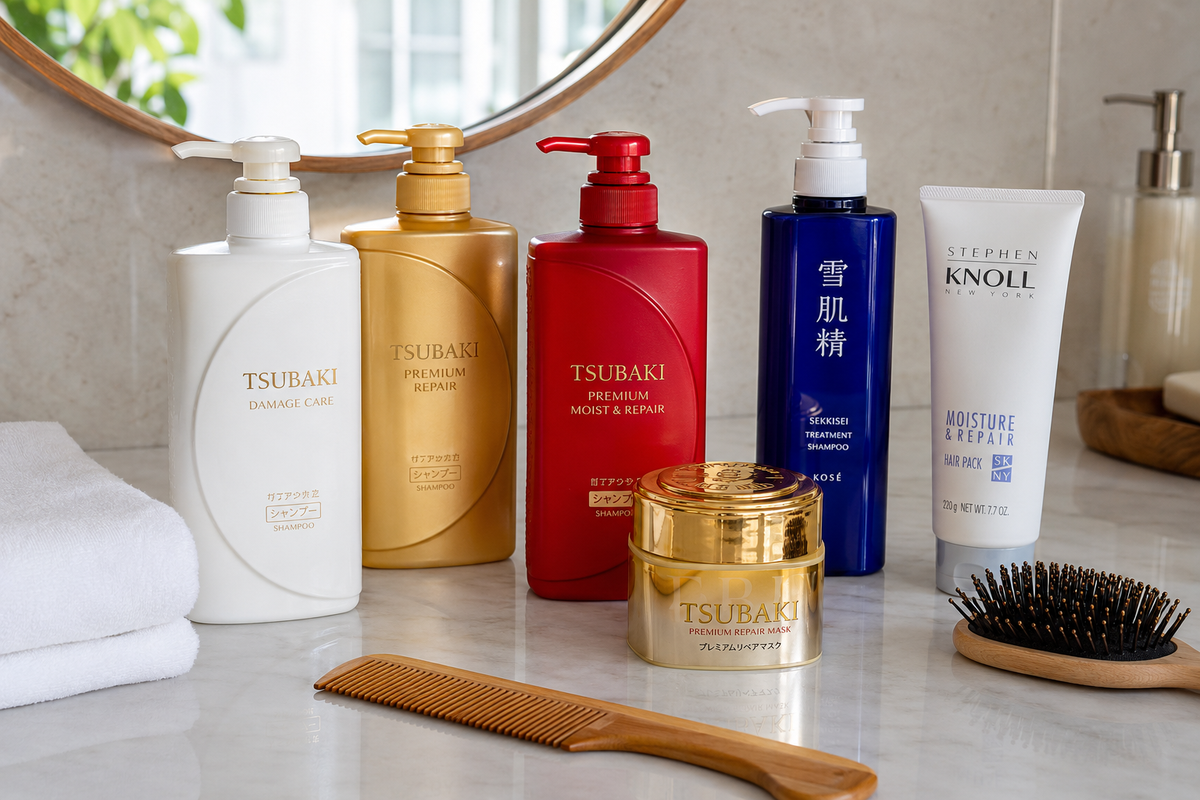
Japanese haircare shelves can look complicated because the same brand may offer “moist,” “smooth,” “damage,” “scalp,” “color care” and “volume” versions at once. The useful starting point is not the marketing adjective; it is the job the formula is supposed to do.
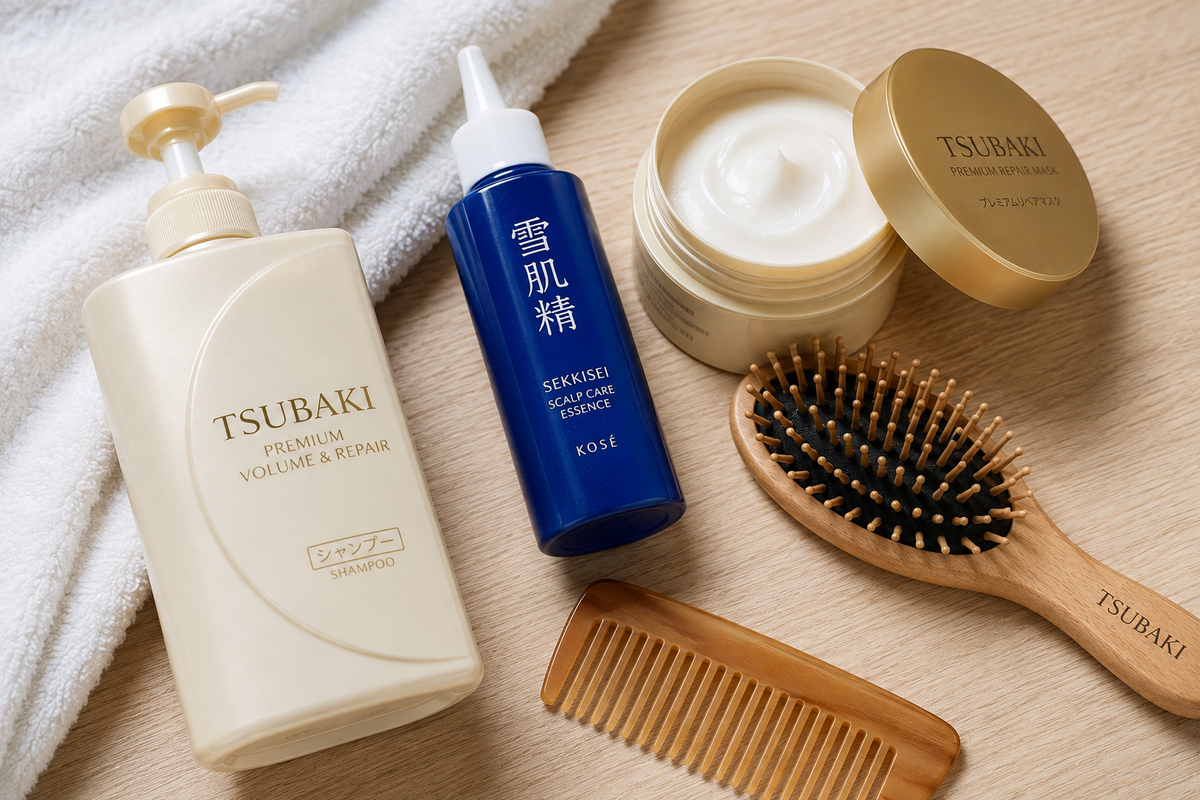
Shampoo mainly removes sebum, styling residue and other oily soil from the scalp and hair. Conditioner and rinse products mainly improve surface feel, detangling and manageability. Treatments may add a stronger conditioning step or use instructions that ask for a short leave-on time before rinsing. Scalp lotions, essences and medicated products belong to a separate decision: read their product category, directions and claims rather than treating every “scalp care” label as interchangeable.
- Choose shampoo for cleansing feel and scalp compatibility first.
- Choose conditioner for slip, detangling and the finish you want after rinsing.
- Choose a treatment when regular conditioning is not enough for the hair lengths and ends.
- Choose a scalp product only when its label and directions match the care step you actually want.
Step-by-Step Guidance: Choose a Shampoo by Scalp and Hair Behavior
A practical shampoo test is how your scalp and hair behave after several normal washes, not how dramatic the foam or fragrance feels on day one. Hair and scalp should be thoroughly wet before shampooing, and the product needs to reach the scalp rather than sitting only on the outer hair.
Kao’s official haircare guidance emphasizes wetting the hair and scalp well, spreading shampoo across the scalp, washing with the finger pads rather than scratching, and rinsing thoroughly. Those steps matter because poor distribution and incomplete rinsing can make even a well-formulated shampoo feel wrong.
- If the scalp becomes tight or uncomfortable after washing, consider a milder cleansing profile or lower wash intensity.
- If the roots remain greasy or heavily coated, check technique and rinse quality before assuming you need the strongest cleanser available.
- Fragrance, cooling agents and rich oils change the experience but do not by themselves prove that a shampoo is more suitable.
Key Differences and Trade-offs: Sulfates, Silicones and Conditioning Ingredients
“Sulfate-free” and “silicone-free” are useful formulation descriptions, not universal quality grades. Different cleansing systems can be mild or strong depending on the whole formula and how much product you use. Likewise, silicone ingredients can improve slip and reduce friction for some damaged or tangled hair.
Kao’s consumer guidance notes that silicone is effective at making hair feel smoother and can be helpful for damaged hair. That is why the better question is whether the complete formula gives you the cleansing, slip and finish you want—not whether a single ingredient category is present or absent.
- Do not assume “free from” wording means a product is automatically gentler.
- For easily tangled or damaged hair, smooth wet-hair slip can matter because wet hair is more vulnerable to friction.
- Fine hair may prefer lighter conditioning at the roots, while dry or processed ends may benefit from more conditioning.
Treatments and Conditioners: Focus on Lengths, Ends and Rinsing
Conditioners and treatments are designed primarily to improve the hair fiber’s feel and manageability. Kao explains that these products smooth the hair surface and can reduce static and tangling, while Shiseido’s support guidance says its rinse-off treatments and conditioners should be thoroughly rinsed after they are worked through the hair.
Usage can differ by product, so the package directions matter. Some treatments are designed to remain on the hair briefly before rinsing; others do not need an extended wait. Applying more product than the hair can distribute evenly usually adds weight and residue rather than a better result.
- Squeeze out excess water before applying a rinse-off conditioner or treatment.
- Concentrate richer products on the mid-lengths and ends unless the product specifically directs scalp use.
- Rinse according to the maker’s instructions rather than leaving residue because you think it will work “stronger.”
Scalp Care: Keep the Goal Cosmetic and the Technique Gentle
Scalp care in a beauty routine can mean several different things: removing buildup during washing, reducing the feel of dryness, using a cosmetic scalp lotion, or using a product that is regulated and labeled for a specific purpose. These are not the same category, so read the label before using a new product.
A scalp brush or massager can be a convenience tool, but it should not turn washing into aggressive scrubbing. The core technique is still gentle contact, adequate cleansing and thorough rinsing. If you use a scalp lotion or essence, follow its specified application amount and frequency rather than layering multiple active-feeling products at once.
- Do not use fingernails or hard pressure to chase a “deep-clean” sensation.
- Treat cooling, tingling or strong fragrance as sensory effects, not proof of better scalp care.
- If a cosmetic repeatedly causes redness, swelling, itching or irritation, stop using it.
Safety, Compatibility and Japanese Ingredient Labels
Japan requires cosmetics to carry ingredient information, and the Japan Cosmetic Industry Association maintains the naming framework used for cosmetic ingredient labels. The Ministry of Health, Labour and Welfare also provides guidance on how ingredient names are listed, generally in descending order of amount with exceptions for very low-level ingredients and colorants.
For overseas buyers, the important limitation is that a Japanese label may not be translated, and cosmetics and quasi-drugs follow different systems. The JCIA notes that cosmetic ingredient display names and quasi-drug ingredient names are not the same. Do not compare two packages as if identical-looking Japanese terms always represent the same regulatory category.
- Keep a photo of the full ingredient panel when you find a product that works well for you.
- Check fragrance and known personal triggers rather than relying on “sensitive” marketing language alone.
- Patch-style caution is useful for leave-on scalp products, but follow the maker’s directions and warning statements.
Buying Route: How to Reduce Counterfeit and Compatibility Risk
For haircare, authenticity is usually easier to verify through the seller and packaging trail than through visual guesswork. Start with the brand’s official store, an authorized retailer or a major marketplace listing where the actual seller is clearly identified. Keep the product page, seller name, order record and packaging until you know the item is correct.
Overseas shoppers should also check bottle size, refill format and leakage risk. A refill pouch can be economical in Japan but may be awkward if you do not already own the matching pump bottle. Large liquid products can also change shipping cost and restrictions, so compare the whole route before ordering.
- Confirm the seller identity, not just the marketplace name.
- Compare the exact product version and refill compatibility.
- Avoid listings that promise medical-style hair growth or guaranteed scalp results from ordinary cosmetics.
- Use the broader Watoria buying and counterfeit guides when you need marketplace-specific checks.
A Simple Routine for Most Beginners
A simple routine is usually easier to evaluate than a shelf full of overlapping products. Start with one shampoo and one conditioner or treatment that match your hair feel. Use them consistently for a short period, then change only one variable at a time if the result is not right.
Add a scalp-specific product only if you can explain what extra step it provides and how often the maker says to use it. Add leave-in products only when they solve a clear styling or dryness problem. This approach makes it easier to identify what helps, what weighs the hair down and what irritates the scalp.
- Step 1: shampoo with careful scalp coverage and thorough rinsing.
- Step 2: condition the lengths and ends as needed, then rinse as directed.
- Step 3: blot water gently before drying rather than rubbing aggressively with a towel.
- Step 4: add scalp or leave-in products one at a time, following the label.
FAQ
- Are Japanese shampoos automatically gentler than Western shampoos?
- No. Japanese products use many different cleansing systems and are designed for different hair and scalp preferences. Judge the complete formula, your washing technique and how your scalp and hair behave after use.
- Is silicone bad for hair?
- Not automatically. Silicone ingredients are commonly used to improve smoothness and reduce friction. Kao’s consumer guidance notes that silicone can be useful for damaged hair because it improves smoothness during washing and rinsing.
- Should conditioner go on the scalp?
- For many rinse-off conditioners, the main target is the hair, especially the lengths and ends. Some products are specifically designed for scalp use, so follow the directions on the exact product rather than using one rule for every formula.
- What should I do if a Japanese haircare product makes my scalp itchy or red?
- Stop using the product. The Japan Cosmetic Industry Association advises discontinuing cosmetics when redness, swelling, itching or irritation appears, and seeking dermatologic advice when symptoms warrant it.
- How can I tell whether a Japanese haircare product is authentic?
- Buy from traceable sellers, compare the package and ingredient information with the maker’s official material, keep the order record, and avoid listings with implausible medical or guaranteed-growth claims. Seller identity and the purchase trail are more reliable than judging a bottle from one photo.
Official References
- Kao — Hair- and Scalp-Friendly Washing Method
- Kao — Rinse, Conditioner and Treatment
- Japan Cosmetic Industry Association — Cosmetic Ingredient Labeling
- Japan Cosmetic Industry Association — Ingredient Labeling FAQ
- Japan Cosmetic Industry Association — What to Do if Skin Trouble Occurs
- Shiseido Support — How to Rinse Hair Treatment and Conditioner

Change One Haircare Variable at a Time
If you replace shampoo, treatment, scalp product and styling products together, it becomes difficult to know which change helped or created a problem. A simpler approach is to keep the routine stable and change one product role at a time.
Judge shampoo mainly by scalp comfort and cleansing performance, treatment by how the lengths and ends behave, and scalp products by their stated cosmetic purpose and instructions. Avoid turning packaging claims into medical conclusions.
For overseas orders, compare size, ingredient information, seller authenticity, leakage risk and replacement availability before paying extra for a Japan-only product.
Final Thoughts
The most useful Japanese haircare routine is not the one with the most products. Choose a shampoo that cleans comfortably, a conditioner or treatment that gives the hair enough slip and manageability, and only add scalp or leave-in products when they have a clear role. Read the Japanese label, follow the exact directions, change one variable at a time, and stop using a product that repeatedly irritates the scalp.