Watoria Guide
KAI vs Green Bell vs Seki Edge: Japanese Nail Clippers Compared
KAI, Green Bell and Seki Edge all sell Japanese nail clippers, but the comparison is not really three separate manufacturers. This guide explains the Green Bell–Seki Edge relationship, representative sizes and designs, blade-shape choices, hand fit, care and overseas buying considerations.
- Quick Answer
- What You’ll Learn
- First, understand the brand relationship
- What actually makes one nail clipper feel better than another
- KAI: the broadest choice of formats and sizes
- Green Bell Takumi no Waza: substantial feel and feature variety
- Seki Edge: compact Green Bell options with a different design language
- Which one should you choose?
- How to judge authenticity and overseas listings
- Use and care: keep the edge clean and dry
- FAQ
- Related Guides
- Official References
- Final Thoughts
- Keep exploring Japanese culture
- Continue to the best buying / booking route
- Continue exploring
- Useful guides
- Discover more Japan
- Primary sources
Quick Answer
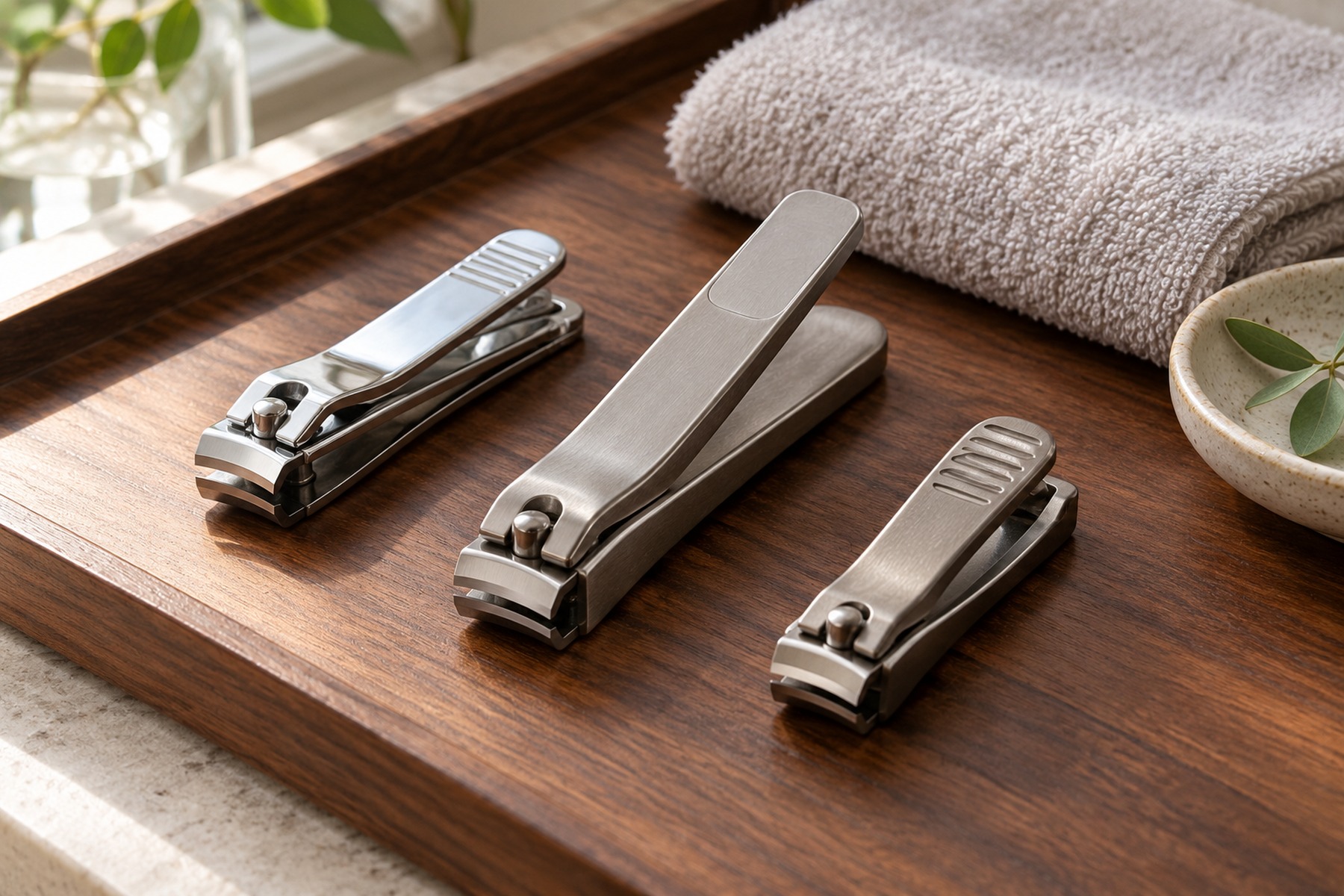
Start with the key distinction: Seki Edge is a Green Bell brand, so this is mainly KAI versus two Green Bell product families. Choose KAI if you want a broad range of sizes and specialized designs, Green Bell’s Takumi no Waza line if you prefer a substantial all-metal feel and multiple catcher or blade options, and Seki Edge if you want a more compact, presentation-focused Green Bell line. Compare the exact model, not only the logo, because size, lever geometry, blade curve and catcher design change the experience more than brand name alone.
What You’ll Learn
- Why Seki Edge and Green Bell should not be treated as unrelated manufacturers.
- How representative KAI, Takumi no Waza and Seki Edge clippers differ in size, leverage and feel.
- Why blade alignment, curved versus straight edges and hand size matter more than prestige claims.
- Which product family tends to fit compact carry, larger hands, thicker nails or catcher preferences.
- How to clean, store and verify Japanese nail clippers when buying from overseas.
First, understand the brand relationship
The biggest source of confusion in this comparison is the name Seki Edge. Green Bell’s own official site lists Seki Edge alongside Takumi no Waza as one of its brands. In other words, Seki Edge is not a separate manufacturer competing with Green Bell in the same way KAI does; it is a Green Bell product family.
That changes how to compare the three names. KAI versus Green Bell is a maker-level comparison. Takumi no Waza versus Seki Edge is better treated as a product-line comparison inside Green Bell, with different model shapes, sizes and presentation. This is why the exact model number matters more than assuming one badge is automatically sharper or better made.
- KAI: separate Japanese cutlery and grooming manufacturer with a broad nail-care lineup.
- Green Bell: maker of nail clippers, nippers, files and other grooming tools, with manufacturing operations in Seki, Gifu.
- Takumi no Waza: Green Bell brand with many stainless nail-care formats and sizes.
- Seki Edge: another Green Bell brand, positioned around compact and premium grooming tools.
What actually makes one nail clipper feel better than another
Nail clippers look simple, but a few mechanical details strongly affect the cut. KAI’s factory explanation highlights blade alignment, heat treatment, edging and a small intentional offset between upper and lower cutting edges. Green Bell likewise emphasizes hardened stainless blades, sharpening and lever geometry on representative models.
For the buyer, this translates into practical questions: how wide is the jaw, how much leverage does the handle provide, how large is the body, does the clipper include a catcher or file, and does the cutting edge match the nail you are trimming? A heavier clipper can feel controlled in a large hand, while a compact one can be easier to position on smaller nails.
- Blade meeting and edge finish affect how cleanly the nail separates.
- Longer levers generally provide more mechanical advantage but add bulk.
- Compact bodies are easier to carry and may suit smaller hands.
- Catchers reduce flying clippings but can make the body thicker.
- Curved and straight cutting edges serve different nail-shaping needs.

KAI: the broadest choice of formats and sizes
KAI’s Sekimagoroku nail-care lineup shows how wide one manufacturer’s range can be. The official range includes standard clippers in multiple sizes, wide-opening and easy-grip designs, magnifier-equipped clippers, nipper-style tools and files. That breadth is useful if your priority is matching a specific hand size or nail-care problem rather than buying one iconic model.
As a representative reference point, Sekimagoroku type101 is listed at 90 mm long, while type101L extends to 106 mm. Those dimensions illustrate why a brand-level verdict is not enough: two KAI clippers can feel more different from each other than a KAI and Green Bell model of similar dimensions.
- Good fit for buyers who want multiple body sizes and specialized formats.
- KAI publicly documents its nail-clipper manufacturing process, including heat treatment, edging, blade alignment and inspection.
- Check whether a model is standard, large, easy-grip, magnified or nipper-style before comparing prices or reviews.
Green Bell Takumi no Waza: substantial feel and feature variety
Green Bell’s Takumi no Waza line includes many conventional clippers, wide-opening models, built-in catchers, magnifier versions and nail nippers. One useful representative is the G-1205 Stainless Steel Nail Clipper. Green Bell lists it at 92 mm and 62 g, with stainless-steel blades, a zinc-alloy lever and an etched stainless file.
The company says the G-1205 blades are hardened at high temperature and sharpened twice, while the handle is designed for easier holding and pressing. That combination points toward a fuller, heavier hand feel than the small Seki Edge examples below. It can be attractive if you value leverage and a substantial body, but it is less pocket-friendly than a compact clipper.
- Representative G-1205: 92 mm long and 62 g.
- Wide file and ergonomic handle are explicit G-1205 features.
- Takumi no Waza offers both catcher-equipped and non-catcher designs, so check the exact item number.
- Green Bell sells separate catcher accessories for some models, including the G-1205.
Seki Edge: compact Green Bell options with a different design language
Seki Edge belongs to Green Bell, but its nail-clipper lineup includes smaller, more presentation-oriented models. The SS-113 Premium Fingernail Clipper is listed at 78 mm and 38 g. Green Bell describes it as an S-size design for smaller hands, with a curved lever and an integrated nail file.
Another Seki Edge example, SS-106, is even shorter at 68 mm and 32 g. These examples make Seki Edge easier to understand: the appeal is not that it comes from an unrelated maker with a secret manufacturing advantage, but that the line offers compact form factors and specific ergonomics within Green Bell’s broader catalog.
- Representative SS-113: 78 mm long and 38 g.
- Representative SS-106: 68 mm long and 32 g.
- Compact size can improve control for smaller hands or travel kits.
- Because Seki Edge is a Green Bell brand, compare model dimensions and features rather than treating the badge as a separate manufacturing origin.
Which one should you choose?
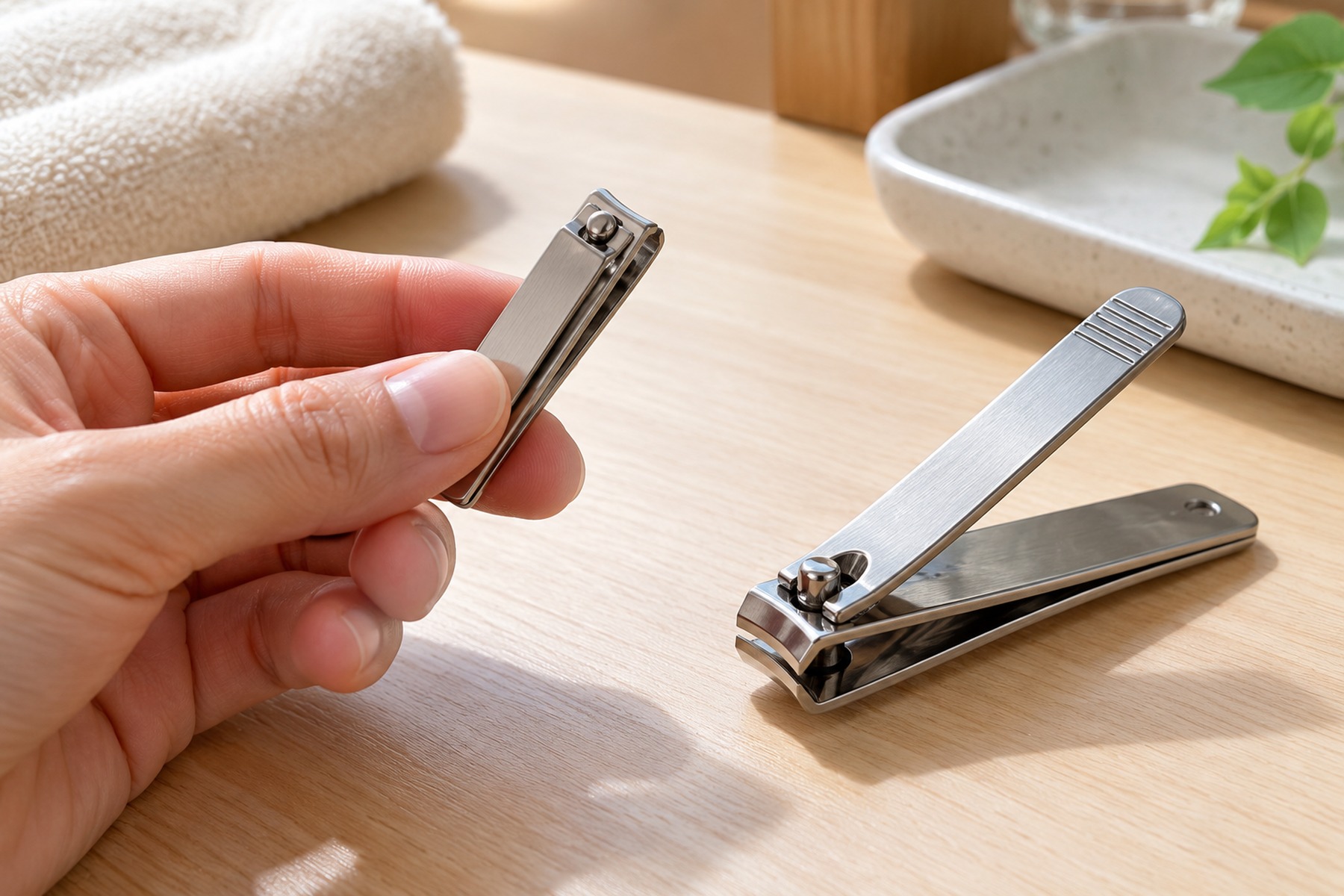
For most buyers, hand size and nail type should drive the decision before brand prestige. A large or easy-grip KAI model makes sense when you want more leverage or accessibility. A heavier Takumi no Waza model such as G-1205 suits buyers who like a substantial all-metal body and a larger handle. A compact Seki Edge model such as SS-113 or SS-106 is easier to pack and may feel more controllable in a smaller hand.
If you are trimming thick toenails, do not assume a small fingernail clipper is the right tool. Look for a toenail-specific, wide-opening, straight-edge or nipper-style model as appropriate. Green Bell’s FAQ specifically distinguishes curved blades for following the roundness of fingernails from straight blades that can cut a squarer shape and may suit toenails or weaker nails.
- Choose by hand fit first: compact for precise control, larger for leverage.
- Choose by nail type second: fingernail, toenail, thick nail or ingrown-nail support may require different geometry.
- Choose convenience features third: catcher, file, magnifier and grip style.
- Only after that should finish, packaging and brand styling decide between otherwise similar models.
How to judge authenticity and overseas listings
Overseas shoppers often see product names translated inconsistently, and the same Japanese manufacturer may sell multiple versions under different regional listings. Verify the maker, exact model code, dimensions and included accessories against the official product page before relying on marketplace titles alone.
For Green Bell and Seki Edge, model prefixes are especially useful because the official site identifies Takumi no Waza and Seki Edge separately. For KAI, check whether the listing is a KAI generic clipper, a Sekimagoroku grooming product or another specialized line. If a model is available only from a Japan-based shop, a proxy service can be useful, but shipping, customs, fees and destination eligibility must be checked before purchase.
- Match the model number, dimensions and materials to an official product page.
- Do not treat a marketplace title such as 'Japanese premium clipper' as proof of origin or authenticity.
- Check whether the catcher, file or case shown in a listing is actually included.
- For proxy purchases, confirm total fees, shipping method, import rules and return practicality before ordering.
Use and care: keep the edge clean and dry
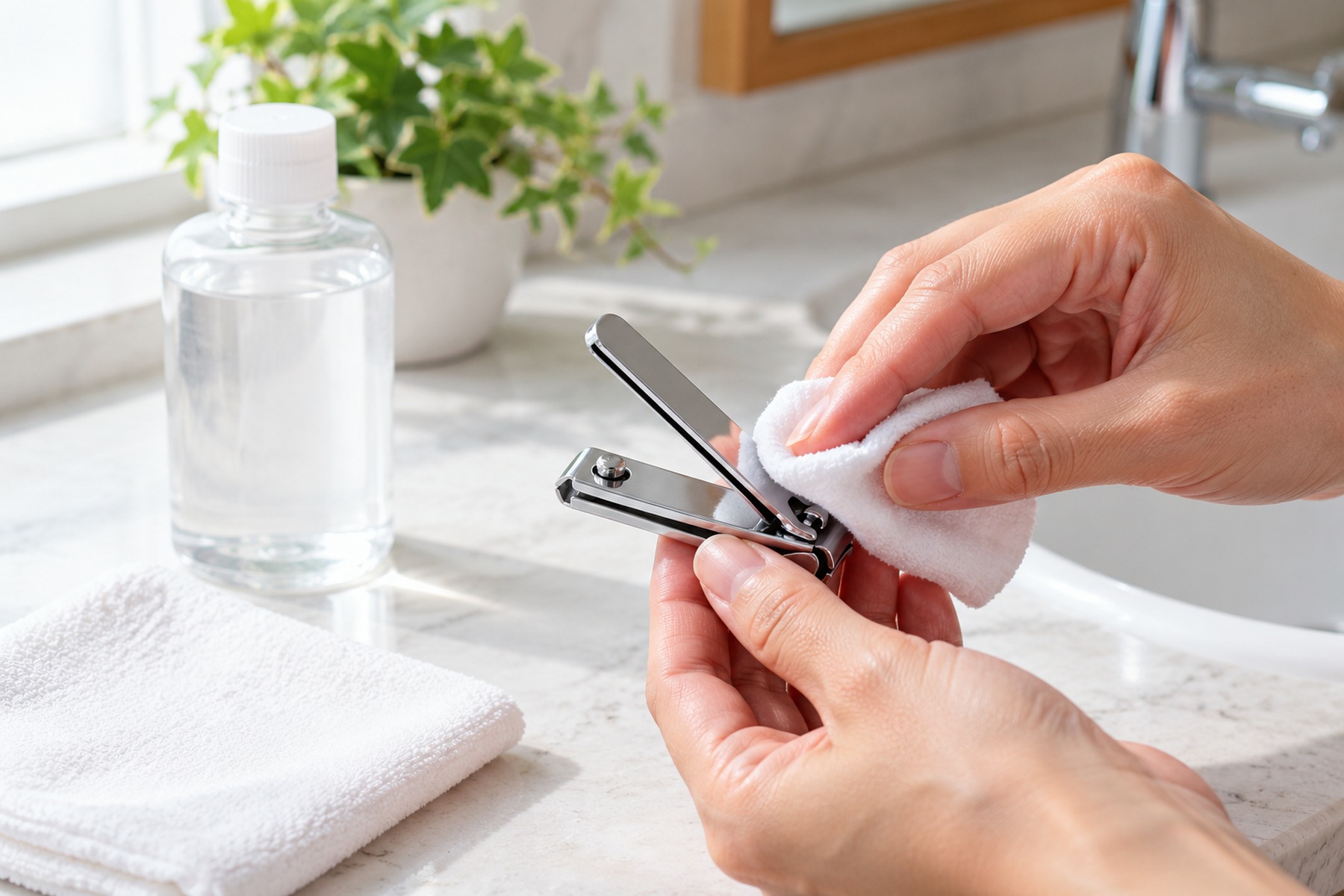
A good clipper can still feel rough if the jaws are dirty or if the lever and pivot are neglected. Green Bell recommends cleaning nail clippers by applying alcohol to a clean cloth or tissue, wiping the tool, then wiping it dry and storing it in a dry, well-ventilated place. The company does not recommend home sharpening of its clippers.
Use several smaller cuts rather than forcing a large bite through a thick nail. Keep fingers clear of the jaws, and stop using a clipper if the blades are visibly damaged, misaligned or no longer cut cleanly. A nail file can smooth the final edge after clipping and reduce the temptation to cut too close.
- Wipe after use and remove moisture before storage.
- Do not attempt aggressive home sharpening on precision clipper jaws.
- Use a file for finishing instead of repeatedly nibbling at the nail edge.
- Replace a clipper that is damaged, badly misaligned or consistently crushing rather than cutting.
FAQ
- Is Seki Edge a different company from Green Bell?
- No. Green Bell’s official site lists Seki Edge as one of its brands. Treat Seki Edge versus Takumi no Waza as a comparison between Green Bell product lines, while KAI is a separate manufacturer.
- Which is better for small hands?
- Look at the exact dimensions rather than the logo. Green Bell describes Seki Edge SS-113 as an S-size clipper for smaller hands, and SS-106 is even shorter. KAI also offers smaller variants, so compare the specific model before buying.
- Which is better for thick toenails?
- A dedicated toenail, wide-opening or nipper-style tool is usually a more sensible starting point than a compact fingernail clipper. Both KAI and Green Bell offer specialized formats, so choose by nail thickness and jaw design rather than brand alone.
- Should I choose a curved or straight cutting edge?
- Green Bell describes curved blades as the standard choice for following the roundness of fingernails, while straight blades create a squarer cut and can be useful for toenails or weaker nails. Personal nail shape and technique still matter.
- Can I sharpen Japanese nail clippers at home?
- Green Bell says it does not recommend home sharpening because its clippers are sharpened with grinding machinery. If the tool no longer cuts cleanly, replacement is safer than improvised sharpening.
Official References
Final Thoughts
The most useful conclusion is not a simple brand winner. KAI offers the widest range of nail-clipper formats and sizes, while Green Bell’s Takumi no Waza and Seki Edge lines cover different body sizes and design preferences within the same manufacturer. Start with your hand size, nail type and desired features, then compare exact model numbers and dimensions. That approach is more reliable than buying on brand reputation alone.