Watoria Guide
How to Buy from Amazon Japan, Rakuten Japan and Japanese Brand Stores
A practical guide to choosing the right Japanese buying route, understanding total landed cost, checking seller terms, and reducing delivery and return risk when ordering from overseas.
- Quick Answer
- What You’ll Learn
- Start with the Right Route, Not the Cheapest Sticker Price
- Decision Path: Which Route Fits Your Order?
- Fees and Total-Cost Factors You Should Separate
- Shipping, Customs and Return Risk Comes After Checkout Too
- How to Buy from Amazon Japan with Less Friction
- How to Buy from Rakuten Japan Without Missing Shop-Level Rules
- How to Buy from Official Japanese Brand Stores Safely
- Common Mistakes That Cause Delays, Surprise Costs or Failed Returns
- FAQ
- Related Guides
- Official References
- Final Thoughts
- Keep exploring Japanese culture
- Continue to the best buying / booking route
- Continue exploring
- Discover more Japan
- Primary sources
Quick Answer
Use Amazon Japan when an item already supports direct international checkout, Rakuten Japan when you want access to many Japanese merchants and are ready to check each shop’s rules, and official Japanese brand stores when authenticity or model-specific support matters most. Before paying, confirm who the seller is, whether international shipping is direct or indirect, the full landed cost, the return window, and what proof you should keep until delivery is complete.
What You’ll Learn
- How Amazon Japan, Rakuten Japan and official brand stores differ for overseas buyers.
- How to decide whether you need direct international shipping, a forwarding route or a different seller.
- Which cost layers matter beyond the product price, including domestic shipping, service fees, international shipping and import charges.
- What evidence to save in case of delays, damage, customs questions or return disputes.
- A step-by-step buying checklist that keeps your order route clear and low risk.
Start with the Right Route, Not the Cheapest Sticker Price
This guide focuses on one narrow task: choosing the safest buying route when the item you want is sold through Amazon Japan, Rakuten Japan or an official Japanese brand store. The product itself may be identical, but the buying experience can change a lot depending on who takes payment, who ships the parcel, and which policies apply after you order.
Amazon Japan is often the simplest route when the listing clearly supports overseas delivery and the final checkout already shows the destination country, duties estimate or import steps. Rakuten Japan gives you access to many individual merchants, which is useful for variety, limited items and specialty goods, but each shop can have different international shipping, cancellation and communication rules. Official brand stores are usually the best place to start when authenticity, warranty, color or model confirmation and post-purchase support matter more than price alone.
- Choose Amazon Japan for the most streamlined route when the item is eligible for direct international checkout.
- Choose Rakuten Japan when you need access to many Japanese merchants and are prepared to read each shop’s terms carefully.
- Choose an official Japanese brand store when authenticity, product guidance or brand-specific packaging and support are the priority.
Decision Path: Which Route Fits Your Order?
A good decision path starts with four questions: Is the exact item available from more than one route? Does any route ship directly to your country? Are there restrictions on batteries, liquids, food, cosmetics or fragile goods? And if something goes wrong, which seller gives you the clearest support path?
If the marketplace listing already supports your country and the total cost is visible before payment, that route is usually easier than forcing the order through a forwarding workflow. If direct shipping is not available, compare whether the item is also sold by an official brand store with its own overseas policy or by a Rakuten merchant that works with an international forwarding route. The best route is the one with the clearest terms, not the one with the shortest product title or the lowest headline price.
- Confirm the exact seller name and whether the order is sold by the marketplace, a third-party merchant or the brand itself.
- Check whether your destination country can be selected before payment, not only on a promotional page.
- Avoid assuming that one store’s shipping or return rules apply to another seller on the same marketplace.
- If the item is regulated or fragile, read the shipping restrictions before you add it to cart.
Fees and Total-Cost Factors You Should Separate
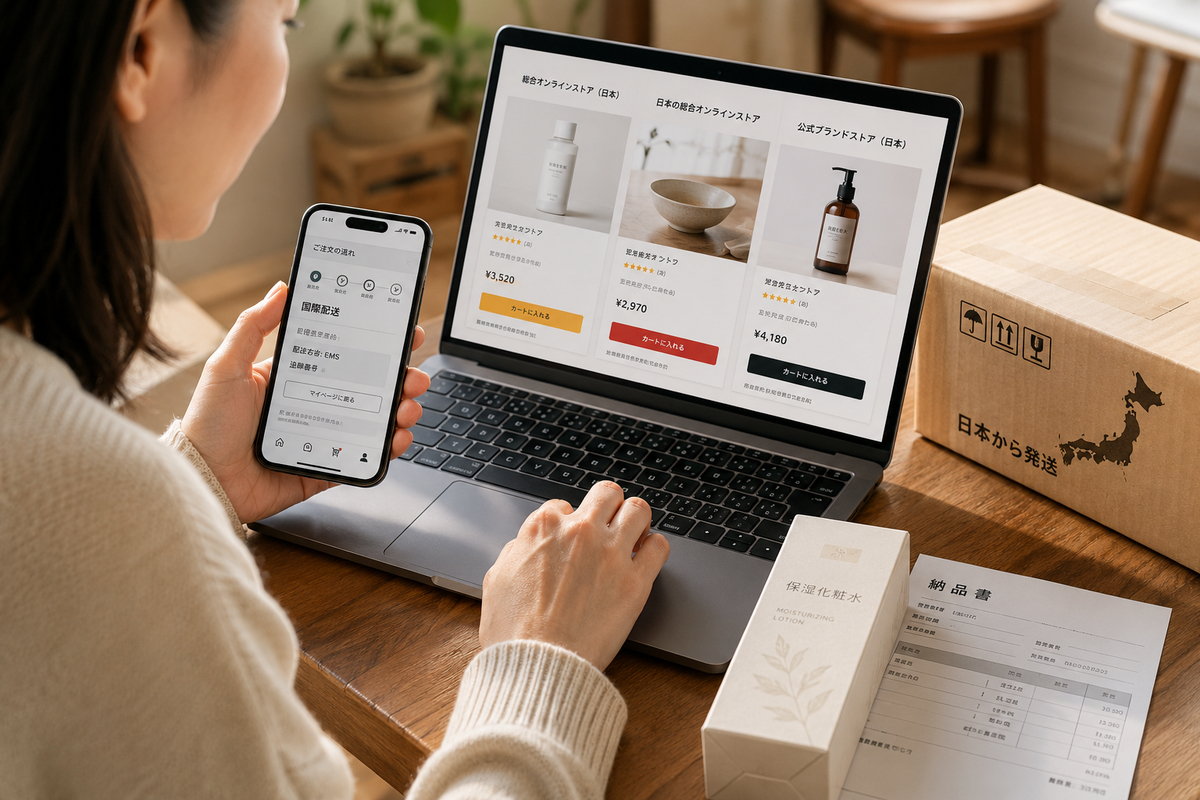
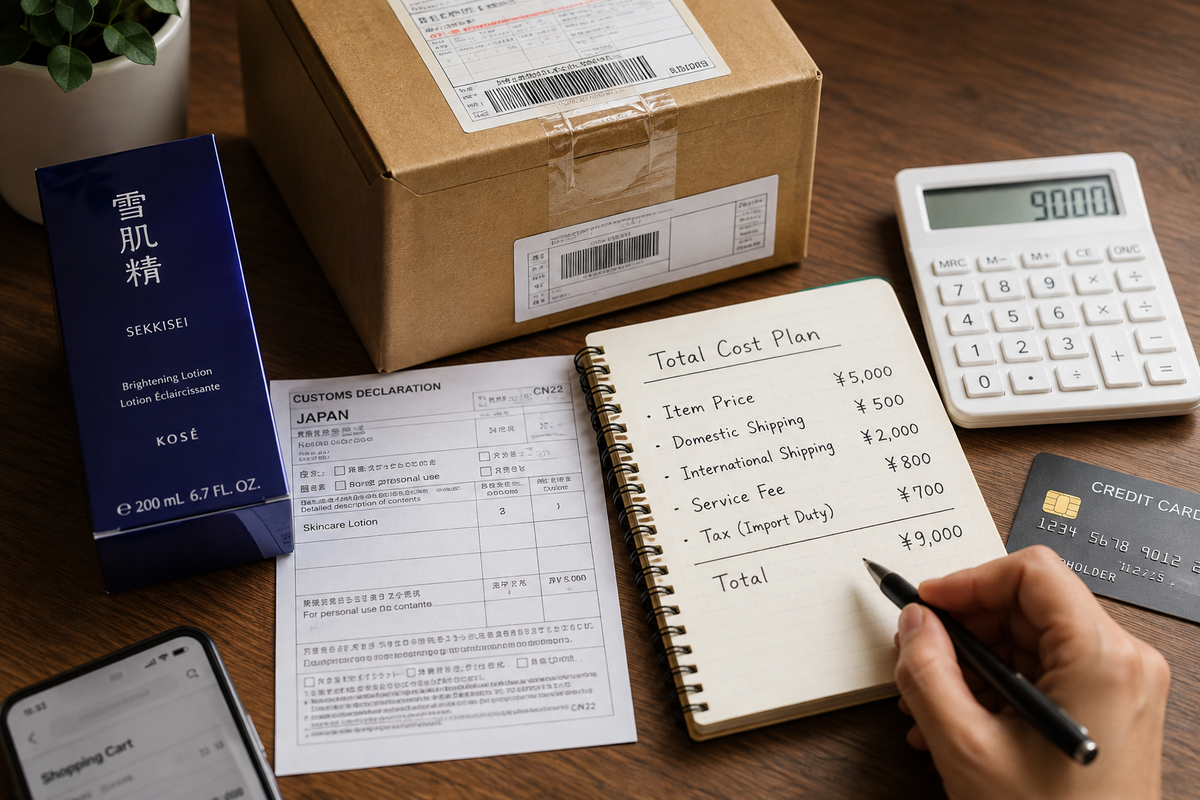
Overseas buyers often lose track of costs because the product price is only one part of the total. A careful budget separates the item price, domestic shipping inside Japan, any marketplace or forwarding service fee, international shipping, insurance if available, and import charges that may be collected before or after delivery depending on the route.
Amazon Japan may surface some costs earlier in the process when a listing supports direct international shipping. Rakuten Japan and official brand stores can vary more because individual shops may charge domestic shipping differently, and some routes require the parcel to reach a warehouse in Japan before international shipping is quoted. Always compare the landed total rather than the product price alone.
- Product price: the listed item cost before shipping and taxes.
- Domestic shipping: the cost from the seller to a warehouse or pickup point in Japan, when applicable.
- Service fee: any extra handling or forwarding fee charged by the route you use.
- International shipping: the overseas transport charge that usually changes with weight, size, destination and carrier.
- Import charges: duty, VAT, GST or customs-related fees collected under your destination country’s rules.
Shipping, Customs and Return Risk Comes After Checkout Too
A clean checkout does not remove delivery risk. Country-specific restrictions, missing customs information, nonmailable contents and packaging damage can slow or stop delivery. The risk is higher when the listing is unclear about what is inside the parcel, whether batteries or liquids are included, or whether the seller has a practical return path for international customers.
Returns are also route-specific. Marketplace returns may follow one system for marketplace-fulfilled orders and another for third-party merchants. Official brand stores may accept returns only for unused goods or only within Japan-based return procedures. If your order value is meaningful, save every key document until the item is delivered, checked and accepted.
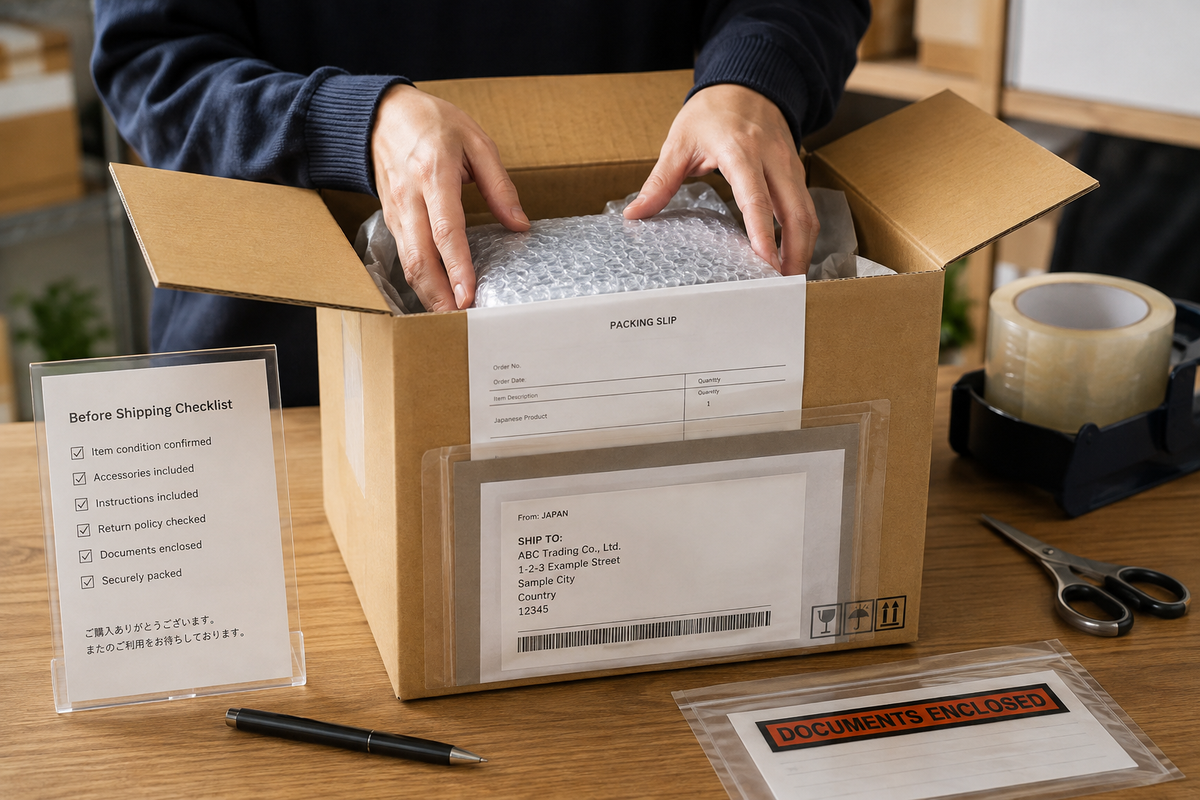
- Keep the order confirmation, seller page, item page, shipping promise, and any messages that explain the shipping route.
- Save the final invoice or receipt, tracking number, and customs or tax notices.
- Photograph the parcel before opening if the carton looks crushed, wet, retaped or incomplete.
- Report missing parts or damage using the seller’s official channel as soon as the condition is confirmed.
How to Buy from Amazon Japan with Less Friction
Amazon Japan is the easiest choice when the listing clearly supports direct overseas delivery and the final checkout reflects your destination. That is the moment to confirm the real seller, the delivery estimate, any import-charge treatment shown at checkout and the return information linked to the order.
Do not assume that every item on Amazon Japan can be shipped overseas just because the marketplace itself is accessible from your country. Eligibility can differ by seller, item type and destination. If the listing becomes unclear after you switch the delivery address, step back and compare with another route instead of forcing the purchase.
- Set your destination address before evaluating availability.
- Check whether the seller and the shipper are the same or different entities.
- Review the estimated delivery window and what happens if the parcel is undeliverable.
- Keep a screenshot of the final checkout summary before you place the order.
How to Buy from Rakuten Japan Without Missing Shop-Level Rules
Rakuten Japan works differently because you are often buying from an individual merchant inside the larger marketplace. That means the shop page matters. Look for store identity, domestic shipping policy, international delivery notes, cancellation rules, contact method and any explanation of how combined shipments or forwarding should work.
This route is especially useful when you want specialist Japanese products, broader merchant choice or access to shops that use Rakuten’s official forwarding ecosystem. The trade-off is that you must read more carefully. One Rakuten shop may be very international-buyer-friendly, while another may expect a domestic Japanese shipping address first and offer little flexibility after the order is submitted.
- Read the merchant’s shipping and returns page, not only the product page.
- Confirm whether the shop ships overseas directly or expects a Japanese delivery address first.
- Check whether multiple purchases can be consolidated and whether restricted goods are excluded.
- Keep the shop contact information and all messages until the order is fully completed.
How to Buy from Official Japanese Brand Stores Safely
Official brand stores are often the strongest option when you care about authenticity, model guidance, accessory completeness or brand-controlled after-sales support. This is particularly true for skincare, kitchen tools, fashion, home goods and limited product lines where color, material, size and packaging details matter.
The main thing to verify is the store’s real international buying route. Some brand stores ship abroad directly, some use a stated partner workflow, and others accept only domestic shipping in Japan. If you need a specific model, voltage, size or ingredient detail, the brand store can also be the most reliable source for confirming compatibility before purchase.
- Use the official navigation, company page and policy links to confirm that the store is genuinely brand-operated.
- Check whether overseas orders are supported directly or only through a domestic Japanese delivery route.
- Read the return and exchange page before buying limited or made-to-order goods.
- Save any product detail page that confirms size, material, ingredients, voltage or included accessories.
Common Mistakes That Cause Delays, Surprise Costs or Failed Returns
The most common mistake is comparing only the item price while ignoring domestic shipping, service fees and import charges. Another is trusting marketplace familiarity too much and forgetting that seller-level policies still control many parts of the transaction. Buyers also run into trouble when they order fragile or restricted goods without checking whether the route can actually export them to the destination country.
The safest habit is to keep a simple evidence folder from the moment you decide to buy. Save screenshots of the listing, seller page, policy page, order summary and tracking history. That small step makes customs questions, payment disputes, missing accessory claims and damaged-parcel complaints much easier to handle.
- Do not treat the lowest visible product price as the real total.
- Do not assume direct overseas shipping exists until the checkout flow confirms it.
- Do not ignore item-category restrictions such as batteries, liquids, cosmetics, blades or food.
- Do not throw away shipping documents or packaging before you confirm the item is correct and undamaged.
FAQ
- Can I buy from Amazon Japan without a forwarding service?
- Yes, sometimes. If the listing supports direct international delivery to your country and the final checkout accepts your address, you may not need a forwarding route. But availability varies by item, seller and destination, so always confirm it in the live checkout flow before you assume the route is direct.
- Does Rakuten Japan always ship overseas directly?
- No. Rakuten is a marketplace with many different shops, so shipping methods differ by merchant. Some shops ship internationally, some rely on a Japanese domestic delivery step first, and some may not support overseas buyers for a given item or destination.
- Are official Japanese brand stores safer than marketplaces?
- They are often safer for authenticity, product details and brand-specific support, but not automatically better for every buyer. The best route depends on whether the store actually supports your country, what the final landed cost looks like, and how practical the return process is for international orders.
- What records should I keep until the order is fully complete?
- Keep the product page, seller or shop page, policy pages you relied on, order confirmation, invoice or receipt, tracking record, customs notices and photographs of the parcel if it arrives damaged. Those records are the core evidence set if you need support later.
- What should I do if customs or the carrier asks for more information?
- Respond quickly using the order information you saved. Usually you may need the invoice, proof of payment, item description or value confirmation. If something looks inconsistent, contact the seller through the official support path and keep a copy of every message.
Official References
Final Thoughts
If you already know what you want to buy, the best route is usually the one that makes the shipping path, total cost and support responsibility easiest to understand. Amazon Japan is often the most direct path when international checkout is already built in, Rakuten Japan is strong for merchant variety if you read shop-level rules carefully, and official brand stores are often the safest place to confirm authenticity and product details. Choose clarity over impulse, and keep your evidence until the order is fully delivered and checked.