Watoria Guide
How to Choose Matcha: Grades, Origin, Color, Taste and Price
Choosing matcha can feel confusing—labels mention grades, origins, colors, aromas, milling methods and more. This guide gives clear, practical checkpoints so you can pick a tin that fits your taste, use and budget while avoiding common overseas-buyer pitfalls.

- Quick Answer
- What You’ll Learn
- Best-Fit Summary
- How to Choose
- Comparison Criteria
- Recommended Option Types
- Compatibility, Authenticity and Care
- Buying Route
- FAQ
- Related Guides
- Sources & References
- A 60-Second Matcha Label Check
- Final Thoughts
- Keep exploring Japanese culture
- Continue to the best buying / booking route
- Discover more Japan
- Primary sources
Quick Answer
Decide your main use first. For straight sipping (usucha/koicha), look for high-quality matcha from Japan with a vibrant green color, sweet umami aroma, ultra-fine grind and light-blocking packaging—often marketed as “ceremonial.” For lattes and baking, choose a good culinary-type matcha with a bold, slightly more assertive taste that can stand up to milk or heat. Treat grade words as marketing shorthand, not legal standards. Verify “Product of Japan” (if that’s what you want), shade-grown/stone-milled details, recent packing date, and store it cool and airtight after opening.
What You’ll Learn
- The practical differences between “ceremonial” and “culinary” matcha labels
- How origin, color, aroma, texture and taste signal quality
- Which matcha styles fit sipping, lattes or baking
- How to read labels and avoid counterfeits, vague origin and stale stock
- Care and storage so your matcha stays fresher for longer
- Safe, sensible buying routes for overseas shoppers
Best-Fit Summary
If you only remember a few patterns, let them be these.
- For purists (straight sipping): Look for high-sensory-quality matcha often marketed as ceremonial-grade—vibrant green, sweet umami, silky texture, shade-grown and stone-milled.
- For daily lattes: A robust culinary-type matcha (sometimes called latte-grade or premium culinary) with fuller body and a touch more bitterness that balances milk and sweeteners.
- For baking/desserts: Standard culinary matcha; flavor and color stay present after heating, sugar and fat are added.
- For gifts: A well-packaged matcha from a reputable Japanese producer—often a ceremonial or region-focused set. Prioritize freshness, origin transparency and packaging over marketing terms alone.
How to Choose
Most of what you need to decide lives in a handful of checkpoints. Work through them in order rather than relying only on words like “ceremonial” or “culinary” on the front of the tin.
- Match grade label to use
– Ceremonial-grade (marketing term): Usually positioned for usucha/koicha and straight sipping; better products in this category emphasize sweetness, umami and a creamy mouthfeel.
– Culinary-grade (marketing term): Often split into premium (great for lattes and iced drinks) and standard (best for baking, smoothies, ice cream and confectionery). These are tuned for color and flavor performance when mixed rather than for pure sipping.Check origin and producer transparency
– Look for a clear country-of-origin statement such as “Product of Japan” if Japanese matcha is important to you. In Japan, origin labeling is regulated, but terms like “ceremonial” are not.
– Well-known Japanese matcha-growing areas include Uji (Kyoto), Nishio (Aichi), Yame (Fukuoka), and parts of Kagoshima and Shizuoka. Some packs will also mention cultivar, shading and harvest.
– Details such as cultivar, harvest season (for example, first flush) and stone-milling are positive signals that the maker is taking quality seriously.Assess color and aroma (in person or via trusted photos)
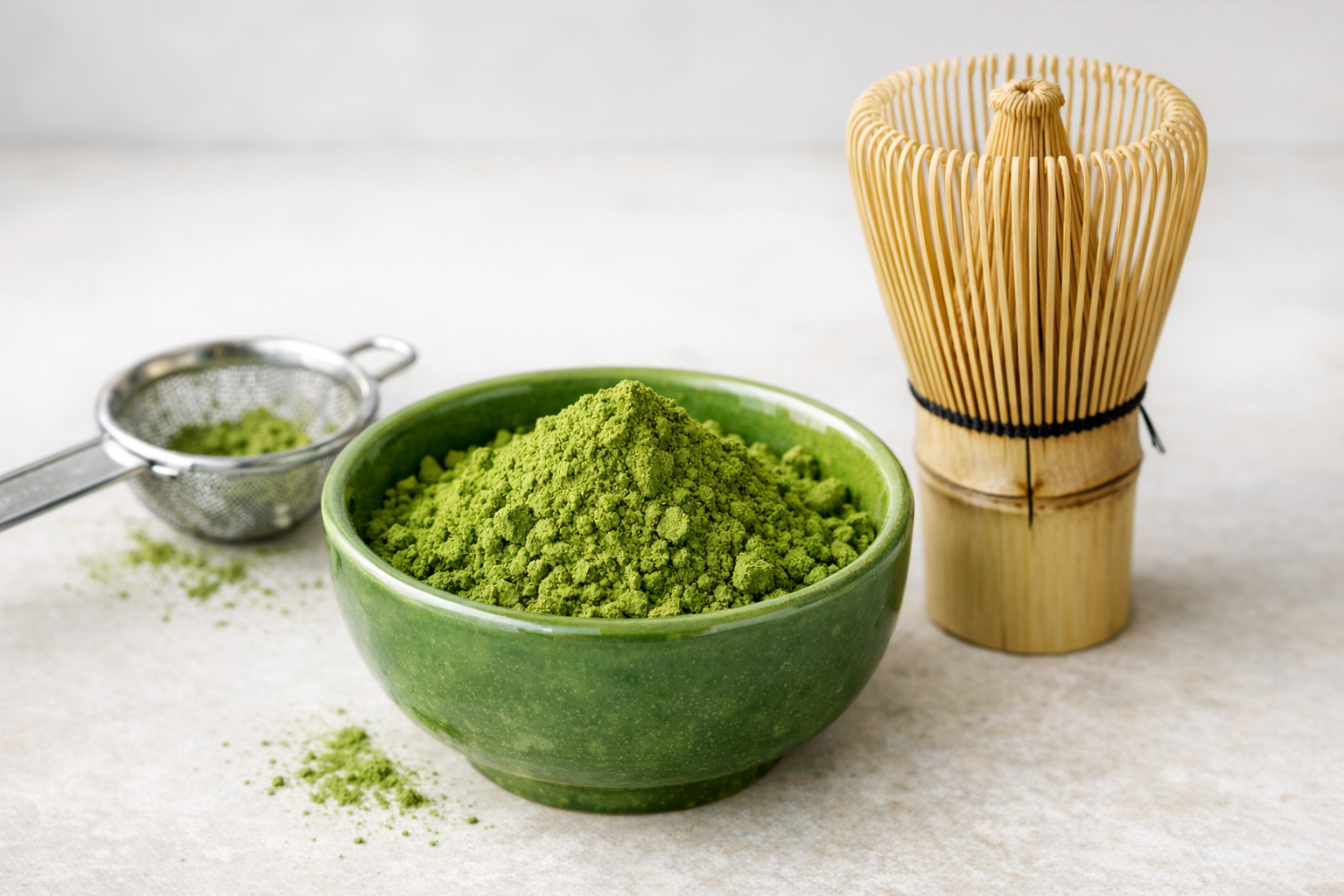
– Color: Fresh, higher-grade matcha looks bright to deep vivid green. Dull yellow-green, khaki or olive can indicate lower grade or oxidation.
– Aroma: Expect sweet, creamy, seaweed-like umami. Flat, hay-like or musty smells can signal age or poor storage.Feel the grind and dispersion
– Ultra-fine powder should sift easily, dust your fingers like talc and disperse without gritty residue.
– Some clumping in the tin is normal; what matters is that each clump breaks down into a smooth, silky powder when pressed or sifted.Read the package carefully
– Prefer light-blocking tins or bags. Nitrogen-flushed packaging is a plus, as it slows oxidation.
– Check packing and best-before dates and follow the storage instructions. Matcha is sensitive to light, heat, oxygen and humidity.
– Ingredients should be 100% green tea (Camellia sinensis). If colorants or flavorings appear, you are no longer dealing with pure matcha.Align price expectations to grade and freshness
– Shade-grown, first-harvest tencha from Japan is labor-intensive and in high demand; this is reflected in the price.
– In most markets, high-quality matcha marketed as ceremonial-grade will cost more per gram than standard culinary matcha. Be cautious if a product claims to be premium Japanese ceremonial matcha at a very low price; something may be compromised in origin, harvest quality or milling.
Comparison Criteria
Once you have a short list, compare tins or brands on consistent points rather than just on the front-label words.
- Intended use: Straight sipping vs latte vs baking and confectionery.
- Marketing grade terms: Ceremonial, premium culinary, standard culinary—understand these as vendor promises, not regulated standards.
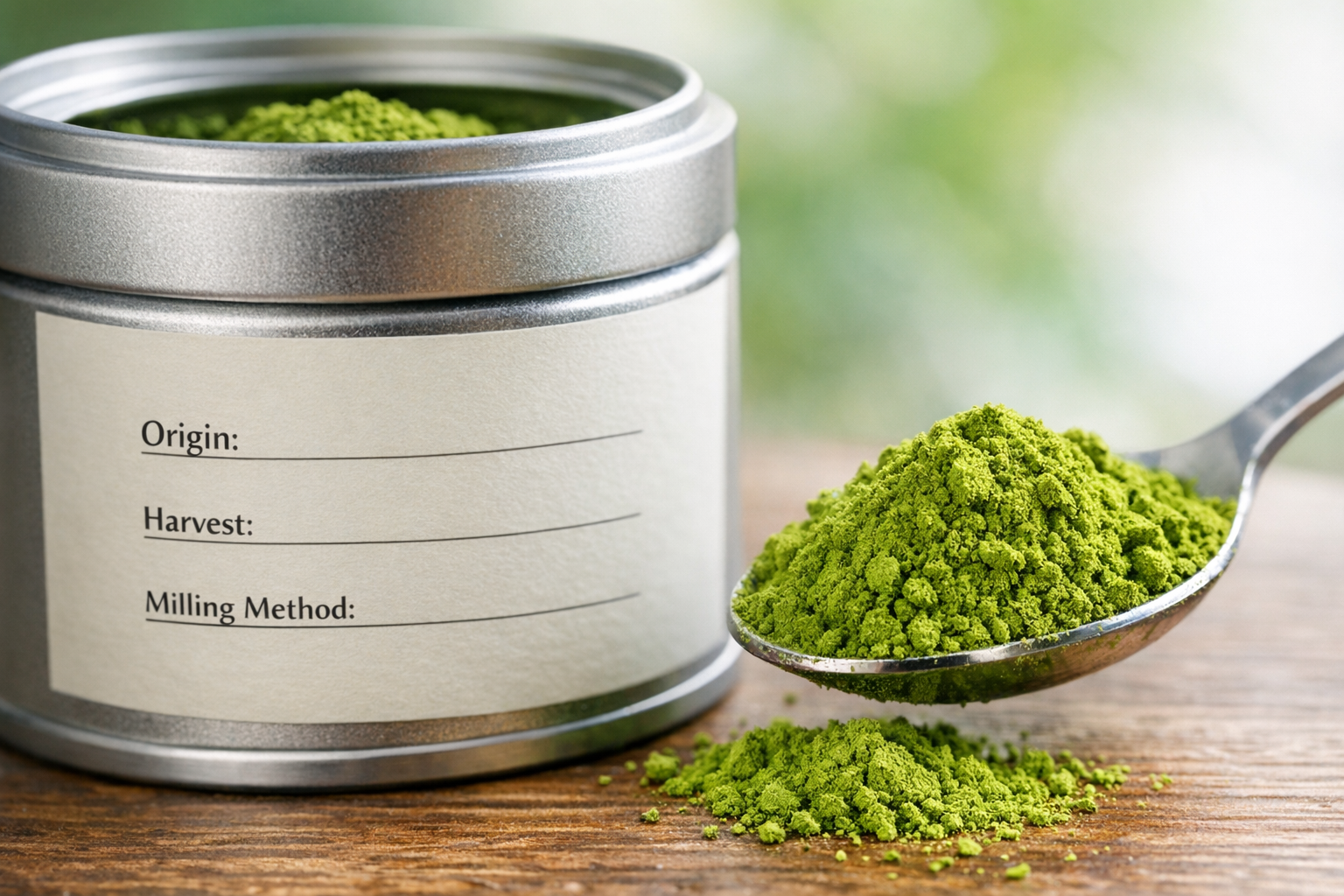
- Origin transparency: Clear country-of-origin (for example, “Product of Japan”), region, harvest information and milling method.
- Color: Vivid green generally signals freshness and higher leaf quality. Avoid brownish or khaki tones; be cautious if a neon-bright color appears alongside added ingredients.
- Aroma: Sweet, fresh and oceanic-umami rather than stale, musty or overwhelmingly grassy-dry.
- Texture: Ultra-fine, talc-like powder with no sandiness when whisked in water; foam should be even and fine in straight preparations like usucha, reflecting good grind and leaf quality.
Taste: A balance of sweetness, umami and bitterness appropriate to use—softer and rounder for sipping, more assertive for lattes and cooking.
Packaging and date: Light protection, a recent packing date, and clear storage notes.
Certifications and labeling: Look for recognized organic marks (such as JAS Organic) when relevant, and complete ingredient panels that distinguish between origin of the tea and place of packing.
Recommended Option Types
You do not need one perfect matcha for everything. Many people are happier with two complementary tins than with a single compromise.
- First-timer tasting set
– Small tins or sampler packs across two or more marketing grades let you compare color, aroma and taste side by side without overcommitting your budget.Daily latte choice
– A premium culinary matcha with a slightly stronger backbone that holds its personality in milk. If lattes are your main use, compare our best Japanese matcha for lattes before choosing a tin. Expect a touch more bitterness and a deeper green that stays visible in foam and cold drinks.Straight-sipping traditionalist
– A carefully made matcha marketed for ceremonial use from a reputable Japanese origin. Look for notes about shading, first flush and stone-milling, and pay close attention to packing dates.Baking and desserts
– Standard culinary matcha whose color and flavor remain present after heating and mixing with sugar, dairy or chocolate.Gifting
– An elegantly packaged matcha or a region-focused duo (for example, Uji and Nishio) that tells a clear origin story. Prioritize freshness, origin transparency, and thoughtful packaging rather than only the word “ceremonial” on the label.
Compatibility, Authenticity and Care
Choosing matcha is partly about verifying what is really in the tin and partly about keeping it that way once you open it.
- Authenticity checks
– Terminology: Genuine matcha is made from shade-grown tencha that is finely milled. Many cheaper powders abroad are generic green tea powder, sometimes from unshaded leaves or non-Japanese origins.
– Origin: If Japanese matcha is important to you, look for a clear country-of-origin statement such as “Product of Japan” and, when available, a region like Uji, Nishio, Shizuoka, Kagoshima or Yame.
– Label completeness: Harvest season, cultivar name and milling method are good signs of a transparent producer. Ingredients should list only green tea if you want pure matcha.
– Certifications: Recognized organic marks (such as JAS Organic) may appear on some products. Check that any seal on the front of the pack is also supported by information on the back and in official documentation where available.Overseas-buyer risks
– Heat and transit time: Long journeys and hot conditions can fade color and flavor. Light-proof, well-sealed packages and recent packing dates help reduce the risk.
– Customs rules: Check the import guidance for tea powders in your country before arranging any purchase from overseas sources.
– Counterfeits and relabeling: Some products use Japanese imagery or words like “Japanese-style” while sourcing leaves elsewhere. Favor established sellers that describe their sourcing, storage and handling clearly.Care and storage
– Keep matcha sealed, dry, and away from light and heat. Many producers suggest refrigeration after opening; follow the guidance on your specific package and protect it from moisture and strong odors.
– If you store matcha in the fridge or freezer, let the closed container return fully to room temperature before opening. This helps prevent condensation from forming on the powder.
– Once opened, aim to use the tin promptly—often within a few weeks for peak flavor—rather than keeping it for many months.
Buying matcha from outside Japan?
If a Japanese shop does not accept overseas checkout or does not ship to your country, Remambo is a tracked proxy route for buying from Japan and arranging international shipping. Check current service fees, shipping options, import rules and total landed cost before ordering. New customers who register through Watoria’s tracked Remambo route receive a JPY 1,000 discount on their first international shipment.
Buy from Japan with RemamboBuying Route
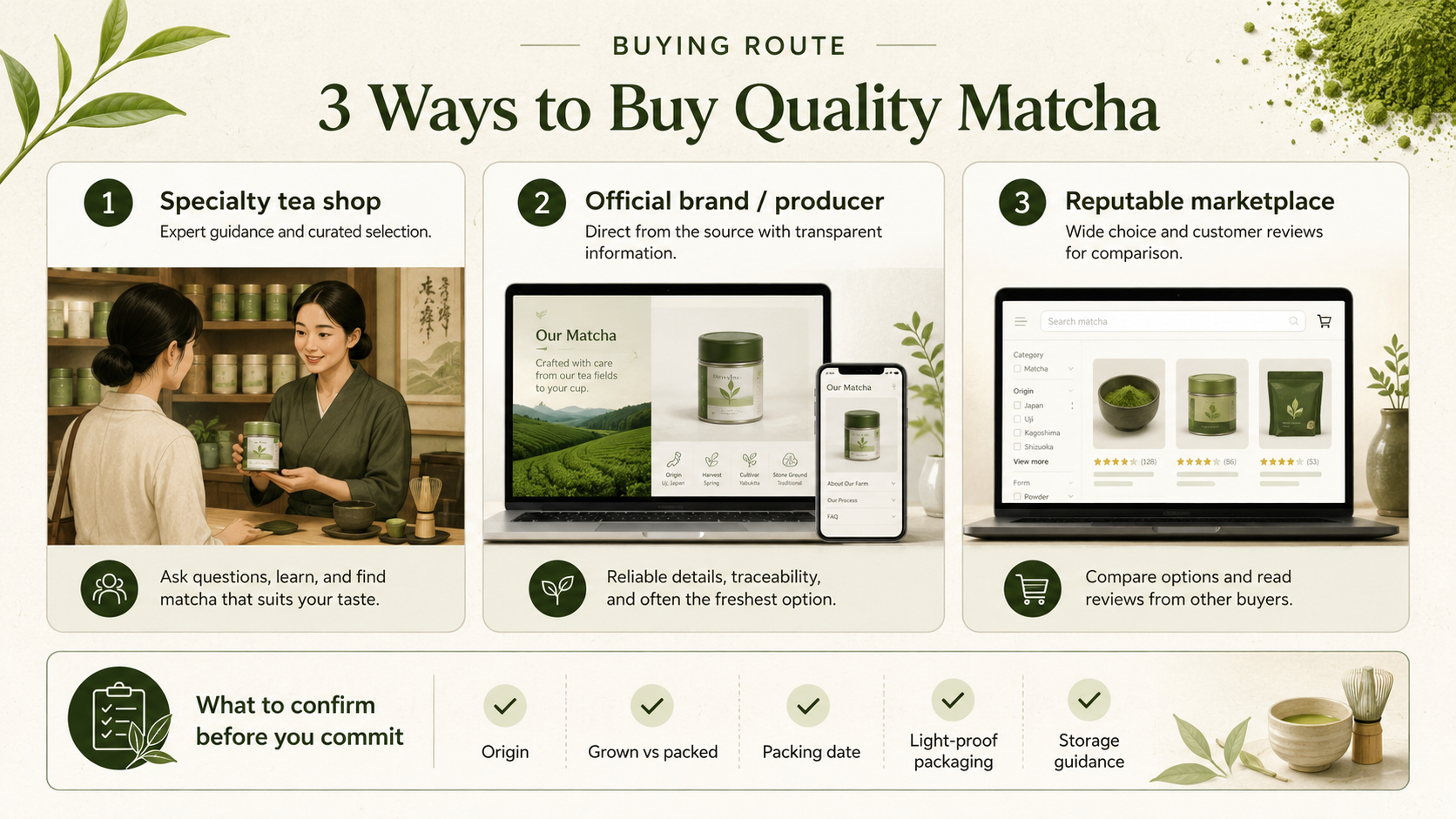
Watoria is an editorial guide to Japanese culture and products. It does not sell matcha or operate checkout or shipping. Use the checkpoints below wherever you prefer to shop.
- Specialty tea shops
– Staff can help you match flavor, aroma and grade labeling to how you plan to use the matcha. In-person shopping also allows you to inspect color and packaging directly.Official brand or producer channels
– Official online or physical channels often provide clearer origin stories, harvest information and storage advice, and may turn inventory faster so you see more recent packing dates.Reputable marketplaces and retailers
– If you use a general marketplace, scrutinize the specific seller’s reputation, storage and shipping policies, and return terms.What to confirm before you commit
– Clear country-of-origin, such as “Product of Japan,” if that matters to you.
– Transparent distinction between where the tea was grown and where it was packed or blended.
– Recent packing or best-before dates.
– Sealed, light-proof packaging and clear storage instructions that match how you plan to keep it at home.
FAQ
- What’s the difference between ceremonial and culinary matcha?
- Ceremonial and culinary are marketing terms, not legally defined grades. Products sold as ceremonial are usually positioned for straight sipping and often emphasize sweetness, umami and a silky texture. Culinary matcha is tuned for performance in recipes—color and flavor that stay present with milk, sugar or heat. Quality can vary widely in both categories, so origin, color, aroma and taste matter more than the word on the label.
- Can I make lattes with ceremonial-grade matcha?
- Yes. Many people enjoy lattes with matcha marketed as ceremonial, but a good premium culinary matcha is often more cost-efficient and is blended for a stronger backbone that balances milk and sweeteners. It comes down to your taste and budget; both can work if the tea itself is fresh and well made.
- How should good matcha look and smell?
- Quality matcha is bright to deep vivid green and smells sweet, fresh and umami-rich—often compared to seaweed, fresh grass and cream. Dull, yellowish, khaki or brownish powder, or a smell that is musty or like dry hay, usually signals lower grade material or oxidation from age and poor storage.
- How long does matcha stay fresh once opened?
- Unopened, well-packed tins keep their quality longer. Once opened, most matcha tastes best within a few weeks if stored properly—sealed, cool, dry and away from light and strong odors. Always follow the producer’s specific guidance on your package, and avoid leaving an opened tin for many months if you care about color and aroma.
- Is all green tea powder the same as matcha?
- No. Matcha is specifically made from shade-grown tencha that is steamed, dried and finely milled, giving a characteristic color, taste and texture. Many inexpensive powders labeled as matcha abroad are generic green tea powders made from unshaded or differently processed leaves, and sometimes from non-Japanese origins. Check for shade-growing, origin information and ingredient details if you want true matcha.
Sources & References
A 60-Second Matcha Label Check
Before comparing marketing terms, check the basics: the ingredient should be green tea if you want pure matcha; the country of origin should be clear; packing or best-before information should be readable; and the package should protect the powder from light and moisture.
Then compare the matcha to how you will actually use it. Straight whisked tea rewards aroma, texture and balance. Lattes need enough flavor to remain noticeable with milk. Baking usually values color and strength more than the most delicate aroma.
If the product is Japan-only, compare the final shipped cost and confirm that the seller or proxy accepts the item before ordering. The word “ceremonial” by itself is not enough to make the decision.
Final Thoughts
Choosing matcha gets simpler when you stop chasing a single perfect grade and instead match the tea to how you plan to enjoy it. Start by deciding whether you mainly sip it straight, whisk it into lattes or fold it into sweets. From there, use origin transparency, color, aroma, texture and taste—as well as realistic price expectations—to narrow your options.
Treat words like “ceremonial” and “culinary” as helpful hints rather than guarantees, and lean on clear labeling and sensory clues instead. With careful storage at home, the matcha you select will reward you with more vivid color, fuller aroma and a steadier, more satisfying cup or bowl, whether you’re whisking in a quiet kitchen or sharing it with friends.