Watoria Guide
Best Japanese Matcha for Lattes
The best matcha for a latte is not automatically the most expensive one. These Japanese picks have enough flavor, color and structure to stay present with milk, with options from crisp and balanced to smooth and umami-rich.
- Quick Answer
- What You’ll Learn
- What Makes Matcha Good for a Latte?
- Five Latte-Friendly Japanese Matcha Picks
- Ippodo Ikuyo: The Easiest All-Round Recommendation
- Ippodo Sayaka: For Smooth, Umami-Rich Lattes
- Nakamura Tokichi Matcha Standard: For More Presence in Milk
- Marukyu Koyamaen Aoarashi: For a Fresh, Brisk Style
- Yamamasa Koyamaen Matsukaze: Traditional Matcha That Still Works in Milk
- Choose by Milk, Sweetness and Latte Style
- Use Enough Matcha Before Blaming the Product
- Freshness, Storage and Buying From Japan
- FAQ
- Related Guides
- Official References
- Final Thoughts
- Keep exploring Japanese culture
- Continue to the best buying / booking route
- Continue exploring
- Discover more Japan
- Primary sources
Quick Answer
For most home lattes, start with a matcha that has enough astringency and body to remain clear after milk is added. Ippodo Ikuyo is the strongest all-round fit because Ippodo explicitly recommends it for lattes and describes it as balanced, medium-bodied and pleasantly astringent. For a smoother, more umami-forward cup, Ippodo Sayaka is a better fit. Nakamura Tokichi Matcha Standard is a fuller-flavored option designed to work well with milk, Marukyu Koyamaen Aoarashi suits drinkers who prefer a fresher, brisker edge, and Yamamasa Koyamaen Matsukaze is a traditional tea-ceremony matcha that the maker also recommends in a latte recipe.
What You’ll Learn
- Which Japanese matcha styles stay noticeable after milk is added
- Five maker-backed matcha options suited to different latte preferences
- Why a little astringency can be useful instead of being a flaw in a latte
- How milk type, sweetness and matcha dose change which product works best
- How to protect freshness so a good matcha does not turn flat or stale
What Makes Matcha Good for a Latte?
A latte changes what you should value in matcha. Milk softens bitterness and astringency, but it also mutes delicate aroma and umami. That means an expensive, very subtle matcha can be less satisfying in milk than a well-made medium-bodied matcha with a clearer green bite.
For latte use, look for a producer that gives real preparation guidance, a flavor profile that includes enough body or astringency to survive dilution, and a fresh green color that is not being used as the only quality signal. Proper matcha is made from tencha that is ground into powder; it is not simply any powdered green tea.
- Body matters because milk dilutes aroma and flavor intensity.
- A little clean astringency can help matcha remain noticeable in dairy or plant milk.
- Freshness matters more than buying a very large pack you cannot finish promptly.
- Producer guidance is more useful than relying on a vague grade label alone.
Five Latte-Friendly Japanese Matcha Picks
These are editorial picks based on official maker descriptions and preparation guidance rather than live price, stock or marketplace ratings. Availability can change, so treat the product names as flavor and use-case references first.
There is no single winner for every latte. The best choice depends on whether you want balanced, smooth, brisk or tea-forward flavor, and on how much milk and sweetener you normally use.
- Ippodo Ikuyo — best all-rounder for a balanced everyday latte
- Ippodo Sayaka — best for a smoother, richer and more umami-led latte
- Nakamura Tokichi Matcha Standard — best for a fuller green flavor that stands up to milk
- Marukyu Koyamaen Aoarashi — best for a fresher, brisker profile
- Yamamasa Koyamaen Matsukaze — best for a traditional tea-ceremony matcha used as a latte base
Ippodo Ikuyo: The Easiest All-Round Recommendation
Ippodo describes Ikuyo as balanced and medium-bodied, with astringency, umami and sweetness in proportion. More importantly for this article, Ippodo lists it among its top matcha recommendations for lattes and calls it a first recommendation for people making one.
That balance is useful with milk. The slight astringency prevents the drink from tasting like warm milk with a faint green note, while the moderate body keeps the cup approachable. It is a strong starting point if you want one matcha that can work both straight and in a latte.
- Choose it if you want a balanced latte rather than an intensely bitter or dessert-like one.
- Works especially well when you use little or moderate sweetener.
- Avoid it if your priority is the softest, most umami-heavy latte possible.
Ippodo Sayaka: For Smooth, Umami-Rich Lattes
Sayaka sits on the richer and smoother side of Ippodo's lineup. The maker describes it as having rich umami with little astringency and characterizes the latte as smooth and velvety.
This is the better choice for someone who dislikes a brisk edge. The trade-off is that softer matcha can become less assertive if you use a very large amount of milk or heavy sweetener, so keep the latte ratio restrained enough for the tea to remain present.
- Choose it for a soft, creamy latte with more umami and less bite.
- Works well when the milk itself is mild and not strongly flavored.
- Avoid it if you deliberately want a sharp matcha finish that cuts through a sweet drink.
Nakamura Tokichi Matcha Standard: For More Presence in Milk
Nakamura Tokichi's Matcha Standard is made from Kyoto-grown first-flush tea and is positioned for lattes and sweets as well as everyday matcha use. The maker emphasizes a balance of umami, sweetness and gentle bitterness, along with a fuller flavor expression and bold green color.
That makes it useful when you want the matcha to remain obvious after milk is added. It is also a sensible direction for oat milk or a sweeter latte, where a very delicate matcha can disappear.
- Choose it when you want a latte with a clearly tea-forward center.
- A strong fit for milkier or slightly sweeter recipes.
- Buy a pack size you can finish while the aroma and color are still fresh.
Marukyu Koyamaen Aoarashi: For a Fresh, Brisk Style
Marukyu Koyamaen describes Aoarashi as refreshing and recommends it for thin tea. The maker also notes that it works with milk or cream in confectionery, which is a useful clue for latte pairing even though it is not presented as a dedicated latte product.
Aoarashi is therefore a good candidate for drinkers who like a slightly livelier, more brisk matcha profile. It is not the pick for someone trying to remove every hint of astringency.
- Choose it if you prefer a fresher, sharper green-tea impression.
- Good for a latte that should taste bright rather than heavy.
- Availability can be intermittent, so do not build your entire buying plan around live stock.
Yamamasa Koyamaen Matsukaze: Traditional Matcha That Still Works in Milk
Yamamasa Koyamaen recommends using matcha intended for tea ceremony in its matcha latte recipe and specifically lists Matsukaze among the examples. The maker also separates matcha for drinking from matcha for cooking, which is useful when you want a latte that still tastes like prepared tea rather than a baking ingredient.
This is a strong choice for people who want a more traditional tea profile in the cup. Yamamasa does not primarily sell directly to individual overseas customers, so availability may depend on authorized or regional retail partners.
- Choose it when tea character matters more than sweetness.
- A good fit for simple milk-and-matcha recipes.
- Check the seller and distribution route rather than assuming direct international retail.
Choose by Milk, Sweetness and Latte Style
The same matcha can taste very different depending on the milk. Dairy tends to round off bitterness and create a fuller texture. Oat milk can add sweetness and cereal notes, while soy can contribute its own savory character. The more assertive the milk, the more body you generally want from the matcha.
Sweetener changes the balance again. If you use a lot of syrup, a brisker matcha can remain readable. If you drink the latte unsweetened, a smoother and more umami-rich matcha may be more enjoyable.
- Unsweetened or lightly sweetened: Ikuyo or Sayaka
- Milk-heavy or sweeter latte: Matcha Standard or another more assertive option
- Brisk, refreshing style: Aoarashi
- Tea-first, traditional character: Matsukaze
Use Enough Matcha Before Blaming the Product
A weak latte is often a ratio problem rather than a bad-matcha problem. Ippodo's latte method uses more matcha than its standard thin-tea serving, while Yamamasa also gives a dedicated matcha-to-milk recipe. The exact numbers differ by maker because the blends and intended styles differ.
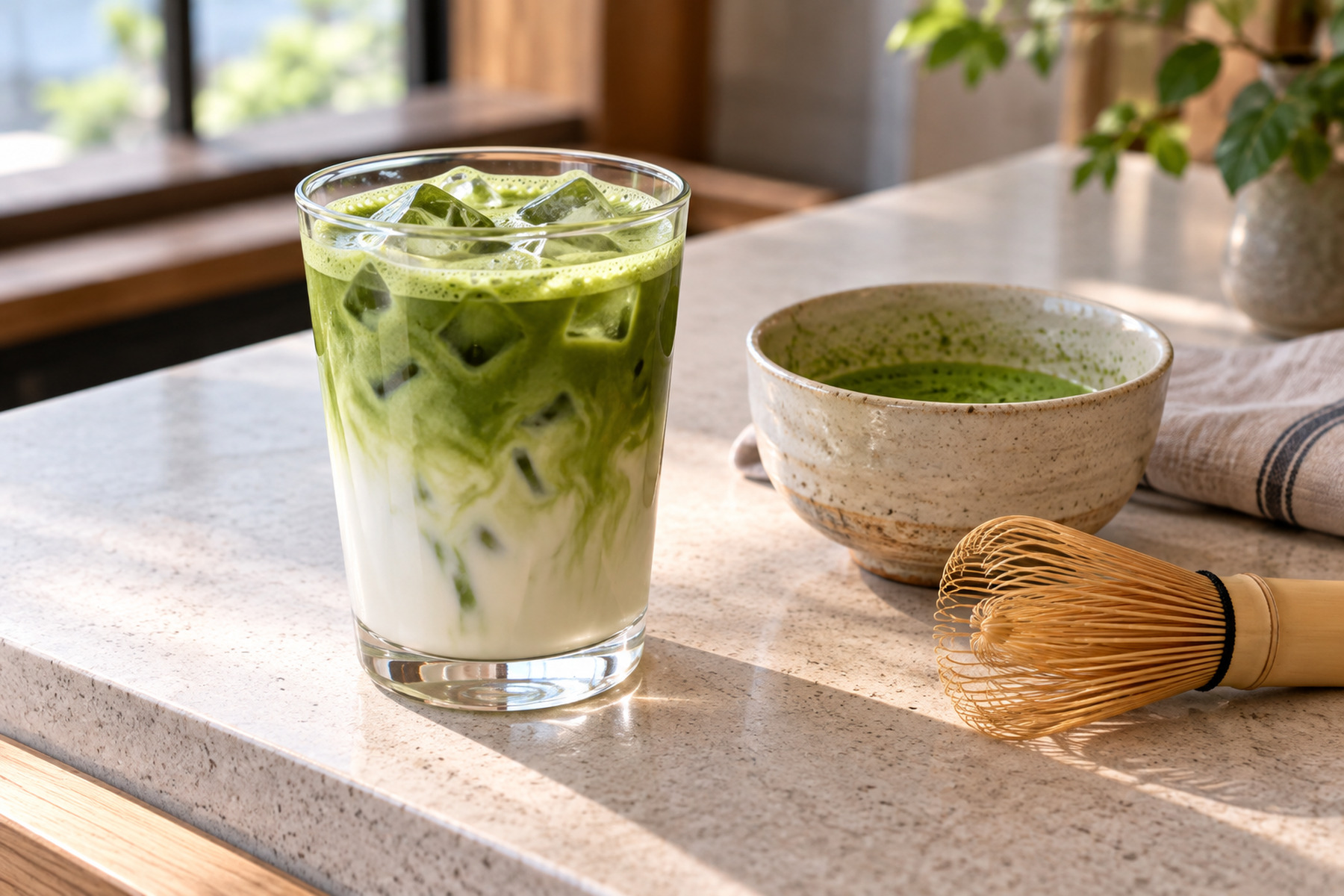
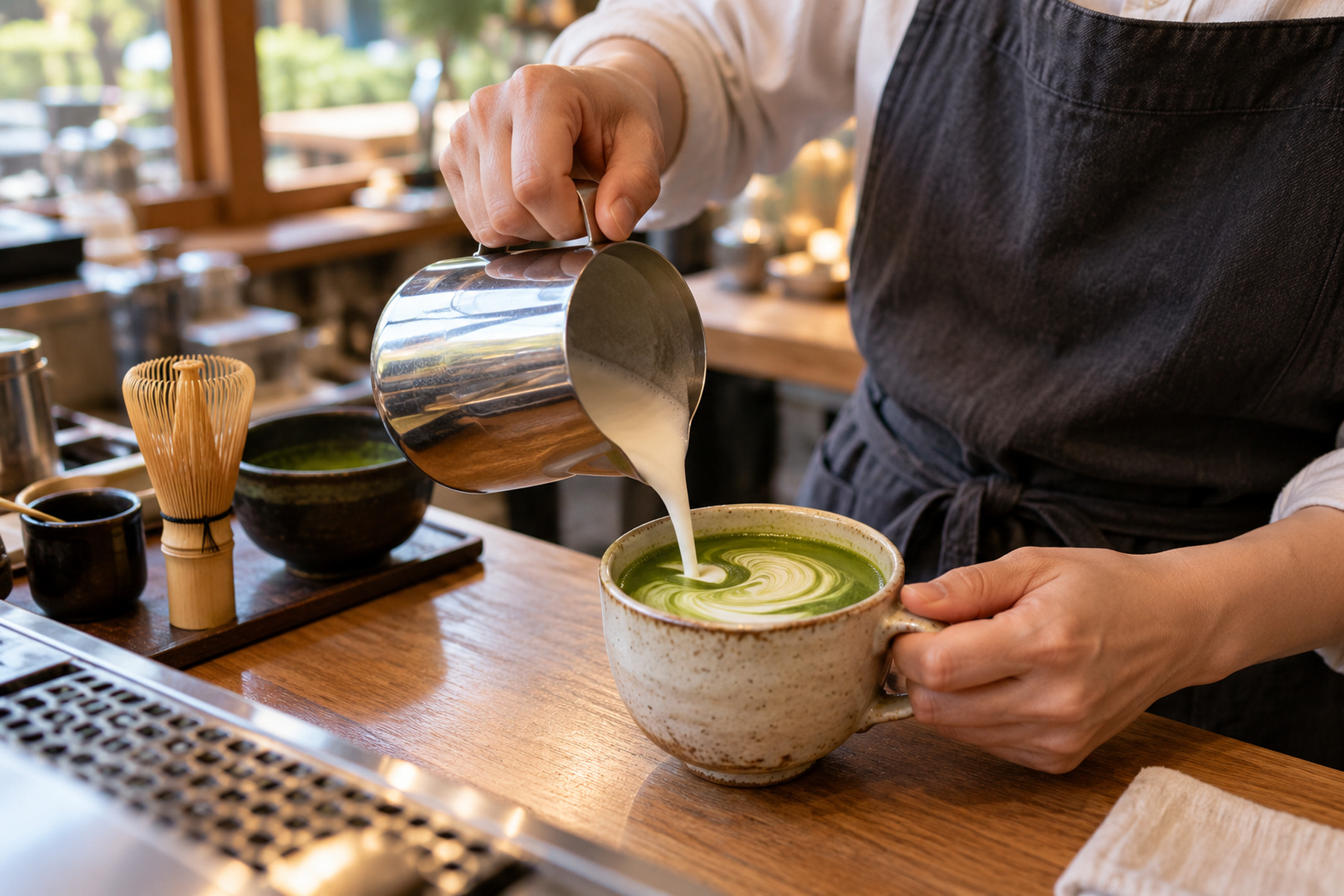
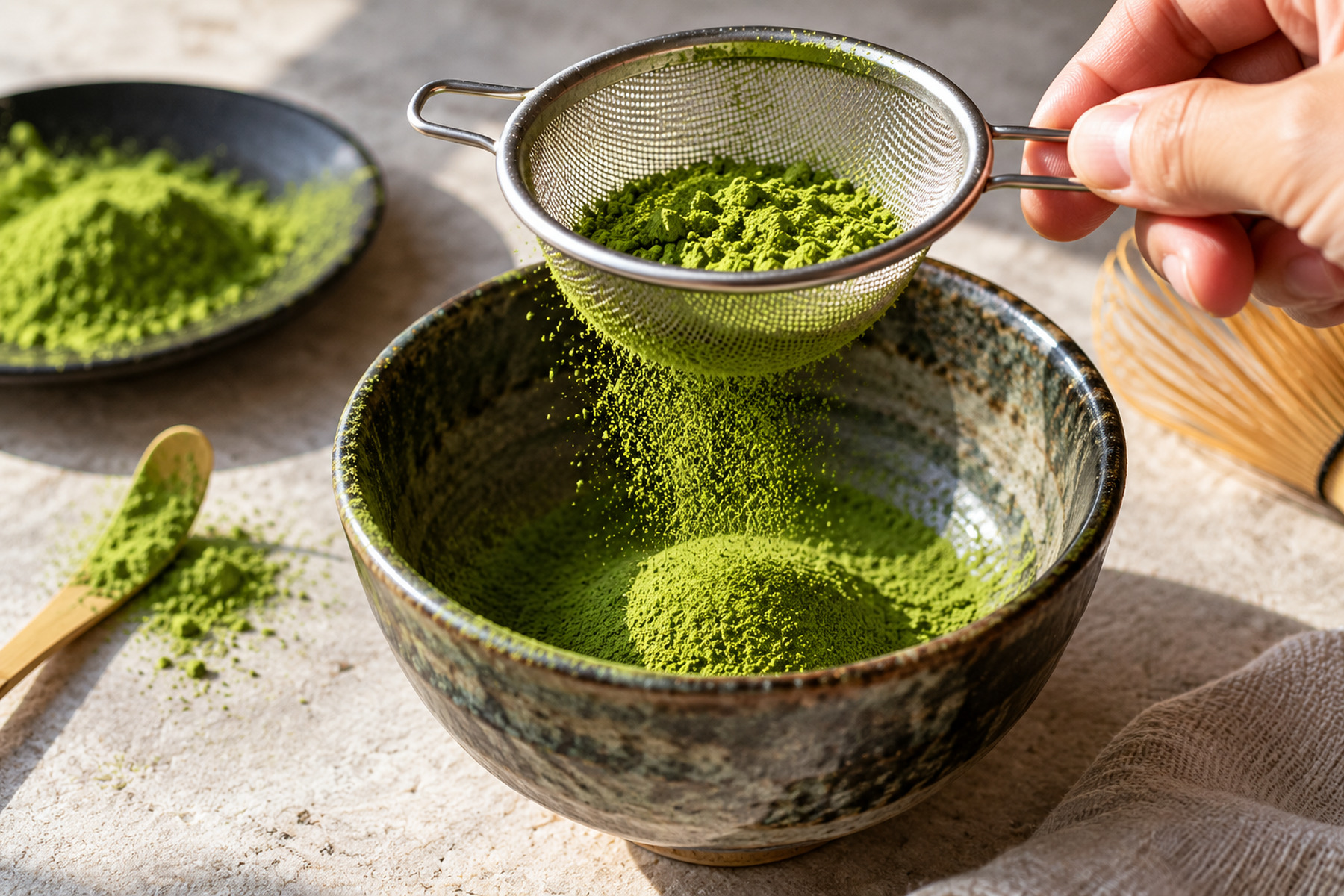
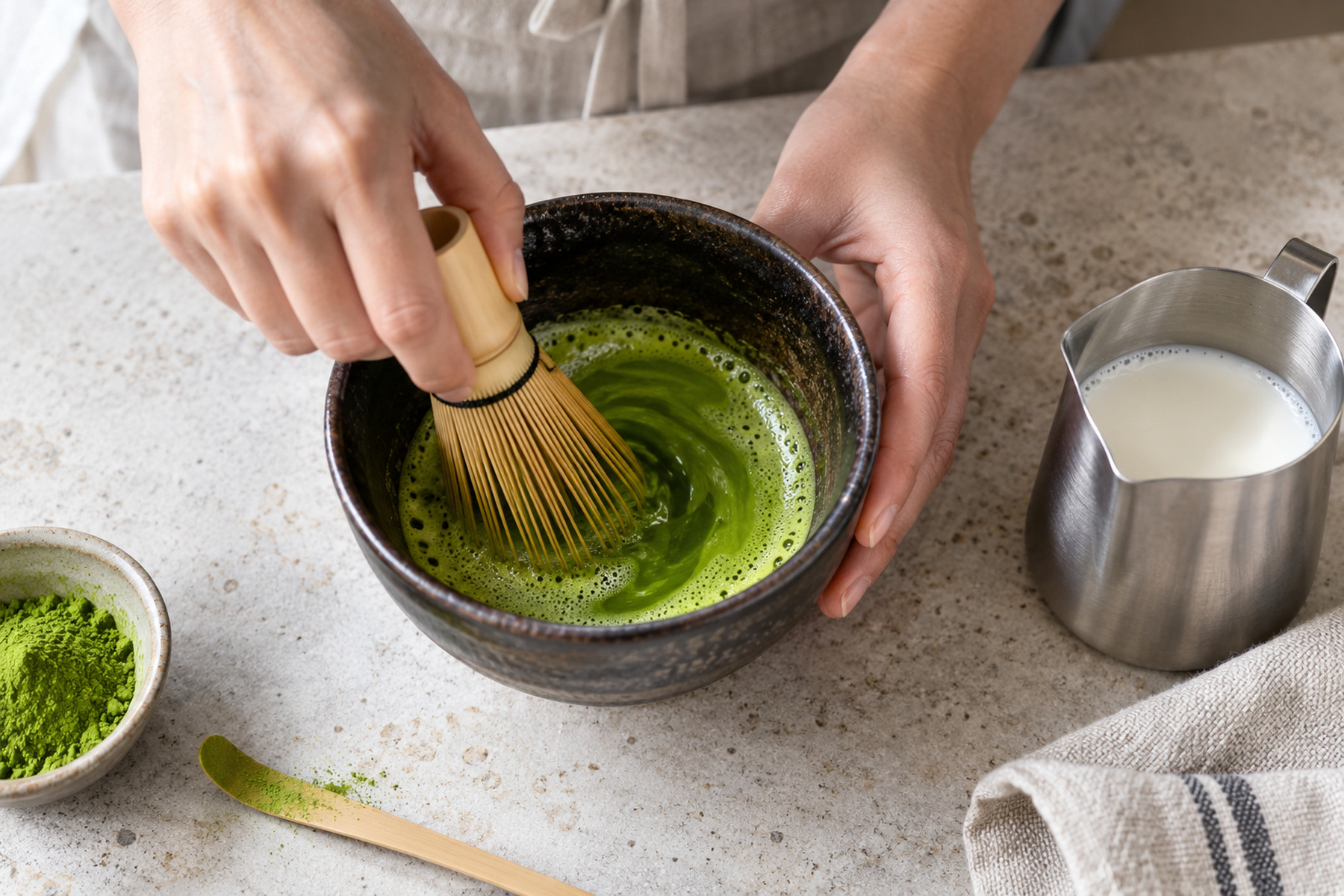
As a practical home approach, sift the matcha, make a smooth concentrated base first, then add milk. If the tea disappears, increase the matcha slightly or reduce the milk before jumping to a much more expensive powder.
- Sift before whisking to reduce dry clumps.
- Build a concentrated matcha base before adding the full amount of milk.
- Adjust matcha and milk in small steps so you can taste what changed.
- Heavy sweetener can make even good matcha seem weak.
Freshness, Storage and Buying From Japan
Matcha is sensitive to heat, humidity and odors. Makers commonly advise keeping it sealed and protected from those conditions, and some specifically recommend cool or refrigerated storage. A large bag is not a bargain if it loses aroma and color before you finish it.
When buying internationally, verify that the seller identifies the maker and product clearly, and check food-import, customs and shipping restrictions for your destination. Popular matcha can have unstable availability, so avoid suspicious listings that promise impossible stock or rely on vague packaging and no producer information.
- Keep the container tightly sealed between uses.
- Protect matcha from heat, humidity, strong odors and prolonged light.
- Choose a pack size that matches how often you make lattes.
- For overseas orders, verify seller identity, destination restrictions and shipping conditions.

FAQ
- Is ceremonial-grade matcha always best for lattes?
- No. For a latte, producer guidance, flavor intensity, freshness and how the matcha behaves with milk matter more than choosing by a broad grade label alone. A balanced medium-bodied matcha with some astringency can outperform a subtler, more expensive tea once milk is added.
- How much matcha should I use in a latte?
- Follow the producer's recipe first because different blends are designed differently. A useful approach is to make a concentrated matcha base, add milk, then increase the matcha slightly if the tea disappears instead of automatically adding more sweetener.
- Is Ippodo Ikuyo good for matcha lattes?
- Yes. Ippodo explicitly lists Ikuyo among its top latte recommendations and describes it as balanced, medium-bodied and pleasantly astringent.
- Can I use premium matcha with oat milk?
- Yes, but oat milk can add sweetness and cereal flavor. A matcha with enough body and astringency is often easier to taste clearly, so a fuller or medium-bodied blend may be more efficient than a very delicate one.
- How should I store matcha after opening?
- Keep it tightly sealed and protected from heat, humidity, light and strong odors. Follow the maker's storage instructions, especially if the product recommends refrigeration, and avoid buying more than you can use while it is fresh.
Official References
Final Thoughts
For most people making lattes at home, Ippodo Ikuyo is the safest starting point because its maker directly positions it for latte use and its balance gives milk something to work with. Move toward Sayaka when you want smoother umami, Matcha Standard when you want stronger green-tea presence, Aoarashi when you like a brisker edge, and Matsukaze when you want a more traditional tea-ceremony style base. The most expensive matcha is not automatically the best latte matcha; fresh tea, the right dose and a sensible milk ratio matter just as much.