Watoria Guide
Best Japanese Sweets Gift Boxes to Order from Japan
A practical guide to choosing Japanese sweets gift boxes for overseas delivery, from shelf-stable yokan and baked wagashi to senbei and seasonal assortments.
- Quick Answer
- What You’ll Learn
- Best-Fit Summary: Choose the Sweet by How Far It Has to Travel
- How to Choose a Japanese Sweets Gift Box
- Comparison Criteria That Matter More Than a Ranking
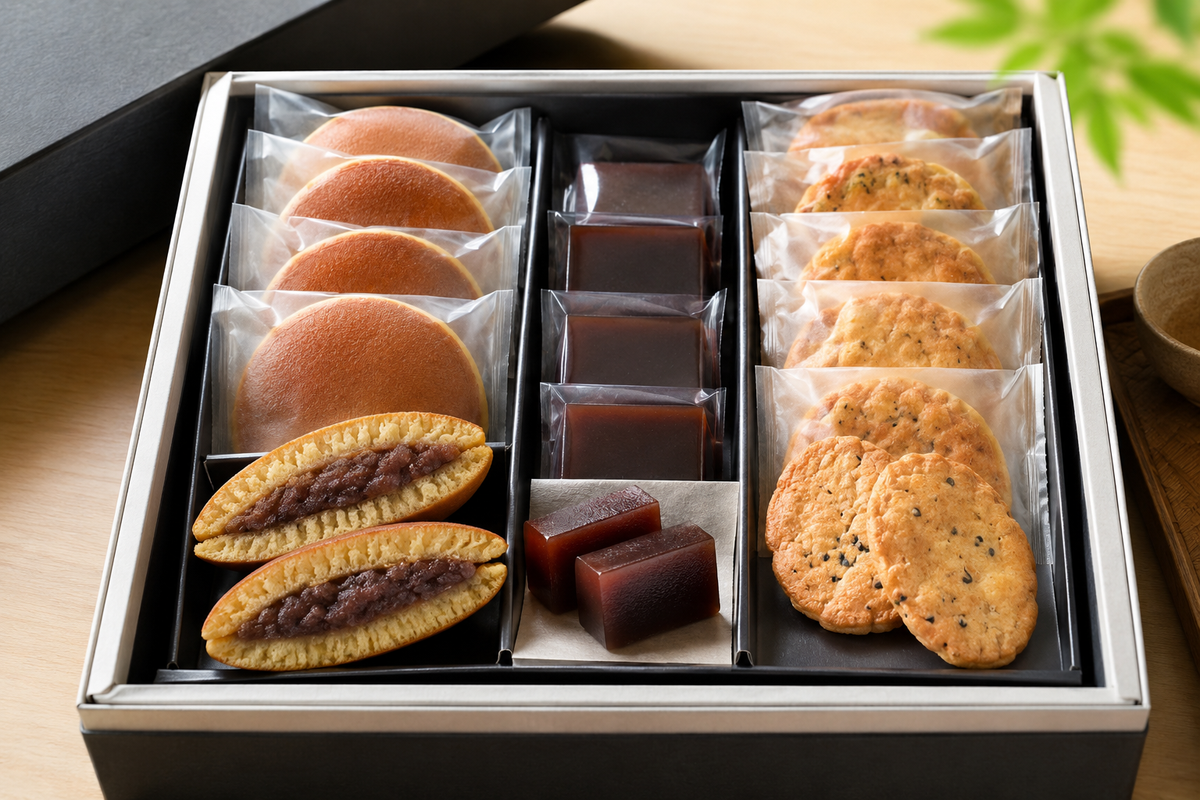
- Recommended Option Type: Yokan for Reliability and Elegant Gifting
- Recommended Option Type: Baked Wagashi and Dorayaki for a Softer Gift
- Recommended Option Type: Senbei for Crisp Texture and Lower Moisture
- Authenticity, Food Labels and Care
- Buying Route and International Shipping Check
- FAQ
- Related Guides
- Official References
- Shipping-Risk Matrix for Overseas Gifts
- Final Thoughts
- Keep exploring Japanese culture
- Continue to the best buying / booking route
- Continue exploring
- Discover more Japan
- Primary sources
Quick Answer
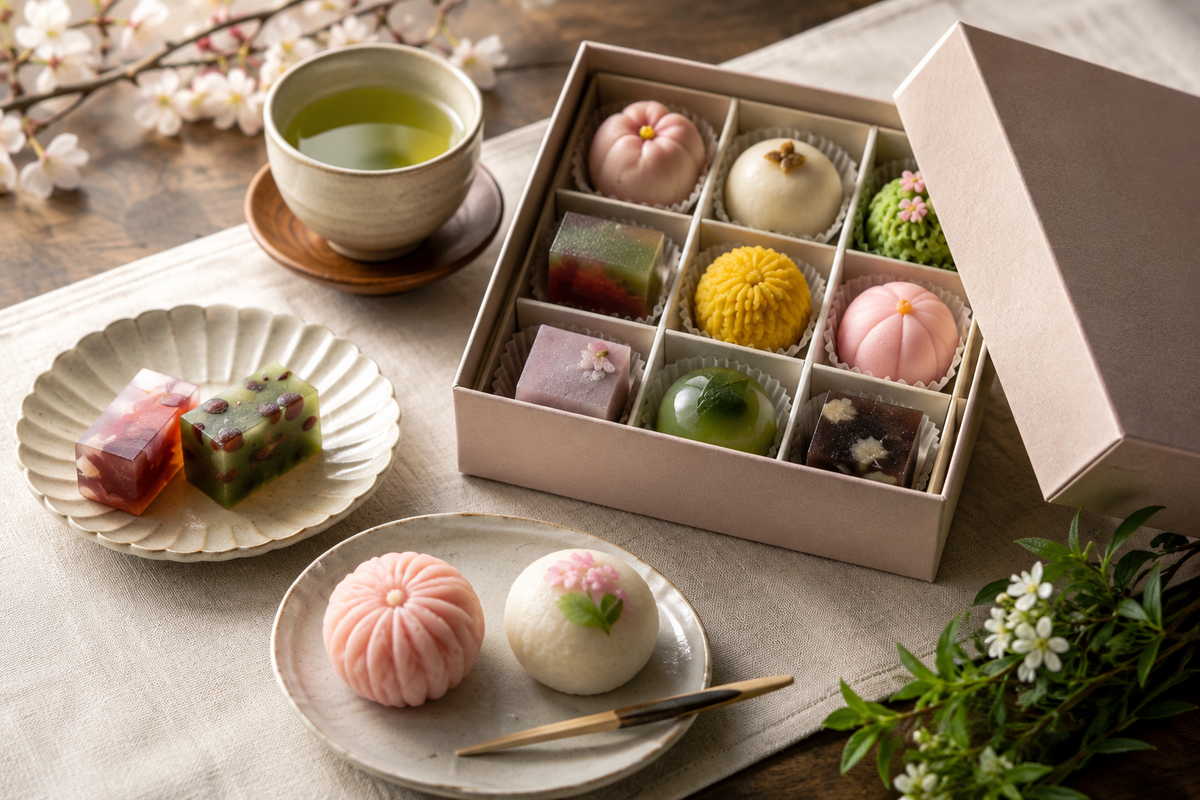
For overseas gifting, the safest Japanese sweets boxes are usually shelf-stable assortments with individually wrapped pieces, clear ingredient and allergen labels, and packaging strong enough for international transit. Yokan is a strong choice when longevity matters; baked sweets such as dorayaki or manju work well when the recipient prefers soft cakes; senbei is useful when you want a lighter, crisp gift. Fresh namagashi can be beautiful, but it is generally a poor international-shipping choice unless the seller explicitly supports the required temperature and delivery window.
What You’ll Learn
- Which Japanese sweets are best suited to international gift-box orders.
- How to compare shelf life, packaging, portioning and recipient preferences.
- How Japanese food labels and allergen information affect overseas buying.
- Why some traditional sweets travel much better than fresh wagashi.
- How to check seller shipping rules before choosing a gift box.
Best-Fit Summary: Choose the Sweet by How Far It Has to Travel
The best gift box is not simply the prettiest one. For an overseas order, the first decision is whether the sweets can realistically survive the shipping route. Traditional Japanese confectionery ranges from moist namagashi to dry higashi, baked cakes, rice crackers and firm yokan, so storage needs vary widely.
For most international buyers, individually wrapped shelf-stable sweets are the easiest starting point. They are simpler to share, easier to keep hygienic after opening, and less vulnerable to a minor delivery delay than highly perishable fresh sweets.
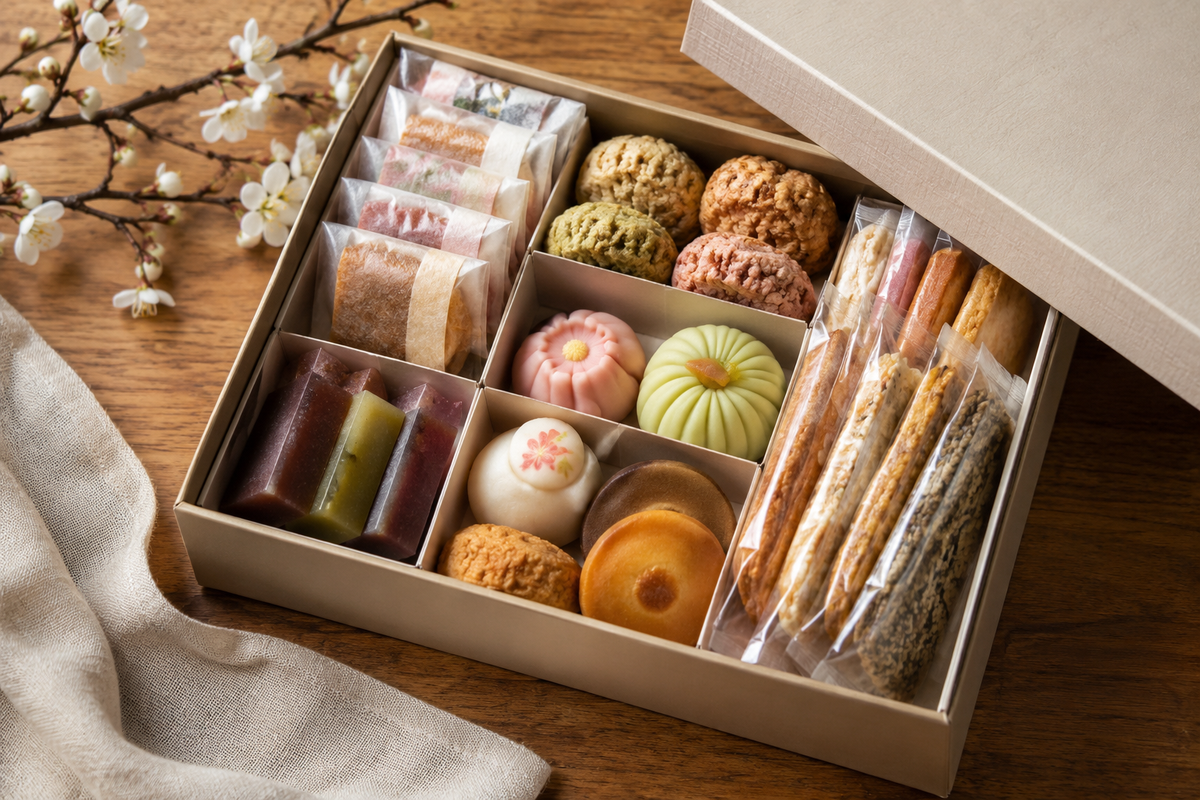
- Best for long transit: yokan and other clearly shelf-stable packaged sweets.
- Best for familiar cake texture: baked manju, dorayaki and castella-style assortments.
- Best for light, crisp gifting: senbei and other dry rice-cracker assortments.
- Best for visual seasonality: fresh or semi-fresh wagashi only when the delivery route explicitly supports them.
How to Choose a Japanese Sweets Gift Box
Start with the recipient rather than the box design. Think about texture, sweetness, tea pairing, dietary needs and how many people will share the gift. A mixed assortment is useful when you do not know the recipient's exact preference, while a focused box such as yokan or senbei is easier to evaluate for storage and ingredients.
Then look at practical details: individual wrapping, best-before information, storage instructions, total package weight and whether the seller actually ships food to the destination country.
- Recipient: soft cake, bean-paste sweets, crisp crackers or mixed assortment.
- Sharing: individually wrapped pieces are easier for offices and families.
- Storage: room-temperature products are usually simpler for cross-border delivery.
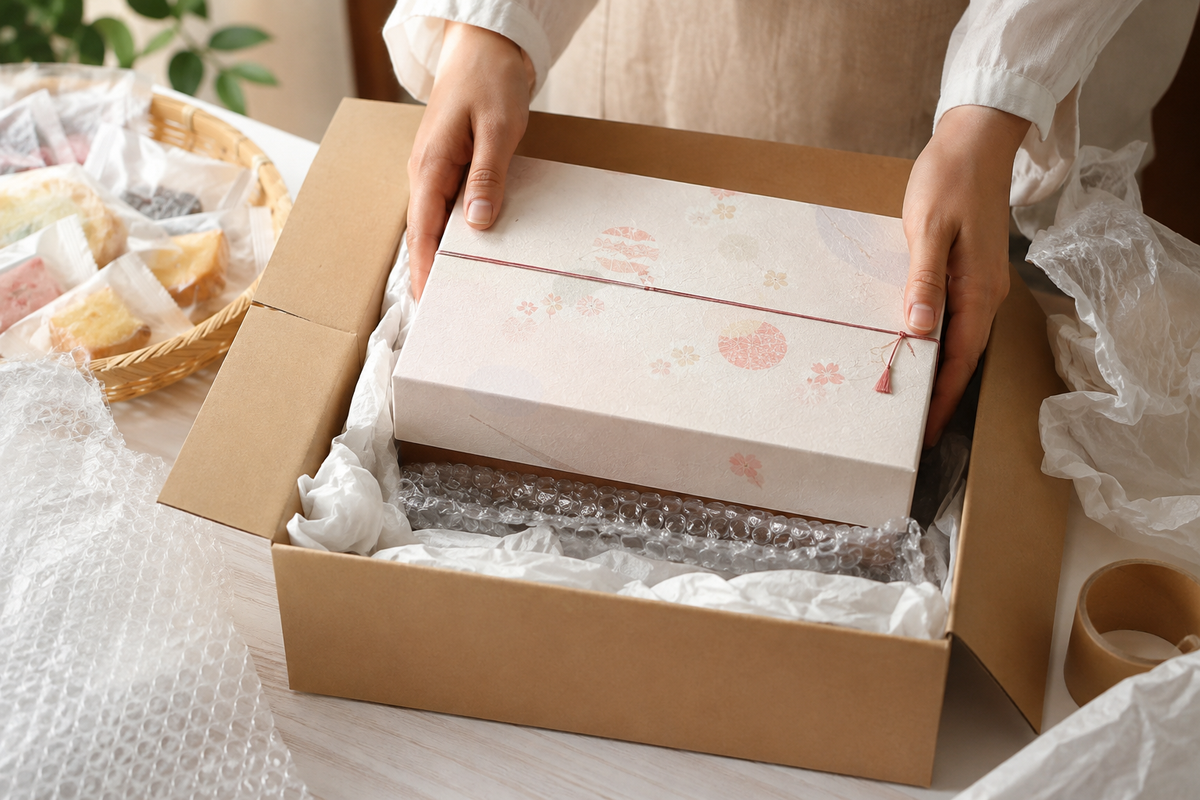
- Presentation: choose sturdy inner trays and a box that protects the sweets, not only decorative outer paper.
Comparison Criteria That Matter More Than a Ranking
Live prices, stock and seasonal gift sets change too quickly to treat a permanent ranking as reliable. A better comparison uses stable criteria: shelf life, fragility, individual wrapping, ingredient clarity, allergens, package size and international-shipping support.
Japan's Consumer Affairs Agency provides the framework for packaged-food labeling in Japan, including allergen and best-before information. Overseas buyers should remember that the label is primarily designed for the Japanese market, so it may not match the allergen-label conventions used in the recipient's country.
- Shelf life and storage temperature.
- Mandatory and recommended allergen information on the Japanese label.
- Individual wrapping and protection from crushing or moisture.
- Weight and box dimensions, which can materially affect international shipping.
- Whether the maker or seller states that the product can be shipped to the destination.
Recommended Option Type: Yokan for Reliability and Elegant Gifting
Yokan is one of the most practical traditional sweets for long-distance gifting because many commercial versions are designed for room-temperature storage and have substantially longer best-before periods than fresh wagashi. It is made primarily from sweet bean paste, sugar and agar, although recipes vary.
Toraya's official information illustrates why yokan works well as a gift category: the maker sells formal gift boxes and provides product-specific information on ingredients, allergens, size, weight and best-consumed period. Use that type of official product detail as your model when evaluating any maker.
- Good fit for recipients who enjoy azuki, brown sugar or matcha flavors.
- Easy to portion when sold as petite or individually wrapped pieces.
- Usually less fragile than cream-filled or highly decorative sweets.
- Check the exact product label because ingredients and allergen statements differ by maker.
Recommended Option Type: Baked Wagashi and Dorayaki for a Softer Gift
Baked wagashi such as manju and dorayaki are approachable for recipients who prefer a cake-like texture. Many gift assortments use bean paste, chestnut, fruit or matcha fillings, and makers often present them in individually wrapped pieces.
These sweets are generally more travel-friendly than fresh namagashi, but they are still softer than yokan or senbei. Check the best-before date and avoid choosing a box whose usable life is too close to the expected delivery window.
- Choose individual wrapping when the box will be shared.
- Check whether the filling contains milk, egg, wheat, nuts or other allergens.
- Allow a delivery-time buffer rather than planning around the final best-before day.
Recommended Option Type: Senbei for Crisp Texture and Lower Moisture
Senbei and related rice-cracker assortments are useful when the recipient prefers savory or lightly sweet flavors. Their lower moisture can make them practical for gifting, but crispness depends on good moisture barriers and intact packaging.
For international orders, look for sealed individual packs or well-protected inner bags. A beautiful rigid box is useful only if the crackers inside are also protected from humidity and breakage.
- Good fit for recipients who do not want a very sweet gift.
- Check soy, wheat, sesame and other seasoning-related allergens.
- Prioritize moisture-proof packaging and a rigid outer box.
Authenticity, Food Labels and Care
For packaged Japanese sweets, authenticity is less about a visual 'fake test' and more about buying through a traceable maker or retailer and checking that the package has normal food-label information. Useful evidence includes the manufacturer or seller identity, ingredients, allergens, best-before date and storage instructions.
The Consumer Affairs Agency notes that packaged foods sold in Japan use Japanese labeling requirements. If the recipient has a serious food allergy, do not infer safety from appearance or from an English marketing summary alone; verify the exact product information and contact the seller when necessary.
- Keep the product page and ingredient information until the gift has arrived.
- Do not remove outer packaging that contains allergen or storage information before gifting.
- Store the sweets according to the maker's instructions, especially after opening.
Buying Route and International Shipping Check
Before paying, confirm that the seller ships the exact food product to the destination country. Food-import rules differ by country, and Japan Post warns that destination-specific restrictions can make some food items nonmailable even when they are ordinary consumer goods in Japan.
A maker-direct store can be excellent when it explicitly supports overseas delivery. Marketplace listings can offer broader selection, but the shop's own shipping and storage policy still matters. Do not assume that every item from the same marketplace has the same export eligibility.
- Confirm destination eligibility before checkout.
- Check delivery method, tracking and estimated transit time against the product's best-before period.
- Avoid temperature-sensitive sweets unless the seller explicitly supports the required cold chain.
- Keep the order confirmation and product label information until delivery is complete.
FAQ
- What Japanese sweet is easiest to send overseas as a gift?
- Shelf-stable, individually wrapped products are usually the easiest. Yokan and dry senbei are strong starting points, while baked manju and dorayaki can also work when their best-before period comfortably exceeds the expected transit time.
- Are fresh wagashi good for international shipping?
- Usually not for ordinary international shipping. Fresh namagashi can have short usable periods and may require careful temperature control. Choose them only when the seller explicitly supports the necessary delivery conditions.
- How should I check allergens in Japanese sweets?
- Read the exact packaged-food label or the maker's product information. Japan has its own mandatory and recommended allergen-label framework, which may differ from the recipient country's system.
- Is a large assortment always better as a gift?
- No. A smaller box with individually wrapped pieces and a clear best-before period can be better than a large assortment if the recipient is one person or if international shipping time is uncertain.
- Should I choose the cheapest international shipping option?
- Not automatically. Compare the product's usable life, fragility and storage needs with the delivery estimate. A slower route can be poor value if it puts freshness or gift condition at risk.
Official References
Shipping-Risk Matrix for Overseas Gifts
Lowest shipping risk: sealed yokan, dry higashi and sturdy individually wrapped crackers. These are usually the easiest gifts when transit time is uncertain.
Moderate shipping risk: baked manju, dorayaki and soft cakes. They can travel well, but freshness windows are shorter and warm-weather delivery can reduce quality.
Highest shipping risk: fresh namagashi, cream-filled sweets and products requiring refrigeration. Only choose these when the seller explicitly supports the destination, temperature control and delivery window.
For international gifting, Watoria recommends checking five things before checkout: best-before date, individual wrapping, allergen labeling, package rigidity and the seller’s destination restrictions. A premium-looking box is not a good overseas gift if it arrives stale, crushed or outside its safe storage window.
If the shop only sells domestically in Japan, a proxy service such as Remambo may provide a buying and forwarding route. Confirm food-shipping eligibility, destination import rules and total cost before placing the order.
Final Thoughts
For an overseas gift, the best Japanese sweets box is the one that still looks and tastes intentional after the journey. Choose the sweet type first, then verify shelf life, allergens, individual wrapping, package strength and destination eligibility. Yokan is the safest all-round traditional option for long transit, baked wagashi gives a softer and more familiar texture, and senbei is a practical crisp alternative.