Watoria Guide
International Shipping from Japan: EMS, Courier, Surface Mail and Tracking
Shipping from Japan is not a single choice between fast and cheap. The right route depends on parcel size, destination, tracking needs, restrictions, customs risk and how much delay you can tolerate.
- Quick Answer
- What You’ll Learn
- Choose the route from the parcel backward, not from the carrier forward
- Japan Post in 2026: the service names that actually matter
- When a private courier is the better fit
- Build the true landed cost before you commit
- Customs and restricted items can override every shipping preference
- Tracking is useful only if you understand the handoff
- Common mistakes that cause delays, returns or extra cost
- A practical shipping checklist before the parcel leaves Japan
- FAQ
- Related Guides
- Sources & References
- Final Thoughts
- Keep exploring Japanese culture
- Continue to the best buying / booking route
- Discover more Japan
- Primary sources
Quick Answer
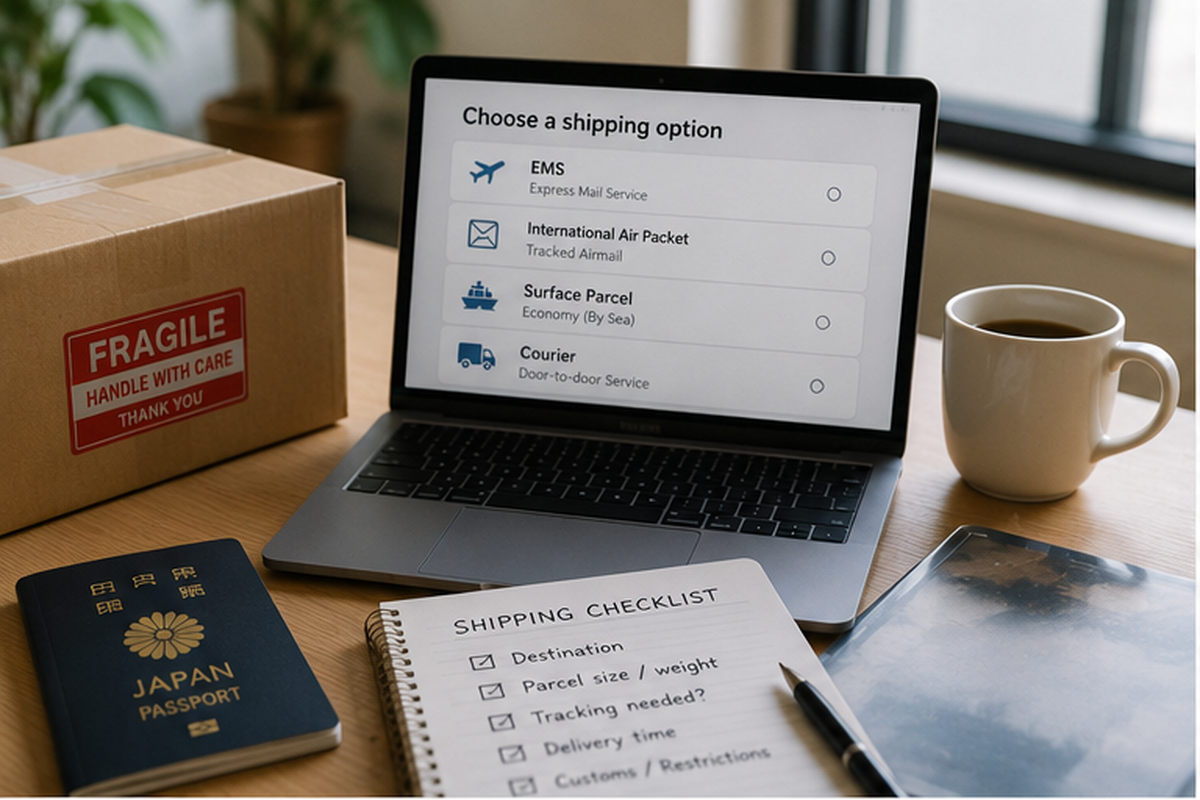
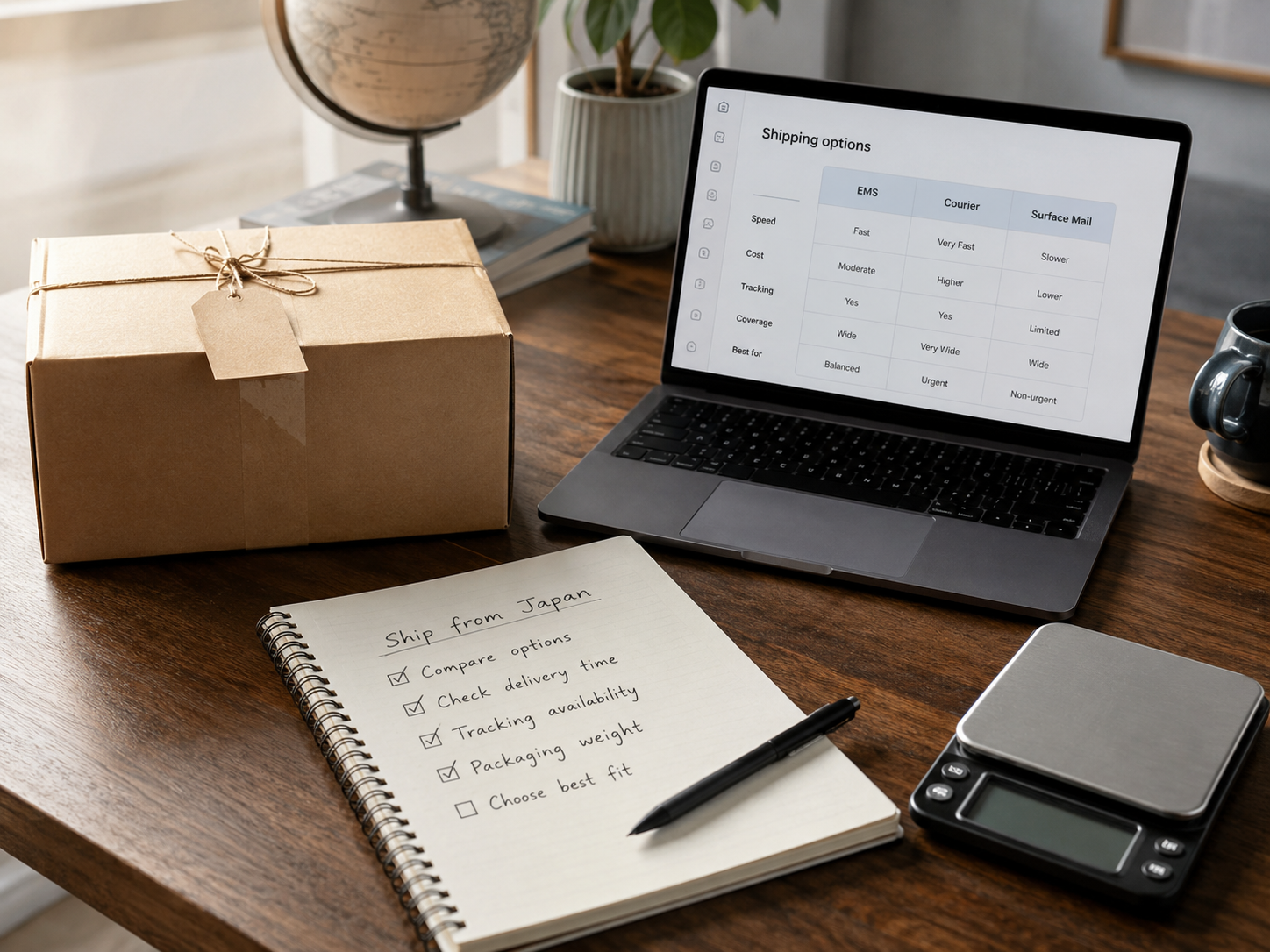
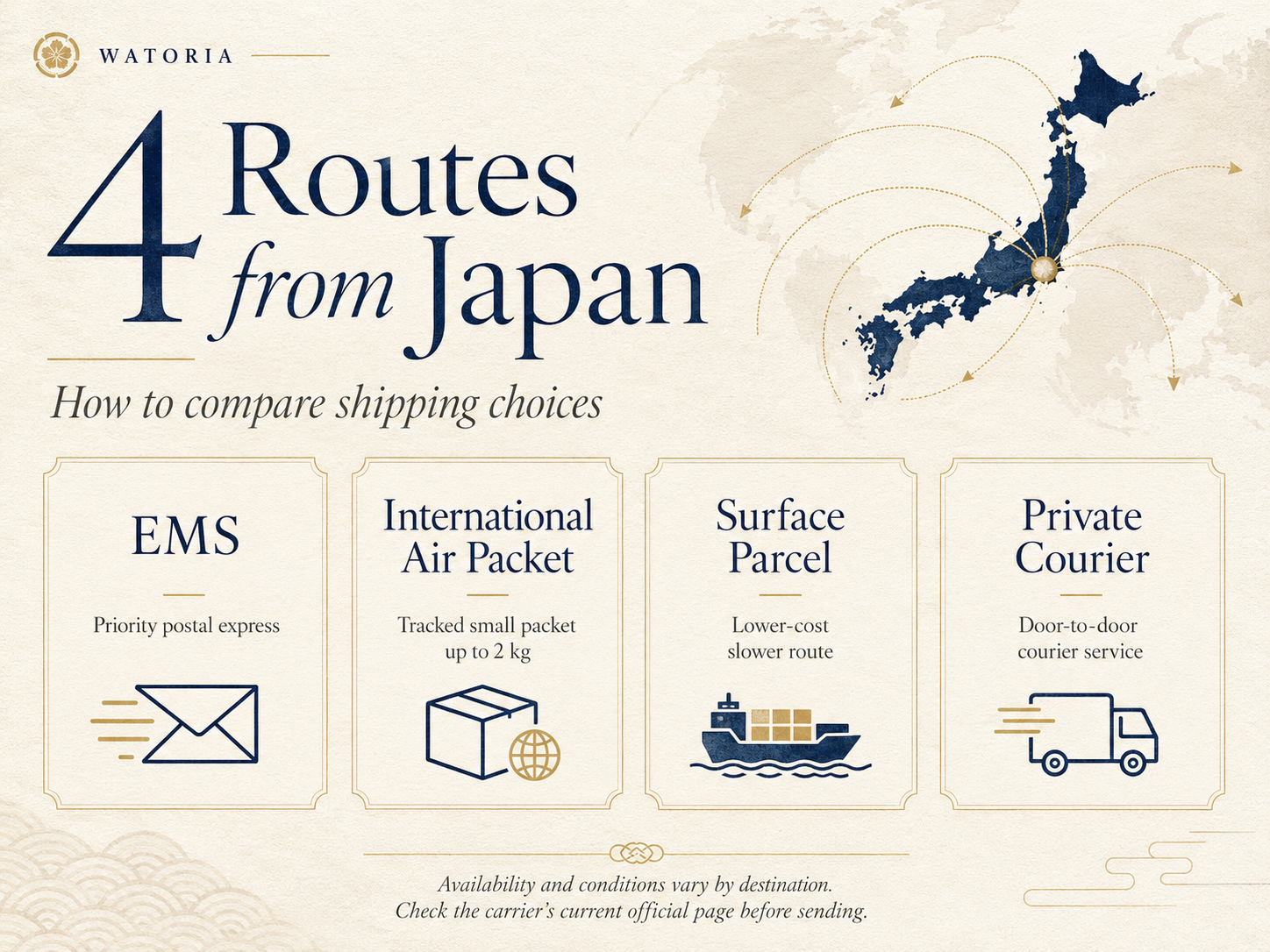
For international shipping from Japan, start with the parcel and destination rather than choosing a carrier by habit. EMS is Japan Post’s priority express option; International Air Packet is the tracked airmail service for small packets up to 2 kg; ordinary Small Packets are not recorded; International Parcel Post covers larger parcels with air or surface options; and private couriers such as DHL Express or Yamato International TA-Q-BIN can be useful when door-to-door handling, commercial documentation or route-specific service matters more than the lowest postage. Availability, delivery time, taxes and prohibited-item rules can change by country, so confirm the current official service page before the parcel is handed over.
What You’ll Learn
- How to choose among EMS, International Air Packet, Small Packets, surface parcel services and private couriers
- What changed in Japan Post’s small-packet services in 2026 and why old ePacket advice can now be misleading
- How to separate product price, domestic shipping, forwarding or service fees, international freight, taxes and clearance charges
- Which export, customs and dangerous-goods checks matter before a parcel leaves Japan
- How tracking, handoffs and evidence differ between postal and courier shipments
- Which common mistakes cause delays, returns, added fees or failed delivery
Choose the route from the parcel backward, not from the carrier forward
The broad buying journey is simple: a seller or sender in Japan prepares the goods, the parcel moves through a domestic handoff, export and carrier acceptance, international transport, destination-country customs, and finally local delivery. The shipping decision sits in the middle of that chain. It should be made only after you know what is being sent, its packed size and weight, the destination, the declared value, how urgently it is needed and whether end-to-end tracking or compensation matters.
This article stays focused on that shipping decision. For the broader process of choosing a Japanese seller, paying safely and understanding the entire purchase flow, use Watoria’s separate buying guide rather than treating shipping as the whole transaction.
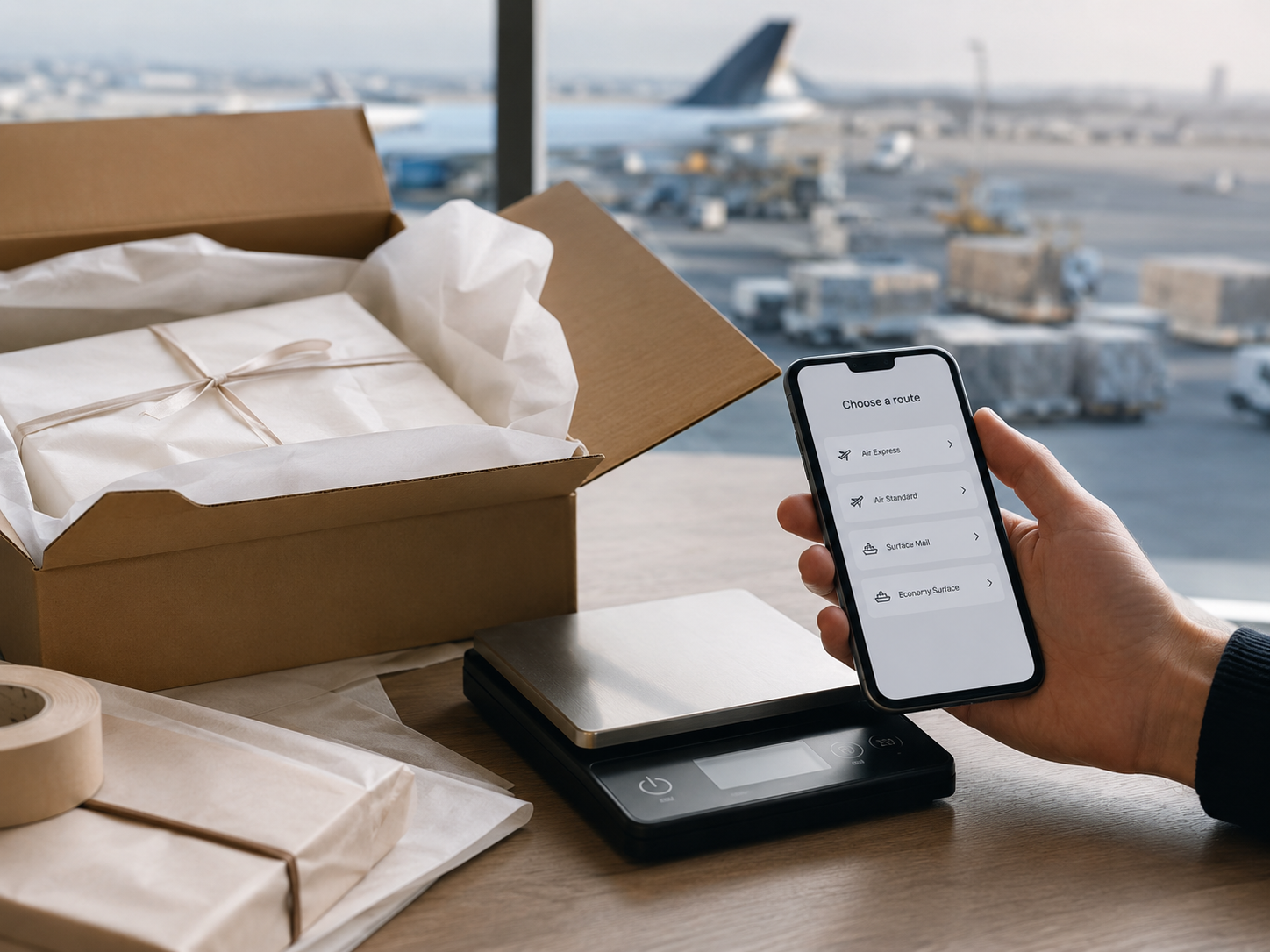
- If speed and postal simplicity matter most, check EMS first.
- If the item is small, under 2 kg and tracking matters, check International Air Packet.
- If cost matters more than tracking, an ordinary Small Packet may fit some destinations, but it is not a recorded service.
- If the item is larger and time is flexible, compare International Parcel Post air and surface options.
- If detailed courier handling, route-specific commercial support or fast door-to-door delivery matters most, compare private courier services.
- Before paying for any route, confirm that the service is currently accepted for the destination and that the contents are allowed.
Japan Post in 2026: the service names that actually matter
Older buying guides can be confusing because Japan Post changed its small-packet lineup. Effective June 1, 2026, International ePacket Light was renamed International Air Packet. Japan Post describes International Air Packet as a tracked airmail service for goods in small packets up to 2 kg, with delivery to the recipient’s mailbox in normal cases. Japan Post also states that compensation is not provided for International Air Packet, so tracking and compensation should not be treated as the same thing.
Ordinary Small Packets remain a lower-cost option for items up to 2 kg, but Japan Post treats them as regular mail items rather than recorded items. The handling of Small Packets as registered mail ended on December 31, 2025. That makes old advice telling readers to simply add registration to a Small Packet obsolete; if a current tracked small-packet service is needed, International Air Packet is the relevant Japan Post product to examine.
For larger parcels, International Parcel Post remains the standard postal parcel service, with transport methods selected according to destination and service availability. EMS remains the priority express postal service. Surface transport is the slowest choice and is appropriate only when the destination accepts it and the buyer or sender can tolerate a long, less predictable transit window.
- EMS: priority postal express service with tracking and a compensation system.
- International Air Packet: tracked airmail for small packets up to 2 kg; no compensation.
- Small Packet: up to 2 kg; ordinary service is not recorded, and registered Small Packet handling has ended.
- International Parcel Post: larger-parcel postal service with air or surface options where available.
- Service availability is destination-specific and can be suspended or delayed, so the live Japan Post availability page outranks old screenshots or forum posts.
When a private courier is the better fit
Private couriers are not automatically better than Japan Post, but they can be a stronger fit when the shipment needs a tightly managed door-to-door network, detailed commercial paperwork, fast route planning or carrier-specific customs services. DHL Express’s 2026 Japan guide lists DHL Express Worldwide as its core international export product and provides full track-and-trace visibility. DHL also calculates chargeable weight using shipment dimensions when volumetric weight exceeds scale weight, so a large lightweight box can cost much more than its physical weight suggests.
Yamato International TA-Q-BIN is another consumer-facing international parcel option from Japan. Yamato says rates, service areas and delivery times depend on the destination, and its current site warns that personal parcels cannot be accepted to a number of countries when either the shipper or receiver is a private individual. Yamato also requires an invoice for parcels and directs users to UPS tracking for the overseas leg of International TA-Q-BIN. This is why a courier should be checked by exact destination and shipment type rather than treated as universally available.
The practical comparison is therefore not 'post versus courier' in the abstract. Compare the exact service that accepts your parcel today, then compare its tracking, compensation, dimensional-weight rules, customs handling, surcharges and return process.
- Courier quotes may include or later add fuel, demand, remote-area, oversized-piece or customs-related charges depending on the service and shipment.
- Dimensional or volumetric weight can make a bulky parcel expensive even when it is light.
- Courier service areas and personal-shipment rules can differ by country.
- Postal services may be simpler or cheaper for many ordinary parcels, while couriers can provide more detailed milestone tracking and commercial support.
Build the true landed cost before you commit
The shipping price shown at checkout is only one layer of the total cost. A reliable estimate separates every charge so that a cheap-looking shipping method does not hide fees elsewhere in the transaction.
For postal services, use Japan Post’s current rate tools and destination zones. For couriers, use the carrier’s current quote or rate guide because dimensional weight and surcharges can materially change the result. Do not copy a price example from an old article and assume it still applies.
Destination-country taxes are also separate from the Japanese postage or courier charge. Who pays them can depend on the seller’s terms, the carrier arrangement and the destination’s tax rules. If a seller or forwarding service states that duties are prepaid, verify exactly what is included; otherwise, assume that import VAT, sales tax, duty, brokerage or clearance charges may still be collected on arrival.
- Product price paid to the seller.
- Domestic shipping inside Japan, if the item must move to a warehouse, proxy or forwarding address.
- Proxy, forwarding, consolidation or service fees, if a third party is involved.
- International postage or courier freight.
- Insurance, compensation upgrades or optional carrier services where available.
- Destination-country duty, VAT, sales tax and customs or carrier clearance charges.
- Possible return, storage, redelivery or address-correction charges if the shipment cannot be delivered.
Customs and restricted items can override every shipping preference
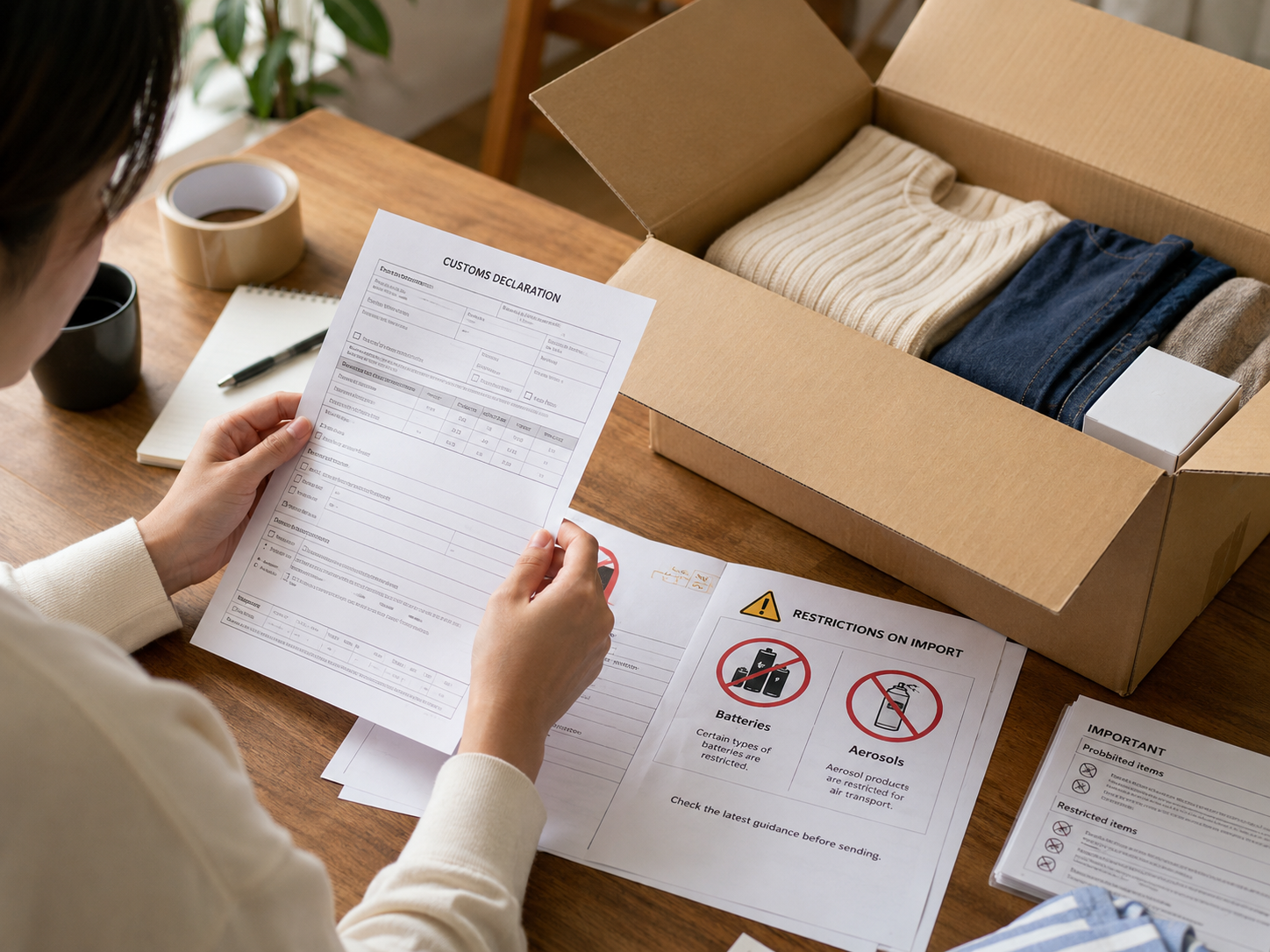
A service can be fast, affordable and available to the destination and still be unusable because of the contents. Japan Post publishes universal nonmailable categories and destination-specific restrictions. Its current guidance highlights dangerous goods such as certain aerosols, perfumes, flammable liquids and power banks, while lithium batteries are allowed only under defined conditions. Items can be returned before export if X-ray inspection finds prohibited contents.
Japan Customs adds another layer. Certain goods are prohibited for export under Japanese law, while other goods require permissions or prior customs checks under separate laws. For ordinary international mail with contents valued under 200,000 yen, Japan Customs says that items not subject to special regulation can be posted with the required customs declaration. If the total value of the contents exceeds 200,000 yen, an export declaration is required; the sender can ask a customs broker such as Japan Post to handle the procedure for a fee or file the declaration directly.
The destination country then applies its own import rules. Food, cosmetics, medicines, plant or animal products, batteries and high-value goods can trigger additional restrictions or documentation. The sender therefore has to pass two tests: can the item legally leave Japan, and can it legally enter the destination?
- Do not under-declare the contents or value to reduce tax.
- Use specific, accurate item descriptions rather than vague labels such as 'gift' or 'parts'.
- Check batteries, liquids, aerosols, perfumes and cosmetics before choosing the service.
- For regulated or high-value goods, contact the carrier or customs before the parcel is handed over.
- Keep the invoice or other price evidence that supports the customs declaration.
Tracking is useful only if you understand the handoff
Tracking does not mean every service behaves the same way. EMS and International Air Packet provide Japan Post tracking, but International Air Packet does not include compensation. Ordinary Small Packets are not recorded. A courier normally provides more frequent milestone scans, but customs holds, partner handoffs and remote-area delivery can still create gaps or delays.
For Yamato International TA-Q-BIN, Yamato’s English FAQ tells customers to use the Yamato number in Japan and the UPS tracking number for delivery status outside Japan. Postal shipments can also become easier to follow once the destination postal operator begins scanning the item. When a scan appears to stop, first identify which operator currently has responsibility before assuming the parcel is lost.
Evidence matters most when the shipment actually goes wrong. Keep a small case file from the day the order ships so that a claim does not depend on reconstructing information weeks later.
- Order confirmation and payment record.
- Seller or sender packing photos for fragile or high-value goods when available.
- Shipping receipt and service name.
- Tracking number or numbers used before and after a carrier handoff.
- Customs declaration or invoice copy where available.
- Screenshots of important tracking milestones if a delay develops.
- Photos of the outer box, inner packaging and item condition before disposal if damage is discovered.
Common mistakes that cause delays, returns or extra cost
Most avoidable shipping problems come from decisions made before the parcel enters the international network. Choosing a route from an old price table, treating tracking as insurance, ignoring dimensional weight or assuming a battery is harmless because it is installed in a product can all create surprises.
Another frequent mistake is allowing the seller, proxy or friend in Japan to choose a service without confirming what the buyer actually needs. The cheapest option may have weak tracking; the fastest option may be disproportionately expensive; a courier may not accept the route or personal shipment; and a postal service can be temporarily suspended.
The strongest approach is to agree in advance on the service, maximum budget, declared value, tracking requirement and fallback plan. If the preferred service becomes unavailable, the sender then knows whether to wait, switch to another route or cancel rather than improvising after the parcel is packed.
- Using pre-2026 ePacket or registered Small Packet advice without checking the current Japan Post product names.
- Assuming a tracked service automatically includes full loss or damage compensation.
- Ignoring volumetric weight on courier shipments.
- Failing to check current destination service alerts before purchase or dispatch.
- Using vague or inaccurate customs descriptions.
- Shipping batteries, sprays, perfume, liquids or other restricted contents without checking the exact rule.
- Discarding receipts, invoices, packaging or tracking evidence before delivery is safely completed.
A practical shipping checklist before the parcel leaves Japan
Use this sequence once the item and seller are fixed. It keeps the decision focused on facts that can be verified before money and time are committed to the international leg.
If the transaction involves a marketplace, proxy or forwarding service, also read that provider’s own fee, consolidation, insurance, prohibited-item and return rules. Carrier rules govern transport, but the service provider’s contract can determine what happens before handoff and after a failed delivery.
- 1. Record the exact contents, quantity, value, packed dimensions, weight and any batteries, liquids or regulated materials.
- 2. Check whether the contents can leave Japan and enter the destination country.
- 3. Check the live destination availability page for Japan Post or the courier’s current service area and alerts.
- 4. Compare EMS, International Air Packet, Small Packet or International Parcel options with a private courier only after confirming eligibility.
- 5. Calculate the total landed cost, not just the international freight line.
- 6. Decide the minimum tracking and compensation level you need for the item’s value and replaceability.
- 7. Prepare accurate online labels, invoices and customs descriptions. Japan Post requires its online International Mail My Page workflow for international shipping labels rather than handwritten goods labels.
- 8. Save the receipt, declared-value evidence and tracking information immediately after acceptance.
- 9. Tell the recipient what taxes, customs contact or carrier messages may require action after arrival.
- 10. If the route is suspended or the parcel is refused, use the seller, proxy or carrier’s documented return process rather than creating an unrecorded workaround.
FAQ
- What is the difference between EMS and International Air Packet from Japan?
- EMS is Japan Post’s priority express international mail service and includes tracking plus a compensation system. International Air Packet is a tracked airmail service for goods in small packets up to 2 kg, but Japan Post states that compensation is not provided. The better choice depends on destination availability, parcel size, urgency and the value of the contents.
- Is a Japan Post Small Packet tracked in 2026?
- An ordinary Small Packet is not a recorded service. Japan Post ended the handling of Small Packets as registered mail on December 31, 2025. If you need a current tracked Japan Post option for a small packet up to 2 kg, check International Air Packet, which replaced the former International ePacket Light name on June 1, 2026.
- Is DHL or Yamato always faster than EMS?
- No single carrier is always fastest on every route. DHL Express offers time-definite products on eligible lanes, while Yamato International TA-Q-BIN and EMS have destination-specific service conditions and delivery estimates. Customs processing, local delivery and current route conditions can change the result, so compare the exact destination using the carrier’s official current tools.
- Can I ship electronics with lithium batteries from Japan?
- Sometimes, but only when the battery, device, packaging and destination meet the carrier’s rules. Japan Post allows certain lithium batteries installed in equipment under defined conditions, while power banks and other configurations can be prohibited. Courier dangerous-goods rules can differ, so check the exact battery specification and destination before shipping.
- What changes if the contents are worth more than 200,000 yen?
- Japan Customs states that when the total value of the contents exceeds 200,000 yen, an export declaration is required for international mail. The sender can ask a customs broker such as Japan Post to complete the export clearance procedure for a fee or file the export declaration directly with Customs. Regulated goods can require additional procedures regardless of value.
- What should I do if tracking stops after the parcel leaves Japan?
- First identify which operator currently has the parcel. Postal items may begin showing useful scans on the destination postal operator’s system after handoff. Yamato International TA-Q-BIN uses a Yamato tracking number in Japan and Yamato’s FAQ directs customers to the UPS tracking number for the overseas leg. If the item exceeds the carrier’s normal inquiry window or a status indicates a hold or return, contact the responsible carrier with the receipt and tracking evidence.
Sources & References
- Japan Post – Service availability by country for international mail
- Japan Post – International mail products and services
- Japan Post – International Air Packet
- Japan Post – Small Packets
- Japan Post – International mail rate schedule
- Japan Post – Nonmailable articles in international mail
- Japan Customs – Procedures for sending postal articles overseas
- Japan Customs – Articles prohibited for export
- DHL Express – Service & Rate Guide 2026: Japan
- Yamato Transport – International TA-Q-BIN
Final Thoughts
The safest way to ship from Japan is to treat the carrier choice as the last step of a short verification process, not the first. Confirm the contents, destination, current service availability, customs rules, true landed cost and the level of tracking or compensation you actually need. That approach also protects you from outdated advice: in 2026, Japan Post’s small-packet services changed, route availability continues to move, and private couriers apply their own destination, dimensional-weight and documentation rules. Use official carrier and customs pages for the live decision, keep evidence from acceptance through delivery, and choose the route that matches the parcel’s real risk rather than simply the lowest headline price.