Watoria Guide
Japanese Customs, Import Duties and Taxes: What Overseas Buyers Should Expect
Buying from Japan can involve more than the item price and international shipping. Learn how customs declarations, import duties, VAT or GST, carrier fees and delivery terms can affect the final landed cost—and what to check before you place an overseas order.
- Quick Answer
- What You’ll Learn
- Why Customs Costs Can Appear After Checkout
- Decision Path: Identify Who Collects What and When
- How the Total Landed Cost Is Built
- Customs Declarations, HS Codes and Evidence
- Destination-Country Duties, VAT/GST and Handling Charges
- 2026 Example: EU Low-Value E-Commerce Imports
- Prepaid Duties vs Recipient-Paid Duties
- Shipping, Customs and Return Risks
- Step-by-Step Checklist Before You Buy
- Common Mistakes to Avoid
- FAQ
- Related Guides
- Official References
- Final Thoughts
- Keep exploring Japanese culture
- Continue to the best buying / booking route
- Discover more Japan
- Primary sources
Quick Answer
When you buy a product from Japan for delivery overseas, the Japanese seller or shipper handles the export side, but the import rules that usually determine duty, VAT/GST and customs clearance costs are set by the destination country. Your real total can therefore include the product price, domestic shipping in Japan, service or proxy fees, international shipping, destination-country import taxes or duties, and carrier or postal clearance charges. Do not assume that a low item price means no customs bill. Before ordering, check who is responsible for duties and taxes, how the shipment will be declared, whether the product is restricted, and which documents you should keep.
What You’ll Learn
- Which costs can appear between a Japanese seller and final overseas delivery
- Why customs value, HS classification and accurate declarations matter
- How prepaid-duty and recipient-paid shipping arrangements change the checkout experience
- What can cause customs delays, extra fees, returns or refused delivery
- How to estimate landed cost without relying on a misleading single threshold
Why Customs Costs Can Appear After Checkout
An overseas purchase from Japan passes through two different regulatory sides: export from Japan and import into the destination country. Japan Customs requires exporters to declare the nature, quantity and value of exported goods and to provide supporting documents when required. For the buyer, however, the surprise bill usually appears on the import side, because the destination customs authority decides whether the parcel is taxable, how the goods are classified and valued, and whether any import restrictions apply.
This is why a Japanese store's checkout total is not always the final amount paid to receive the parcel. A seller may quote only the merchandise and transport charges, while the destination country's duty, VAT or GST and a carrier clearance fee are collected later. Other sellers or carriers may arrange duties and taxes to be paid in advance. The important question is not simply 'Does this store ship internationally?' but 'What does the shipping term include, and who is responsible for import charges?'
- Export rules in Japan and import rules in the destination country are separate.
- The destination customs authority normally determines the final import treatment.
- A checkout total may or may not include destination duties, taxes and carrier fees.
Decision Path: Identify Who Collects What and When
Start by separating the parties involved. The Japanese seller sets the product price. A domestic carrier may move the item to a proxy or forwarding warehouse. A proxy or marketplace may charge a service fee. An international carrier or postal operator charges for cross-border transport. Then the destination customs authority applies local import rules, and the carrier or postal operator may collect the resulting amount before or at delivery.
Next, check the shipping terms. Commercial carriers commonly distinguish between arrangements in which duties and taxes are prepaid by the shipper or account holder and arrangements in which the consignee pays them at destination. DHL, for example, describes DDP/DTP as a setup in which the shipper or account holder covers duties and taxes, while DAP/DTU leaves destination duties and taxes to the consignee or another assigned billing party. Terminology and billing procedures can vary by carrier, so the seller's own shipping page and the carrier's terms should be read together.
- Ask whether duties and taxes are prepaid or collected from the recipient.
- Check whether the carrier adds clearance, disbursement or brokerage-related charges.
- Keep the order confirmation and shipping terms that applied when you purchased.
How the Total Landed Cost Is Built
A useful way to budget is to think in layers rather than searching for one universal duty percentage. The landed cost can include the item price, domestic shipping inside Japan, proxy or marketplace service fees, international shipping, insurance, import duty, VAT/GST or similar consumption tax, and customs-clearance or payment-advance fees charged by the carrier. Not every shipment includes every layer.
The customs value used to calculate tax is not identical in every country. Some jurisdictions include freight or insurance in the taxable base; others distinguish between customs value, taxable value and the amount used for particular fees. Product classification also matters because different HS tariff categories can carry different rates or restrictions. For that reason, a reliable estimate should use the destination country's customs authority or official tariff tool rather than a generic online percentage.
- Product price
- Domestic shipping within Japan
- Proxy, marketplace or handling fee
- International shipping and optional insurance
- Import duty and destination VAT/GST or equivalent tax
- Carrier or postal customs-clearance charges
Customs Declarations, HS Codes and Evidence
Accurate shipment data is one of the strongest protections against avoidable customs problems. Japan Post instructs senders of goods to provide a detailed description, quantity, weight and value and to attach required invoices or other documents. It also warns that inaccurate information can lead to slower customs processing and, in some cases, return or confiscation.
HS codes are internationally used commodity classifications. Japan Post notes that an accurate HS code can help customs officials identify the applicable tariff classification and can reduce processing problems. For some European destinations, missing or inadequate HS-related electronic data can result in delay or return. Buyers may not fill out the export declaration themselves, but they still benefit from choosing sellers or forwarding services that describe merchandise accurately.
Keep evidence that allows the transaction to be reconstructed: the product page or description, order confirmation, payment receipt, invoice, shipping confirmation and tracking number. If customs asks for proof of value or if you later need to challenge a carrier charge or make a damage claim, these records are much more useful than a screenshot of the parcel status alone.
- Do not ask a seller to understate the value.
- Do not ask a commercial seller to mark a purchase as a gift simply to avoid tax.
- Keep invoices and payment evidence until customs clearance and the return period are complete.
Destination-Country Duties, VAT/GST and Handling Charges
There is no single worldwide 'tax-free limit' for Japanese purchases. Import thresholds, tax bases, product classifications, exemptions and collection methods differ by destination and can change. The same Japanese product may therefore have a different landed cost when delivered to the European Union, the United Kingdom, the United States, Canada, Australia or another market.
Some destinations or selling arrangements collect consumption tax at checkout, while others collect import charges through customs or the delivery carrier. Even when customs duty is low or zero, VAT/GST, a postal handling charge, a courier disbursement fee or a product-specific regulatory requirement can still matter. Before relying on a seller's estimate, check whether it is an estimate of duty only or a genuine estimate of the complete import cost.
- Check the destination customs authority, not only the Japanese seller.
- Distinguish customs duty from VAT/GST and carrier fees.
- Recheck the rules shortly before purchase because low-value import regimes can change.
2026 Example: EU Low-Value E-Commerce Imports
The European Union is a useful example of why old threshold advice can become obsolete. From 1 July 2026, the EU abolished the previous customs-duty exemption threshold for consignments with an intrinsic value of up to €150 and introduced a temporary €3 customs duty per item under the new low-value e-commerce regime. The European Commission describes this as an interim measure while the wider customs system is being modernised.
This does not mean that every parcel from Japan to every country now carries a €3 charge. It is an EU-specific rule with its own scope, definitions and VAT treatment. The broader lesson is that a guide written even a year earlier may no longer be reliable. Overseas buyers should verify the destination's current official rule on the date they order, especially for low-value e-commerce parcels.
- Treat low-value thresholds as changeable rules, not permanent facts.
- Use the destination authority's current guidance for the actual transaction.
- Do not apply an EU rule to non-EU destinations.
Prepaid Duties vs Recipient-Paid Duties
A prepaid-duty arrangement can make the final cost easier to understand because the seller or shipping account holder agrees to cover import duties and taxes and then includes or recovers those costs through the transaction. A recipient-paid arrangement can show a lower checkout total but may create a second payment request before delivery.
Neither arrangement is automatically better. Prepaid charges improve predictability, while recipient-paid shipping may be appropriate when the seller cannot calculate destination charges in advance. The risk comes from assuming one model when the shipment actually uses the other. Before checkout, look for wording such as duties paid, taxes included, DDP/DTP, DAP/DTU, duties unpaid or recipient responsible.
- Prepaid duties: usually more predictable at checkout.
- Recipient-paid duties: may require payment to the carrier or customs before delivery.
- If the wording is unclear, budget for an additional destination charge rather than assuming zero.
Shipping, Customs and Return Risks
Customs problems are not limited to tax. A parcel can be delayed because the product description is vague, the declared value does not match the invoice, the HS classification is missing or questionable, required electronic data is incomplete, or the product is restricted in the destination country. Food, cosmetics, medicines, plants, alcohol, animal products, batteries and certain cultural or antique objects can require special attention depending on the route.
A refusal to pay import charges can also create a return problem rather than simply cancelling the purchase. International return freight, warehouse fees, carrier charges and the seller's refund policy may all affect how much money comes back. For expensive or fragile goods, check the seller's damage and return procedure before ordering and keep the packaging until you have inspected the item.
If a parcel is held, respond using the official carrier tracking page or the destination customs channel. Be cautious with unexpected messages that demand payment through an unfamiliar link. Use the tracking number and order records to verify that the request actually relates to your shipment.
- Verify product restrictions before purchase.
- Check return responsibility if customs clearance fails or the recipient refuses charges.
- Retain packaging, invoice, tracking and carrier notices until the transaction is fully resolved.
Step-by-Step Checklist Before You Buy
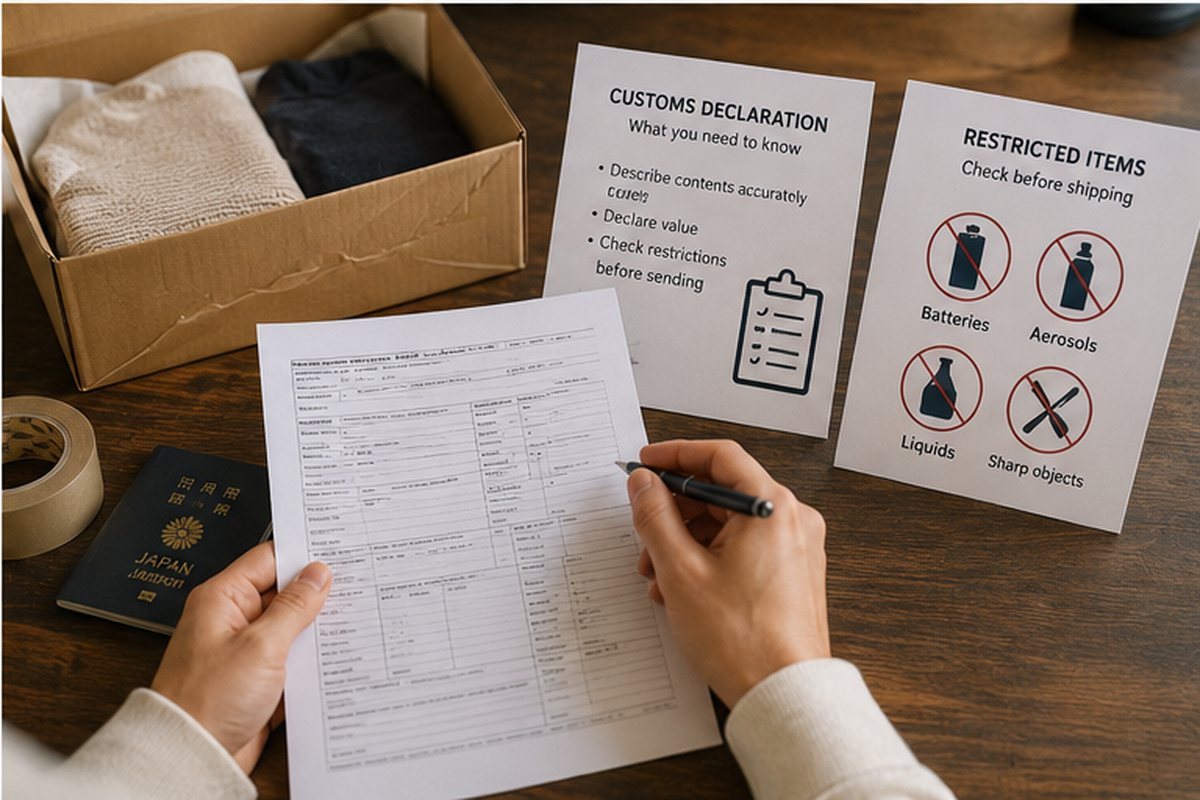
A short pre-purchase check prevents most budget surprises. The goal is not to calculate customs to the last cent before ordering; that may be impossible until customs classifies the parcel. The goal is to identify every cost layer, know who may collect it, and avoid products or shipping arrangements that create unacceptable uncertainty.
- Confirm that the seller is genuine and ships the product to your country.
- Check whether the item is restricted or requires a permit in the destination country.
- Save the product description, order total and payment record.
- Identify domestic Japan shipping, proxy/service fees and international shipping separately.
- Check whether duties and taxes are prepaid or recipient-paid.
- Use the destination customs authority to review the current duty, VAT/GST and low-value rules.
- Confirm that the sender will declare the product and value accurately and provide required customs data.
- Check the carrier's customs-payment and clearance-fee policy.
- Review the seller's return policy for refused, taxed, delayed or damaged international parcels.
- Keep invoice, tracking and packaging until delivery and the return window are complete.
Common Mistakes to Avoid
The most common mistake is treating 'shipping included' as 'all import costs included.' Those are different promises. Another is copying an old de minimis threshold from a forum or search result without checking whether the destination has changed its rules.
Buyers also create risk when they focus only on duty percentage and ignore VAT/GST, clearance fees, product restrictions or return freight. Finally, a false customs declaration is not a legitimate discount strategy. Accurate description and value protect both the sender and buyer and reduce the chance of delays, revaluation, seizure or return.
- Assuming free shipping means duty and tax are included
- Using an outdated low-value threshold
- Ignoring VAT/GST or carrier clearance fees
- Requesting undervaluation or false gift declarations
- Discarding invoices, tracking records or packaging too early
FAQ
- Do I always pay import duty when buying from Japan?
- No. Whether duty applies depends on the destination country, product classification, customs value, exemptions and the current import regime. However, even when customs duty is zero, VAT/GST, carrier clearance charges or other import fees may still apply.
- Does Japan charge the overseas buyer import tax?
- Usually the key import taxes are imposed by the destination country, not by Japan. Japan handles the export side of the shipment, while the destination customs authority determines how the incoming parcel is treated.
- What does DDP mean when a Japanese store ships internationally?
- DDP means Delivered Duty Paid. In practical carrier use, it generally indicates that the shipper or account holder is responsible for duties and taxes rather than leaving them for the recipient at destination. Always confirm the seller's and carrier's exact terms because billing procedures can differ.
- Can I ask the seller to declare a lower value to reduce customs charges?
- You should not. Customs declarations should accurately describe the goods and their value. False or incomplete declarations can cause delays, revaluation, return, confiscation or other enforcement problems.
- Why does the HS code matter for a parcel from Japan?
- HS codes classify traded goods for customs purposes. They help customs identify the tariff category and can reduce clearance problems. Japan Post specifically notes that missing or inaccurate HS-related data can cause delays or returns for some destinations.
- How can I know the exact landed cost before buying?
- Sometimes you cannot know the exact amount in advance because the destination customs authority makes the final classification and valuation decision. You can still make a strong estimate by separating the product price, Japan-side fees, international shipping, likely destination duty and tax, and carrier clearance charges, then checking the destination authority's current rules.
Official References
Final Thoughts
Buying from Japan becomes much easier when you stop treating customs as a mysterious final surcharge and instead map the transaction from seller to delivery. Separate the item price from Japan-side service costs, international shipping and destination import charges; confirm whether duties are prepaid or recipient-paid; insist on accurate shipment data; and check the destination authority's current rules shortly before purchase. That approach will not eliminate every customs decision, but it will make the real landed cost far more predictable and reduce the risk of avoidable delays or failed delivery.