Watoria Guide
Japanese Sunscreen Guide: How to Choose SPF, Finish and Skin Type
Choose Japanese sunscreen by SPF, PA, water-resistance label, finish, skin-feel preferences and real use, with clear guidance on application, reapplication and product claims.
- Quick Answer
- What You’ll Learn
- Best-Fit Summary: Choose by Use Case First, Finish Second
- How to Read SPF and PA Correctly
- Comparison Criteria: Japan's UV Water-Resistance Stars
- How to Choose the Finish: Essence, Gel, Milk, Stick and Tone-Up
- Skin Type Without Overpromising: Use Skin-Feel Preferences and Formula Facts
- Application Amount and Reapplication Matter
- UV Filters, White Cast and Cosmetic Compatibility
- Compatibility, Authenticity and Care for Overseas Buyers
- Buying Route: Choose for Verification, Returns and Replenishment
- FAQ
- Related Guides
- Official References
- Final Thoughts
- Keep exploring Japanese culture
- Continue to the best buying / booking route
- Continue exploring
- Discover more Japan
- Primary sources
Quick Answer
Choose Japanese sunscreen by the conditions in which you will use it, then by the finish you are willing to apply generously and reapply. SPF mainly indicates the level of protection against UVB-related sunburn under standardized testing; PA indicates UVA protection and is shown in Japan from PA+ to PA++++. These ratings are product-selection guides, not a clock that tells you how many hours protection will last. For ordinary daily use, choose a product whose texture and finish make full, even application realistic. For stronger outdoor exposure or water activities, higher SPF/PA and a clearly stated UV water-resistance level may be useful. Japan's UV耐水性★/★★ system is a standardized water-resistance label, but it does not mean sweat resistance and does not replace reapplication. Skin-feel claims such as moisturizing, lightweight, tone-up, alcohol-free or fragrance-free are formula-specific; they can guide preference, but they do not guarantee that a product will suit every person. Check the exact current label and manufacturer instructions before use.
What You’ll Learn
- What SPF, PA and Japan's UV water-resistance star labels actually tell you—and what they do not.
- How to choose among essence, gel, milk, lotion, stick, spray and tone-up finishes without assuming one format is universally better.
- How to match sunscreen texture to personal skin feel, makeup use and daily routine without making medical claims about skin type.
- Why application amount, even coverage and reapplication can matter as much as the rating printed on the package.
- How to interpret claims such as alcohol-free, fragrance-free, allergy-tested, non-comedogenic-tested and soap-removable cautiously.
- What overseas buyers should verify on Japanese labels, current manufacturer pages and seller listings before purchasing.
Best-Fit Summary: Choose by Use Case First, Finish Second
Japanese sunscreens are sold in many textures, but the first decision should be the exposure situation rather than the trendiest finish. The Japan Cosmetic Industry Association (JCIA) explains that SPF and PA are reference values for selecting a product according to the amount and strength of ultraviolet exposure. Higher values are useful when exposure is stronger, while ordinary situations should be matched to purpose rather than treated as a contest for the highest number.
The second decision is whether you will apply the product in a sufficiently even layer and keep using it. A watery essence or gel can be easy to spread over the face and body, a milk or lotion may feel more substantial, a stick can be convenient for targeted touch-ups, and a spray can help with large or hard-to-reach areas when the maker's instructions allow it. None of those formats is automatically more protective than another with the same tested rating.
Finish matters because an unpleasant sunscreen is often under-applied or skipped. Choose the texture, scent level, visible finish and makeup compatibility that fit your routine, then verify the exact product's usage directions.
- Daily indoor/commute use: prioritize reliable application, comfort and makeup compatibility.
- Long outdoor exposure: compare higher SPF/PA options and reapplication practicality.
- Swimming or repeated water contact: look for the Japanese UV water-resistance label in addition to SPF/PA.
- Face versus body: one formula can work for both, but convenience and finish may justify different products.
How to Read SPF and PA Correctly
JCIA states that SPF mainly expresses the degree of protection against UVB-related sunburn. It is not simply a number of hours that the product will remain effective. Real-world performance varies with ultraviolet intensity, application amount, sweating, rubbing and other conditions, so SPF should be read as a standardized comparison value rather than a timer.
PA is Japan's UVA-protection grade. More plus signs indicate a higher measured level of UVA protection, with PA++++ representing the highest current Japanese grade. A product marked SPF50+ / PA++++ therefore combines the top end of the commonly displayed Japanese UVB and UVA categories, but it still has to be applied correctly and reapplied as instructed.
Do not automatically assume that everyone needs the highest possible label for every indoor day. The more useful question is whether the product is appropriate for the expected exposure and whether its finish lets you use enough of it consistently.
- SPF: mainly a UVB-protection indicator, not a duration clock.
- PA: UVA-protection grade shown with plus signs.
- Higher numbers do not compensate for applying too little.
- Use the ratings together with exposure level, application behavior and product instructions.
Comparison Criteria: Japan's UV Water-Resistance Stars
Japan now uses a standardized UV耐水性★ / UV耐水性★★ label based on the ISO 18861 water-resistance method adopted by JCIA. Under the industry standard, one star corresponds to the qualifying result after a total 40-minute water-immersion test and two stars after a total 80-minute test.
That does not mean the product can simply be left on for 40 or 80 minutes in real life. JCIA specifically says that actual conditions vary too much to convert the star mark into a universal protection time. It also states that the water-resistance label describes resistance to externally contacting water, not resistance to sweat.
This distinction matters because words such as waterproof or sweat-resistant can appear in product marketing, while the standardized Japanese star system has a narrower meaning. Read the exact manufacturer directions and reapply after water, heavy sweating or towel drying when instructed.
- UV耐水性★: standardized water-resistance level based on a 40-minute water-immersion test condition.
- UV耐水性★★: standardized level based on an 80-minute water-immersion test condition.
- The stars do not indicate a guaranteed real-world duration.
- The standardized UV water-resistance label is not a standardized sweat-resistance rating.
How to Choose the Finish: Essence, Gel, Milk, Stick and Tone-Up
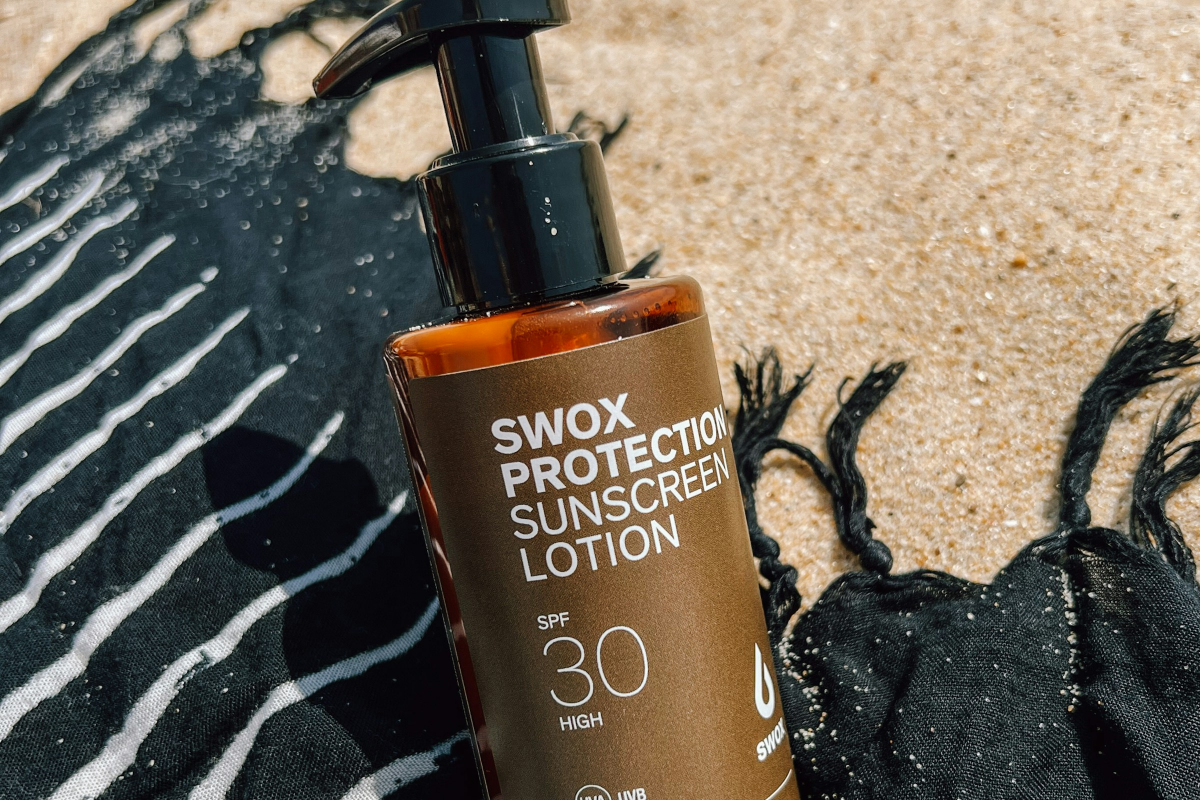
Japanese sunscreen categories often emphasize sensory finish. Kao's current Biore UV Aqua Rich Watery Essence, for example, is presented as a watery, non-sticky essence with SPF50+ / PA++++ and UV water resistance★★. Rohto's Skin Aqua Super Moisture Gel is positioned as a water-like gel for face and body, while the Skin Aqua Hyaluron Serum UV is presented as an ethanol-free, moisturizing serum-like formula. These examples show that products with similarly high UV ratings can target very different application preferences.
Milk or lotion formats can feel more fluid or more film-forming depending on the formula. Stick formats are convenient for targeted areas and reapplication but still need sufficient, even coverage. Sprays can be useful for body or hair, but usage directions matter: Shiseido's current Perfect Sun Protector Spray instructs users not to spray directly onto the face and instead to dispense into the palm first.
Tone-up sunscreens intentionally change visible skin appearance through makeup effects. Rohto's current tone-up line explicitly describes its brightening effect as a makeup effect. Choose these for the cosmetic finish you want, not because a color-changing product is inherently more protective.
- Essence/gel: often chosen for spreadability and a lighter-feeling finish.
- Milk/lotion: useful when you prefer a more fluid or film-forming application.
- Stick: convenient for targeted touch-ups; coverage still has to be complete.
- Spray: follow exact directions, especially for facial use.
- Tone-up: a cosmetic color/finish choice, separate from SPF/PA performance.
Skin Type Without Overpromising: Use Skin-Feel Preferences and Formula Facts
A sunscreen guide should not diagnose skin type from a few symptoms or promise that one formula will suit all dry, oily, acne-prone or sensitive skin. Instead, use observable preferences and current label facts. If your skin often feels tight under sunscreen, you may prefer formulas that the manufacturer describes as moisturizing or serum-like. If you dislike a heavy film, a watery gel or essence may be easier to use consistently.
Ingredient and testing claims need the same caution. An ethanol-free or fragrance-free product can be useful when you are specifically avoiding those ingredients, but the absence of one ingredient does not guarantee zero irritation. Likewise, an 'allergy tested' or 'non-comedogenic tested' statement does not mean every user will avoid an allergic reaction or breakouts; manufacturers commonly state that limitation explicitly.
If a product causes persistent burning, swelling or another concerning reaction, stop using it and seek appropriate professional advice rather than trying to solve the reaction by choosing a higher or lower SPF number.
- Dry-feeling preference: compare moisturizing or serum-like formulas.
- Heavy/sticky-feeling preference: compare lighter gel or essence textures.
- Ingredient avoidance: verify the exact current ingredient and claim list, not a product-family reputation.
- Testing claims reduce uncertainty but are not guarantees for every individual.
Application Amount and Reapplication Matter
Manufacturers repeatedly warn that using too little sunscreen can reduce the expected protection. Rohto's current Skin Aqua instructions say to apply an appropriate amount evenly, recommend layered application to reduce missed areas, and state that insufficient quantity can prevent the sunscreen from delivering enough UV protection.
Shiseido's application guidance similarly emphasizes even coverage and a second layer on the face. Its current public guidance recommends reapplication after sweating or towel wiping, and broader Shiseido guidance commonly uses two to three hours as a reapplication reference. JCIA's water-resistance Q&A also says that regular reapplication around every two to three hours is important regardless of the presence of the UV water-resistance label.
The practical implication is simple: a comfortable product that you apply fully and reapply can be a better real-world choice than a technically impressive product you use in a very thin layer.
- Spread sunscreen evenly rather than relying on a few dots.
- Layering can help reduce missed areas when the maker recommends it.
- Reapply after swimming, heavy sweating or towel drying as directed.
- Use roughly two to three hours as a general reapplication reference where current guidance supports it, while following the product's own instructions.
UV Filters, White Cast and Cosmetic Compatibility
JCIA explains the broad distinction between ultraviolet absorbers, which absorb ultraviolet radiation, and ultraviolet scatterers such as zinc oxide or titanium dioxide, which mainly scatter or reflect it. That classification is useful for reading ingredient lists, but it does not by itself tell you how elegant, irritating, moisturizing or white-casting the finished sunscreen will be.
White cast, pilling and makeup compatibility depend on the complete formula and the other skincare or makeup layers used with it. Test a new sunscreen with the moisturizer, foundation or powder you actually use. Allow layers to settle rather than assuming every pilling problem means the sunscreen itself is defective.
If you want a visually brightened finish, choose a product that intentionally claims a tone-up or makeup effect. If you want the product to disappear visually, look for transparent or low-cast claims from the current maker page, then verify them on your own skin because finish can vary by skin tone and application amount.
- Filter category alone does not predict total skin feel or cosmetic finish.
- Test sunscreen with your real skincare and makeup stack.
- Tone-up is an intentional cosmetic effect, not a synonym for stronger UV protection.
- Visible finish can vary with skin tone, amount applied and the formula around it.
Compatibility, Authenticity and Care for Overseas Buyers
Japanese sunscreen lines change packaging, formulas and size variants, so overseas buyers should match the exact product rather than relying on an old review or product-family name. Confirm the current manufacturer page, SPF, PA, UV water-resistance label, volume, intended face/body use, removal instructions and any ingredient claims that matter to you.
Be careful when marketplace listings mix older and newer packaging. A changed bottle does not automatically indicate a counterfeit, but vague seller information, missing product codes, mismatched packaging images and claims that conflict with the current maker page are reasons to investigate further. Watoria's counterfeit guide covers broader seller-verification checks.
Heat and storage instructions also matter. Do not keep sunscreen in conditions the maker warns against, and replace or discard products according to the current package and manufacturer guidance rather than assuming that an unopened or opened sunscreen remains unchanged indefinitely.
- Match the exact current product name and packaging to the manufacturer page.
- Verify SPF, PA, UV water resistance and removal method on the exact variant.
- Treat marketplace images as seller evidence, not as the final product specification.
- Follow storage and use-by guidance printed on the product or supplied by the maker.
Buying Route: Choose for Verification, Returns and Replenishment
For a routine product such as sunscreen, the best buying route is usually the one that makes authenticity and replenishment easy. A brand-direct store or established authorized retailer gives you clearer product identity and return information. A reputable beauty retailer can be convenient when comparing several Japanese brands. Marketplaces can provide broader access but require more attention to the individual seller and exact listing.
If you are importing sunscreen from Japan, compare shipping, customs rules and the practicality of reordering the same formula. Sunscreen is used up quickly when applied generously, so a rare Japan-only product may be less practical for a daily routine than a formula you can replenish reliably.
Watoria does not sell or fulfill sunscreen. Use the manufacturer's current page for formulation and usage information and the seller's current terms for price, stock, returns and shipping.
- Brand-direct or authorized retailer: strongest route for exact identity and current instructions.
- Established beauty retailer: useful for comparing several clearly identified products.
- Marketplace: verify the individual seller and exact variant.
- Overseas purchase: include replenishment difficulty, shipping and return friction in the decision.
FAQ
- Does SPF50 mean I can stay in the sun 50 times longer?
- No. JCIA explicitly says SPF is not simply a measure of how long protection lasts. It mainly expresses the level of protection against UVB-related sunburn under standardized conditions. Real-world performance depends on UV intensity, application amount, rubbing, sweat and other factors.
- What does PA++++ mean on Japanese sunscreen?
- PA is Japan's UVA-protection grade. More plus signs indicate a higher measured UVA-protection level, and PA++++ is the highest current grade used in the Japanese system.
- What does UV耐水性★★ mean?
- It is Japan's standardized two-star UV water-resistance level based on an ISO-derived test with a total 80-minute water-immersion condition. JCIA warns that the mark cannot be converted into a guaranteed real-world duration and does not represent standardized sweat resistance.
- Is gel sunscreen better for oily skin and milk better for dry skin?
- Not as a universal rule. Gel, essence, milk and lotion describe format and feel more than a guaranteed skin-type outcome. Use manufacturer formula claims and your own skin-feel preferences, and verify ingredient or testing claims on the exact product.
- How often should Japanese sunscreen be reapplied?
- Current JCIA and Shiseido guidance uses roughly every two to three hours as a general reference and stresses reapplication after water exposure, sweating or towel wiping. Always follow the exact product's instructions because use conditions differ.
- Can I trust 'allergy tested' or 'non-comedogenic tested' as a guarantee?
- No. Japanese manufacturers commonly state that those tests do not guarantee that every user will avoid an allergic reaction or acne. Treat the claim as one piece of product information, not as a promise of individual compatibility.
Official References
- Japan Cosmetic Industry Association — UV Protection Standards and Guidelines
- Japan Cosmetic Industry Association — Cosmetics Q&A: SPF and PA
- Japan Cosmetic Industry Association — UV Water-Resistance Label Q&A
- Japan Cosmetic Industry Association — UV Terminology Glossary
- Kao — Biore UV Aqua Rich Watery Essence product update
- Rohto Pharmaceutical — Skin Aqua Hyaluron Serum UV
- Shiseido — Sunscreen application and SPF/PA guidance
Final Thoughts
Japanese sunscreen is easiest to choose when you separate protection ratings from cosmetic preference. SPF, PA and UV water-resistance labels describe standardized performance categories; they do not tell you whether you will enjoy the finish, whether a formula will suit every individual's skin, or how long a thin application will last in real life. Choose the rating for the exposure, then choose a finish you can apply evenly and reapply without resistance. Verify formula-specific claims such as ethanol-free, tone-up, allergy-tested or soap-removable on the exact current product page, because lines and packaging change. For most readers, consistent use, sufficient coverage and practical replenishment matter more than chasing one fashionable Japanese sunscreen.