Watoria Guide
Japanese Pens Explained: Gel, Fountain, Brush and Fineliner Options
Understand Japanese gel, fountain, brush and fineliner pens by ink system, nib or tip behavior, paper compatibility, maintenance and intended use.
- Quick Answer
- What You’ll Learn
- Meaning and Historical Context: Why Japanese Pen Categories Feel So Distinct
- Key Terms and Types: Gel Pens
- Key Terms and Types: Fountain Pens
- Key Terms and Types: Brush Pens
- Key Terms and Types: Fineliners
- How These Pens Appear Today: Study, Work, Journaling and Art
- Paper and Ink Compatibility Matter More Than Pen Reputation
- Respectful Use and Appreciation: Brush Influence Without Cliché
- What to Avoid When Choosing or Buying Japanese Pens
- FAQ
- Related Guides
- Official References
- Final Thoughts
- Keep exploring Japanese culture
- Continue to the best buying / booking route
- Continue exploring
- Discover more Japan
- Primary sources
Quick Answer
Japanese pens are easiest to understand by the way ink reaches the paper and the kind of line the tip is designed to make. Gel pens use water-based gel ink to deliver smooth, vivid everyday writing; fountain pens feed liquid ink through a nib and reward a lighter hand plus basic cleaning; brush pens use flexible fiber, felt, urethane or bristle-like tips to create line variation; and fineliners use firm precision tips for controlled drawing, annotation and technical-style line work. No category is automatically better. Choose gel for simple daily notes and color variety, fountain for refillable expressive writing, brush for pressure-sensitive lettering or illustration, and fineliner for consistent fine lines. Then check exact tip size, ink type, refill system, paper compatibility and whether the ink needs water resistance or archival properties. Japanese manufacturers make many variants within each family, so the exact model matters more than the category name alone.
Check Zebra Sarasa Clip pens
Compare the exact Sarasa Clip 0.5 mm set and current seller terms. If Amazon cannot serve your location, use the Japan proxy-shopping fallback.
View on AmazonWhat You’ll Learn
- How gel, fountain, brush and fineliner pens differ in ink delivery, line behavior and maintenance.
- Why Japanese gel pens became known for smooth fine writing and broad color ranges.
- How fountain-pen nib, cartridge or converter choice changes the writing experience.
- How brush pens translate brush-like line variation into a portable pen format.
- Why fineliners such as pigment-based technical pens are chosen for drawing, journaling and precise annotation.
- How paper, drying time, water resistance, refill availability and storage should influence the final choice.
Meaning and Historical Context: Why Japanese Pen Categories Feel So Distinct
Modern Japanese stationery developed through both traditional writing culture and industrial pen innovation. Brush writing has a much longer cultural history than modern pens, while fountain pens became an important twentieth-century writing instrument and ballpoint technologies expanded rapidly after the war. Japanese manufacturers then helped push finer tips, smoother inks and more specialized writing systems into mass-market stationery.
Sakura's own corporate history notes that it introduced the first gel-based ink in the 1980s, while Zebra's SARASA series later made water-based pigment gel ink a mainstream everyday format with smooth writing and vivid colors. PILOT's history records products such as the Hi-TEC-C micro-fine rollerball, G-2 gel pen, Juice and the beginner-focused Kakuno fountain pen. Pentel's current brush-pen materials trace its Pentel Fude line to 1976, using synthetic fiber technology to reproduce brush-like control without natural hair.
That history explains why 'Japanese pen' is not one aesthetic. It can mean a precise 0.3 mm note-taking pen, a refillable fountain pen, a flexible brush tool or an archival fineliner. The useful comparison is functional rather than nationalistic: what kind of line, ink behavior and maintenance do you actually want?
- Gel innovation emphasized smoothness, color and increasingly fine tips.
- Fountain pens preserved a refillable nib-based writing experience in both beginner and premium ranges.
- Brush pens made pressure-sensitive brush-style strokes portable and convenient.
- Fineliners developed around consistent precision, illustration and record-making needs.
Key Terms and Types: Gel Pens
Gel pens suspend pigment or dye in a water-based gel system that can deliver strong color while still writing with a ballpoint-style tip. Zebra describes SARASA CLIP as using water-based pigment ink with a smooth writing feel, strong color and good water resistance. Its current Japanese lineup spans multiple tip diameters including 0.3, 0.4, 0.5, 0.7 and 1.0 mm.
Fine gel pens are useful when handwriting is compact or planner space is limited. Broader tips usually show color more strongly and can feel smoother, but they also lay down more ink. Paper changes the experience: absorbent paper can soften line edges, while coated or very smooth paper can increase drying time.
A gel pen is the lowest-maintenance choice in this comparison. There is no nib alignment to learn and no cleaning routine beyond normal storage. The main long-term check is refill compatibility, because Japanese pen families often have several bodies and tip sizes that use specific refill codes.
- Best for: everyday notes, planners, color coding and compact handwriting.
- Check: tip diameter, pigment versus dye behavior, drying time and refill code.
- Strength: easy, predictable writing with broad color choice.
- Trade-off: fine wet ink can still smear on some paper before fully dry.
Key Terms and Types: Fountain Pens
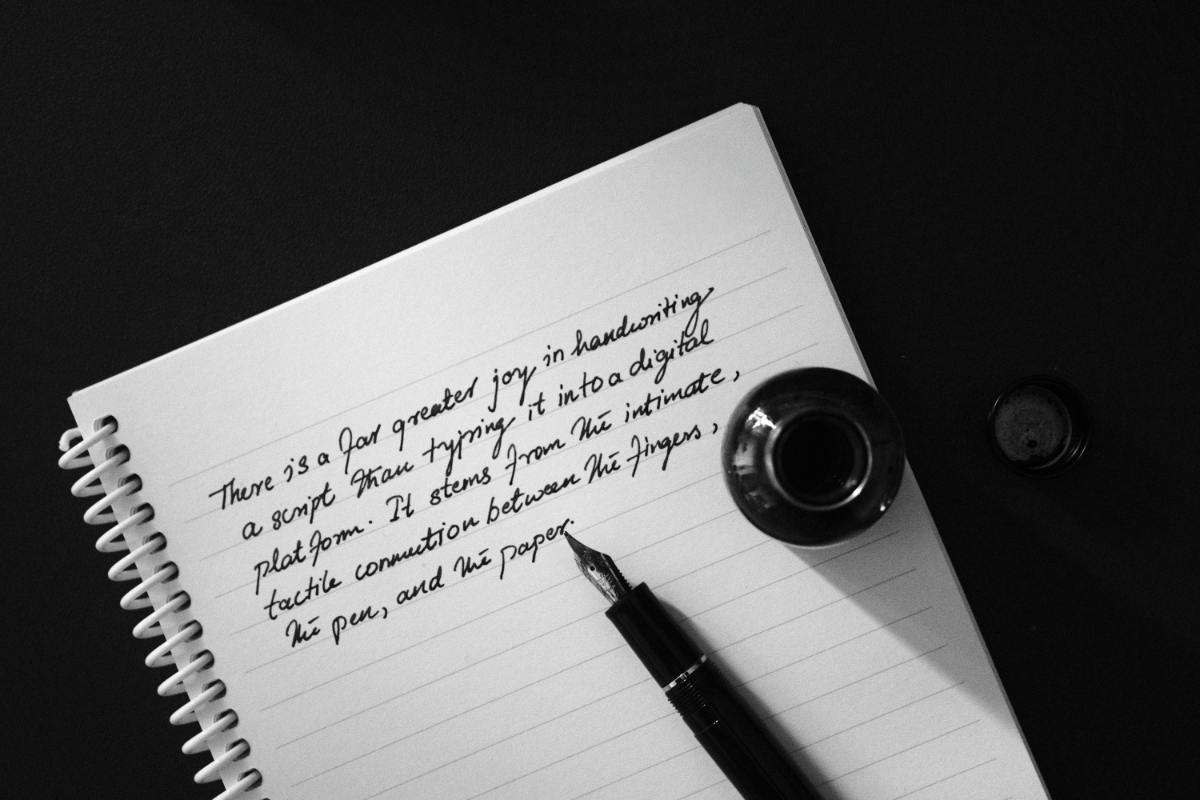
A fountain pen feeds liquid ink to a split metal nib rather than rolling a ball across the page. The nib, feed, ink and paper all affect line character. PILOT's current Kakuno is intentionally positioned as a simple beginner fountain pen, and its official instructions show both cartridge use and bottled ink with a converter.
Fountain pens reward low writing pressure. Instead of pressing harder for a darker mark, let the nib and ink flow do the work. Nib width is not perfectly standardized across every maker, and Japanese fine and extra-fine nibs are often chosen for smaller handwriting. Paper matters more than with most gel pens because some fountain inks can feather or bleed on absorbent stock.
Maintenance is part of ownership. PILOT's official manuals include cleaning guidance and recommend flushing the nib section when ink dries or flow becomes poor. If you regularly change ink colors, a cartridge-converter system makes cleaning and refilling easier to understand than treating the pen as a sealed disposable tool.
- Best for: refillable everyday writing, handwriting practice and people who enjoy ink choice.
- Check: nib width, cartridge/converter compatibility and paper behavior.
- Strength: low-pressure, expressive writing and refillable ink systems.
- Trade-off: requires occasional cleaning and more attention to ink-paper compatibility.
Key Terms and Types: Brush Pens
Brush pens are designed to vary line width as the tip flexes or changes contact with the paper. They are not all constructed the same way. Pentel's long-running Pentel Fude line uses synthetic nylon bristles engineered to reproduce the response of a traditional brush, while other products use felt or urethane tips that are easier for beginners to control.
Pentel states that its Pentel Fude has been sold since 1976 and emphasizes elasticity and durability from synthetic-tip technology. Its separate soft-tip Fude Pen uses a urethane tip and water-based dye ink. These differences matter: a bristle tip can create more organic stroke variation, while a firm or soft felt-style tip is usually easier for small lettering and quick illustrations.
Brush pens connect visually with brush lettering and calligraphic line variation, but owning one does not make modern lettering equivalent to formal Japanese calligraphy. Use them as writing and drawing tools while respecting the deeper disciplines of shodo and traditional brush practice.
- Best for: lettering, expressive illustration, manga-style fills and variable-width lines.
- Check: bristle versus felt/urethane tip, ink type and replacement system.
- Strength: pressure and angle create dramatic line variation.
- Trade-off: tip control takes practice and some dye inks are not water-resistant.
Key Terms and Types: Fineliners
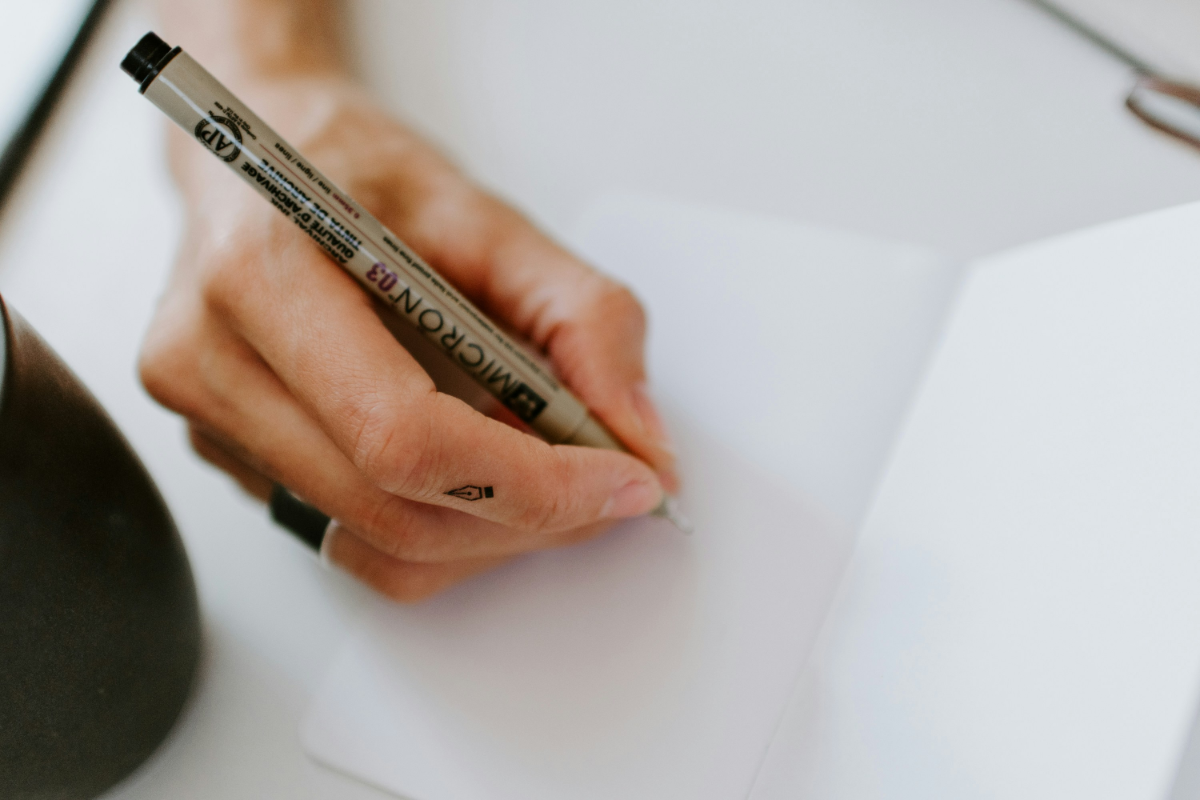
Fineliners use relatively firm precision tips to make controlled, repeatable lines. Sakura's Pigma Micron is a major Japanese reference point: Sakura states that Pigma pigment ink is chemically stable, waterproof and fade resistant and is used for illustration, technical drawing, archival journals and other precise line work.
Fineliners are particularly useful when you need a consistent line that does not respond dramatically to pressure. Different point sizes let you build hierarchy in diagrams, sketches and handwritten layouts. Sakura's Micron range includes multiple fine and broader nib sizes, and current variants extend into brush-format Pigma products as well.
Do not assume every fineliner is identical to Micron or every black technical pen is archival. 'Fineliner' describes the physical use category more than one universal ink standard. Check whether the exact product is pigment- or dye-based, whether the maker claims water resistance after drying, and which papers are recommended.
- Best for: illustration, diagrams, line art, annotation and archival-style journaling.
- Check: actual nib width, pigment/dye ink and water-resistance claims.
- Strength: predictable line width and clean detail.
- Trade-off: very fine tips can be damaged by excessive pressure or rough paper.
How These Pens Appear Today: Study, Work, Journaling and Art
The categories overlap more than marketing sometimes suggests. A student may use a fine gel pen for lecture notes, a fountain pen for long-form handwriting, a brush pen for headings and a fineliner for diagrams. A designer may reverse that priority and use the fineliner as the main tool. Japanese stationery works well as a system because each tool can solve a specific problem rather than compete to become the single 'best pen.'
Zebra's current SARASA family illustrates specialization within one gel platform, with variants focused on extra-fine writing, stronger color or highlighter compatibility. PILOT's fountain-pen line spans beginner and advanced mechanisms. Pentel offers different brush-tip constructions and ink formulations. Sakura expands Pigma across several nib sizes and art uses.
Start with one tool for the task you perform most often. Add a second category only when you can name the problem it solves.
- Dense notes: fine gel or fine fountain nib.
- Long handwriting: fountain pen if refillability and low pressure appeal to you.
- Expressive headings: brush pen.
- Diagrams and controlled line art: fineliner.
Paper and Ink Compatibility Matter More Than Pen Reputation
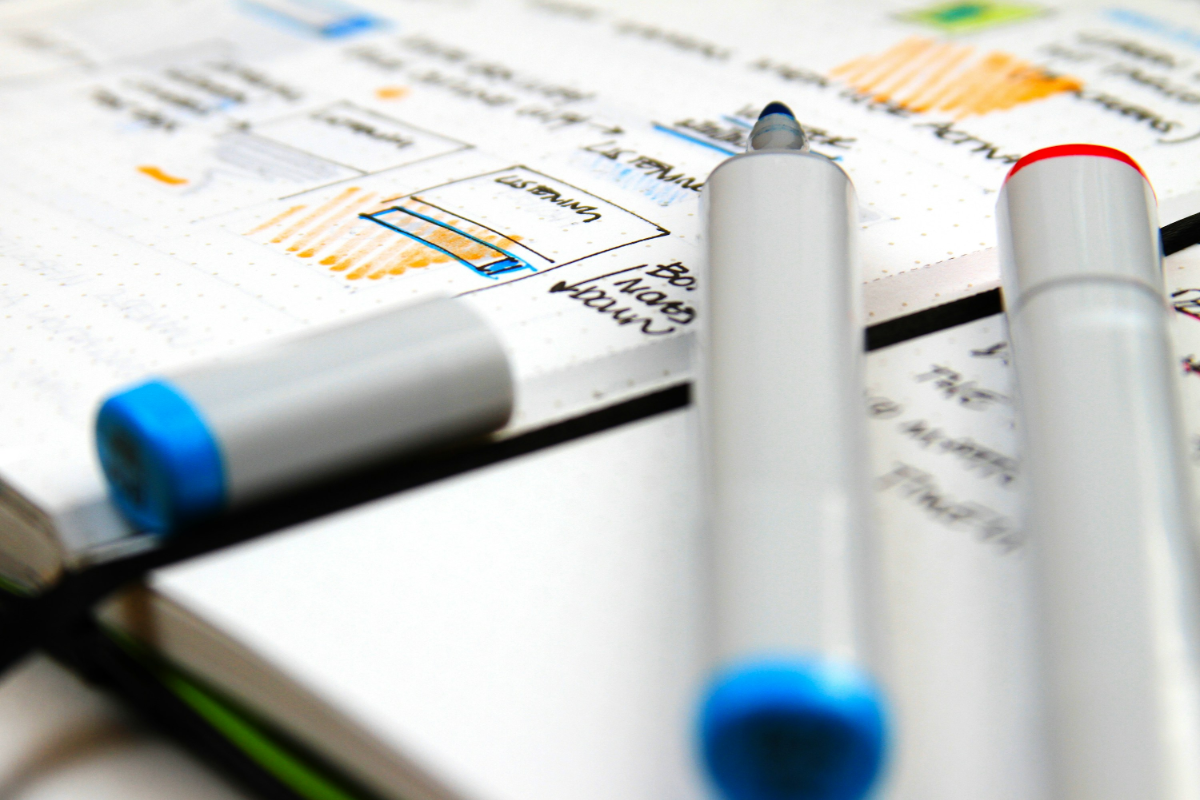
Paper can transform the same pen from excellent to frustrating. Gel ink may dry slowly on coated paper. Fountain ink can feather or bleed on porous sheets. Brush tips can catch on rough paper. Fineliner tips can wear faster if dragged across abrasive surfaces.
If water-based media will be added over line work, verify whether the exact ink is water-resistant after drying. Zebra describes SARASA CLIP's water-based pigment ink as water resistant, while Sakura describes Pigma Micron as waterproof after drying. By contrast, Pentel lists water-based dye ink for some brush pens, so a broad 'Japanese pen' label tells you nothing about water resistance.
Test new combinations on the back page or a spare sheet before committing to an important journal, illustration or document. Ink-paper compatibility is a system property, not a brand ranking.
- Smooth paper can increase drying time.
- Absorbent paper can feather fountain and dye-based inks.
- Rough paper can wear delicate fiber or fineliner tips.
- For watercolor or highlighting, verify the exact ink's resistance after drying.
Respectful Use and Appreciation: Brush Influence Without Cliché
Japanese brush pens are often marketed internationally through associations with calligraphy, manga or traditional aesthetics. Those connections are real, but they should not flatten very different practices into one stereotype. Formal Japanese calligraphy has established techniques, materials, line discipline and cultural contexts that are much broader than a disposable brush pen.
A modern brush pen can still be a meaningful entry point into pressure control, stroke rhythm and Japanese stationery design. Appreciate the tool for what it is: an engineered writing instrument that adapts some qualities of a brush to convenient daily use.
Likewise, Japanese fountain and gel pens should not be treated as exotic simply because they come from Japan. Their appeal is often practical—fine handwriting, refill systems, ink development, tip engineering and reliable manufacturing.
- Use brush pens for lettering and drawing without presenting casual practice as formal shodo expertise.
- Learn the maker's terminology rather than relying on vague 'Japanese-style' labels.
- Judge pens by design and performance, not cultural mystique.
- Give credit to specific manufacturers and product systems when explaining technical features.
What to Avoid When Choosing or Buying Japanese Pens
Avoid buying by barrel appearance alone. A beautiful pen can use an unfamiliar refill, a fountain pen can require a proprietary cartridge, and a brush pen can use dye ink when you expected waterproof pigment. Always check the functional specification first.
Avoid assuming tip-size numbers transfer exactly across categories. A 0.5 mm gel ball does not create the same line as a medium fountain nib or a fineliner labeled 05. Each system measures and behaves differently.
For overseas purchases, verify the exact model and refill code because product families can include domestic-only colors, packaging changes and multiple generations. Established retailers and official manufacturer pages are safer references than listings that omit model numbers or mix images from several variants.
- Do not compare tip labels across different pen systems as if they were identical measurements.
- Do not assume every black ink is waterproof or archival.
- Do not buy a refillable pen without checking refill or cartridge availability.
- Do not rely on translated marketplace titles when the exact model code is missing.
FAQ
- What is the easiest Japanese pen type for beginners?
- A gel pen is the easiest starting point because it requires almost no maintenance and gives predictable line width. A fountain pen is also beginner-friendly if you want refillable ink and are willing to learn basic cleaning. Brush pens require more pressure control, while fineliners are simple but are mainly optimized for precise lines rather than ordinary long-form writing.
- Are Japanese fountain pens better for small handwriting?
- Many Japanese fountain pens offer fine and extra-fine nibs that suit compact writing, but nib labels are not perfectly standardized. Check actual writing samples and the maker's nib options rather than assuming every Japanese fine nib will feel identical.
- What is the difference between a brush pen and a fineliner?
- A brush pen is designed for line-width variation through tip flex or pressure. A fineliner is designed for a more consistent, controlled line. Brush pens suit lettering and expressive drawing; fineliners suit diagrams, outlines, precise illustration and annotation.
- Is Pigma Micron waterproof?
- Sakura describes Pigma Micron's pigment ink as waterproof, fade resistant and chemically stable once dry. That claim applies to the Pigma system, not automatically to every fineliner.
- Can I use a Japanese gel pen with a highlighter?
- It depends on the ink and paper. Some gel inks can smear before fully drying. Zebra's SARASA Mark On is specifically engineered to resist smearing when highlighted after a short drying period, but ordinary gel pens and papers can behave differently.
- What should I check before buying Japanese pens from overseas?
- Confirm the exact model, tip size, ink type, refill or cartridge code, whether replacement parts are available locally, and whether the seller clearly identifies the manufacturer. For fountain and brush pens, also check cleaning or replacement instructions.
Official References
Final Thoughts
Japanese pens are most useful when you stop treating them as one collectible category and instead understand the writing systems. Gel pens emphasize smooth, convenient everyday writing; fountain pens trade a little maintenance for refillability and a nib-based feel; brush pens create pressure-sensitive line variation; and fineliners prioritize precise, repeatable marks. The right choice depends on the task, paper and ink behavior rather than prestige. Check the exact tip, ink, refill and care instructions, and build a small set in which each pen has a clear role. For a broader stationery system, Watoria's Japanese stationery guide is the natural next step.