Watoria Guide
Japanese Cookware Guide: Donabe, Tamagoyaki Pans, Yukihira Pots and More
A practical guide to the core types of Japanese cookware, how they differ, and what overseas buyers should check before choosing one.
- Quick Answer
- What You’ll Learn
- What Makes Japanese Cookware Different
- How to Choose the Right Type for Your Kitchen
- Donabe: Best for Gentle Heat, Hot Pot and Table Cooking
- Tamagoyaki Pans: Small, Rectangular and More Useful Than They Look
- Yukihira Pots: The Most Versatile Everyday Option
- Other Japanese Cookware Worth Knowing
- Heat Source, Safety and Care
- Buying Route and Authenticity Checks
- FAQ
- Related Guides
- Official References
- Heat-Source Compatibility Comes Before Cookware Style
- Final Thoughts
- Keep exploring Japanese culture
- Continue to the best buying / booking route
- Continue exploring
- Useful guides
- Discover more Japan
- Primary sources
Quick Answer
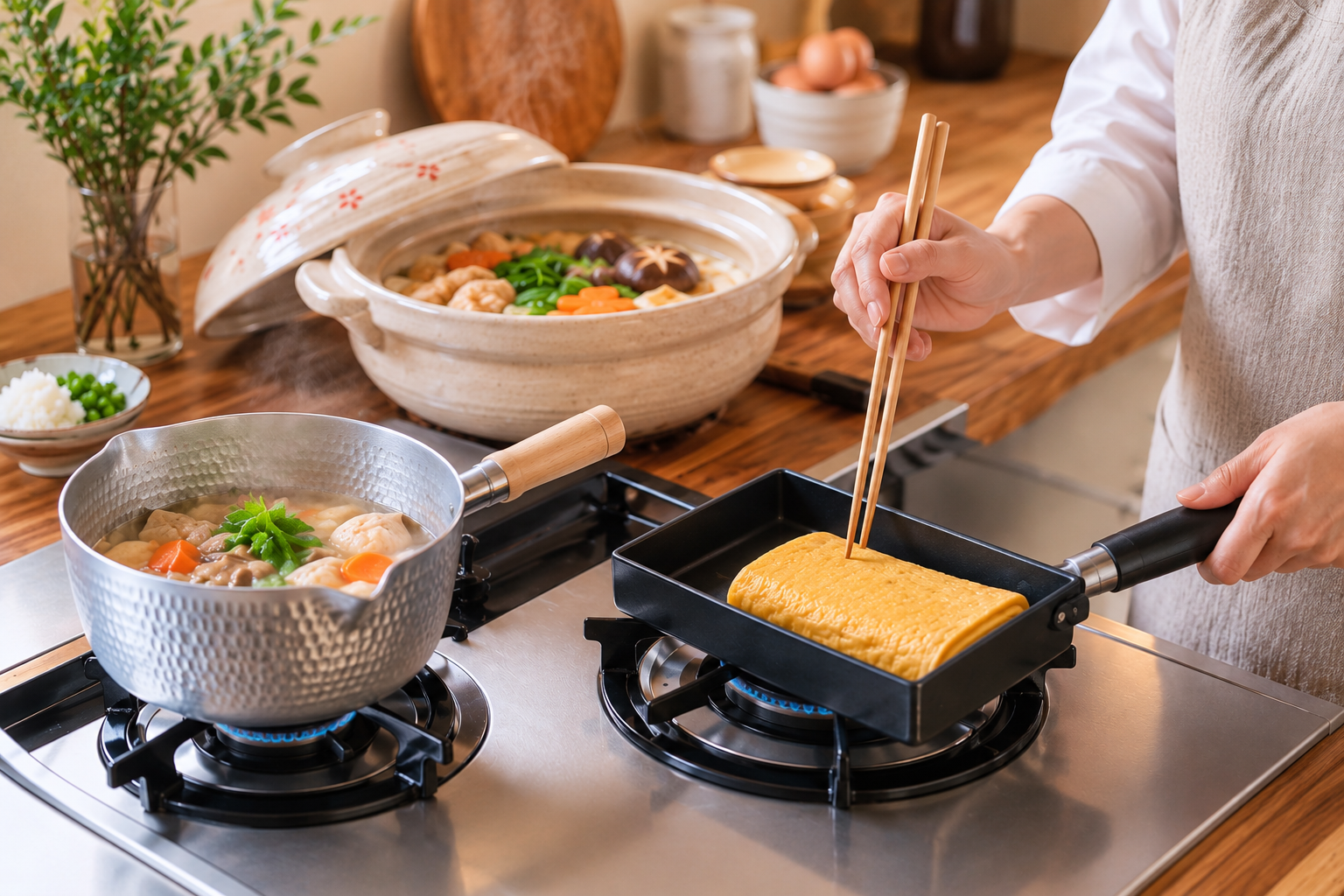
If you want a practical starting point, begin with a yukihira pot for daily boiling and simmering, add a tamagoyaki pan if you cook eggs or small portions often, and choose a donabe when you want gentle heat, table-friendly presentation and traditional clay-pot cooking. The best Japanese cookware is not one “best” pan, but the right shape and material for your stove, cooking style and tolerance for maintenance.
What You’ll Learn
- What donabe, tamagoyaki pans and yukihira pots are best at
- How material affects heat retention, responsiveness and upkeep
- Which cookware is usually safe for gas, electric or induction use
- What overseas buyers should verify before purchasing
- How to care for clay, iron and metal cookware correctly
What Makes Japanese Cookware Different
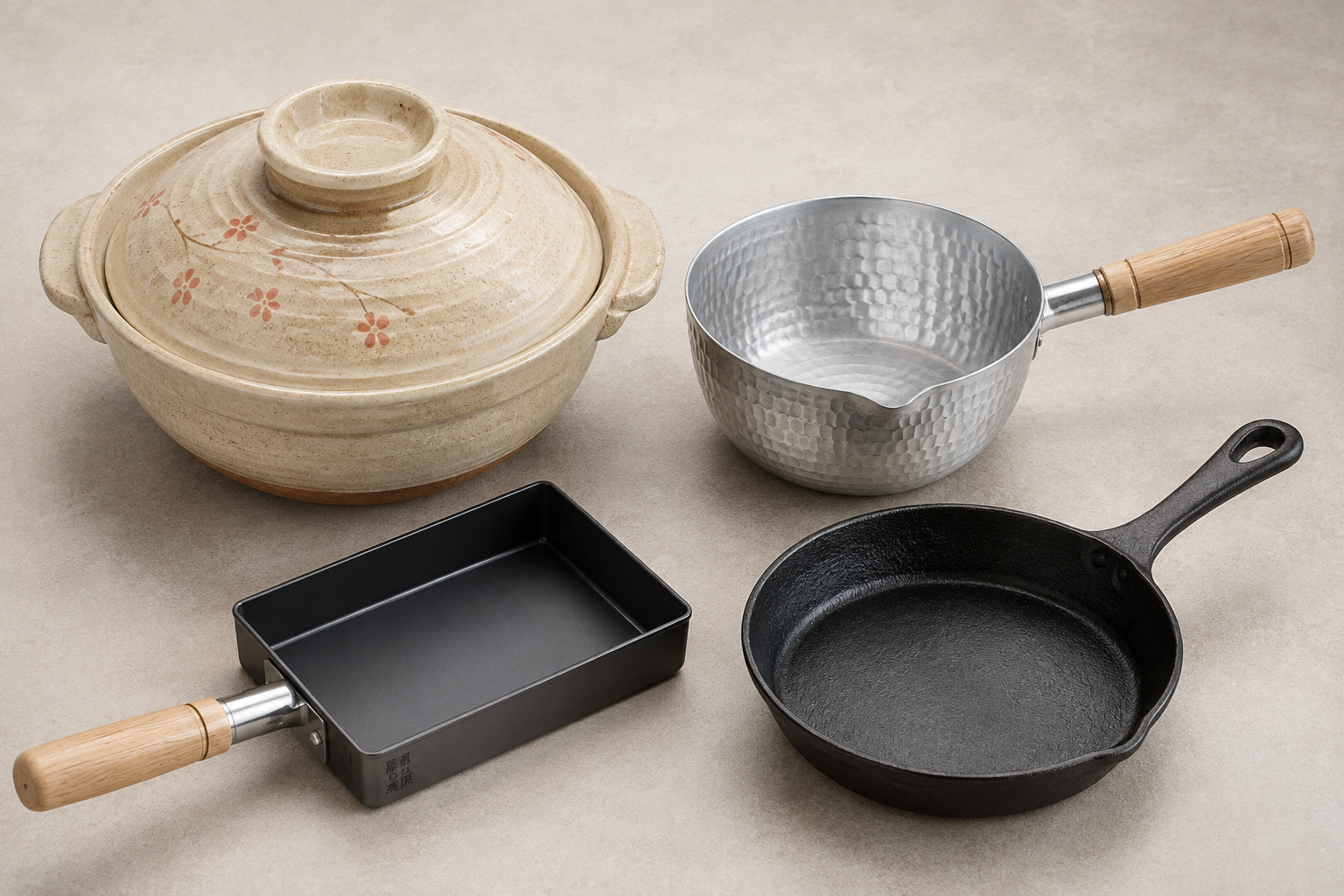
Japanese cookware tends to be purpose-built. Instead of asking one pan to do everything, many Japanese kitchen tools are shaped around a specific job: a rectangular pan for rolled omelettes, a lightweight hammered pot for soups and noodles, or a clay donabe for slow, even heat and table service.
That does not mean these tools are narrow or impractical. In many homes, they are valued because they solve everyday tasks cleanly and efficiently. The appeal is often a mix of function, material character and long-term use rather than novelty alone.
- Shape usually follows one clear cooking purpose
- Materials often trade speed, heat retention and care needs differently
- Many pieces can go from kitchen to table with very little styling effort
How to Choose the Right Type for Your Kitchen
Before comparing brands, decide what you actually cook. If you mainly simmer broth, make noodles or reheat sauces, a yukihira pot is usually the most flexible starting point. If you make eggs, sandwiches or small breakfasts, a tamagoyaki pan is more useful than its niche reputation suggests. If you enjoy hot pot, rice cooked on the stove or slower communal meals, donabe becomes much more attractive.
Heat source matters just as much as menu. Some Japanese cookware works broadly across gas, electric and induction, while other pieces are limited by material or construction. Also consider storage space, weight, handle comfort and whether you are happy to hand wash and dry cookware carefully.
- Choose by your most common cooking task, not by trend
- Confirm gas, electric or induction compatibility before buying
- Check weight, capacity and handle material for everyday use
- Be realistic about maintenance, especially for clay and iron
Donabe: Best for Gentle Heat, Hot Pot and Table Cooking
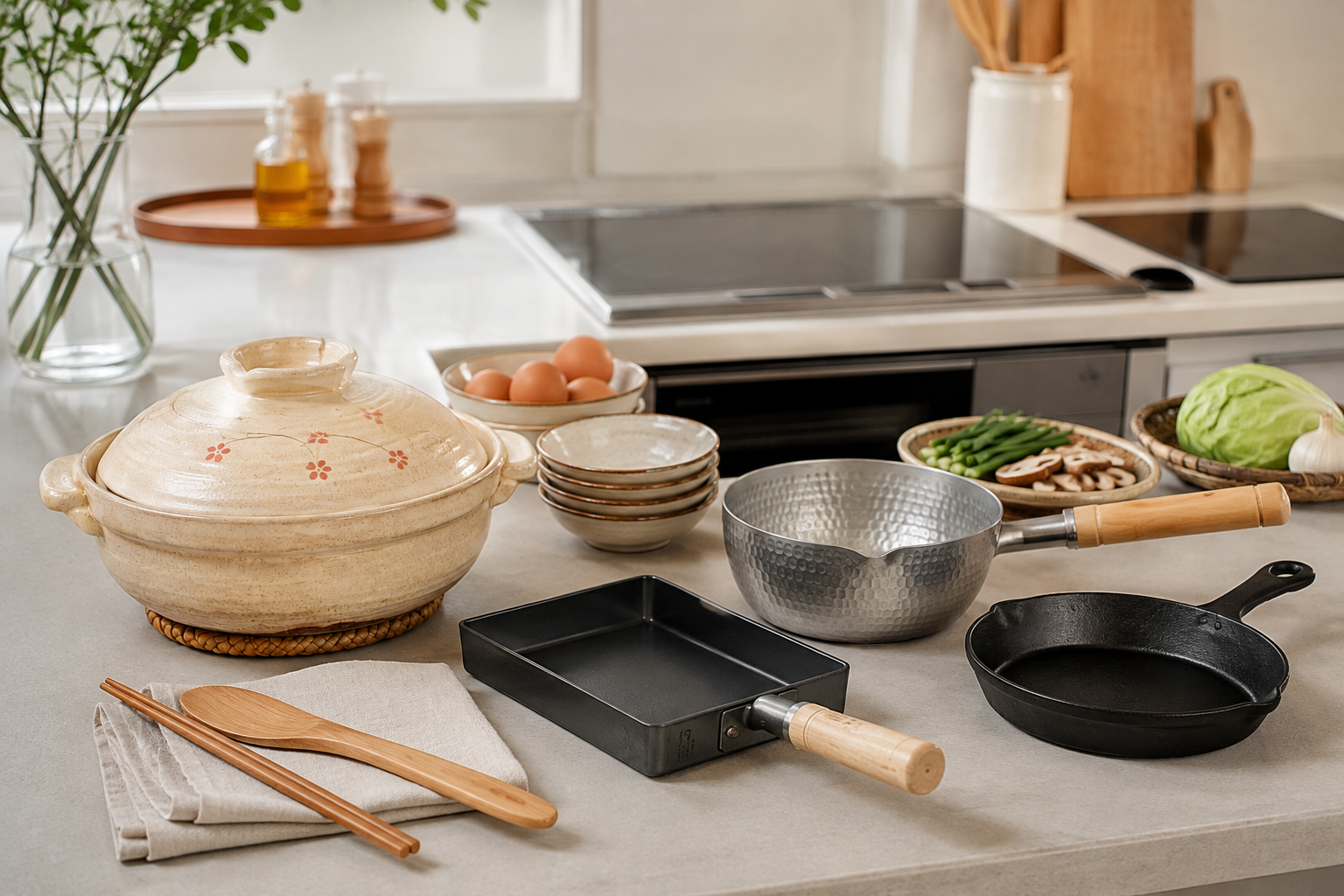
Donabe is a traditional Japanese clay pot prized for steady, gentle heat and a comforting style of cooking. It is especially good for nabemono hot pot, porridge, rice and dishes that benefit from gradual heat build-up and lingering warmth after the flame is turned off.
The trade-off is care. Donabe is more fragile than metal cookware, often requires an initial seasoning step before first use, and must be dried thoroughly to prevent odor, mold or cracking problems. It is also not automatically suitable for induction; many donabe are meant for direct flame unless the maker states otherwise.
- Best for hot pot, rice, porridge and gentle simmering
- Excellent heat retention and table presentation
- Requires careful drying and more thoughtful handling
- Induction compatibility must be checked model by model
Tamagoyaki Pans: Small, Rectangular and More Useful Than They Look
A tamagoyaki pan is designed for Japanese rolled omelettes, and the rectangular shape makes it much easier to build neat layers and square edges. That same shape also works well for compact breakfasts, grilled sandwiches, small fillets and quick side dishes for one or two people.
You will see different material options. Iron versions reward steady use and develop character over time, while nonstick versions are easier for beginners. Copper pans are admired for fast and even heat response but usually demand more attention and care. The right choice depends on whether you prioritize convenience, control or craftsmanship.
- Ideal for rolled eggs and small-portion cooking
- Iron offers durability, nonstick offers ease, copper offers precision
- Compact size is helpful in small kitchens and for solo cooking
Yukihira Pots: The Most Versatile Everyday Option
Yukihira pots are lightweight Japanese saucepans, often recognized by their hammered surface and pouring lip. They heat quickly, pour cleanly and feel nimble in daily use, which makes them excellent for soups, dashi, instant noodles, blanching vegetables and small batches of sauce or porridge.
For many overseas buyers, this is the safest first purchase because it covers a lot of ordinary cooking without demanding specialist technique. The main thing to watch is the exact material and heat-source specification, because not every model behaves the same on induction or in dishwashers.
- Fast heating and easy pouring
- Strong choice for soup, broth, sauce and daily stovetop tasks
- Usually the most approachable entry point into Japanese cookware
Other Japanese Cookware Worth Knowing
Beyond the three headline types, Japanese cookware also includes cast-iron pans and nabe, rice pots, earthenware serving vessels and specialized grill or fish pans. These tools can be excellent, but they make the most sense once you know what problem you want them to solve.
Cast iron is worth considering if you want powerful searing and long heat retention. A dedicated rice pot may appeal if you prefer stovetop rice and want a shape optimized for it. In other words, “and more” should be taken literally: Japanese cookware is broad, but the best choices are still the ones that fit your cooking life.
- Cast iron suits searing and heat retention
- Rice pots suit cooks who want stovetop rice with purpose-built shape
- Specialty pieces are best added after you understand your routine
Heat Source, Safety and Care
Always verify compatibility instead of assuming. Donabe often works only over direct flame unless specifically labeled for induction. Metal pans and pots may support gas and induction, but the base structure matters. A product page or manual should clearly state supported heat sources and any temperature or care warnings.
Care rules also change by material. Clay cookware should be dried completely. Iron cookware may need seasoning or at least careful drying after washing. Nonstick surfaces should be treated gently, ideally with silicone or wooden utensils and moderate heat. Wooden handles can feel comfortable, but they also mean you should confirm oven and dishwasher limits.
- Check supported heat sources on the official product page or manual
- Do not put clay cookware on induction unless the maker explicitly allows it
- Dry clay and iron cookware thoroughly after washing
- Use gentle utensils and moderate heat on coated surfaces
Buying Route and Authenticity Checks
When buying from Japan online, product detail matters more than marketing language. Look for material, dimensions, capacity, heat-source compatibility, country of origin, care instructions and, where relevant, model numbers. Good listings usually explain what the cookware is for instead of describing it only as premium or authentic.
For higher-risk categories such as fragile donabe or heavier cast-iron items, review shipping terms and return conditions before ordering. If you are comparing multiple stores, use the official maker site as a reference point for specs and care guidance. That helps you judge whether a marketplace listing is complete, consistent and credible.
- Check material, dimensions, capacity and heat-source compatibility
- Use official maker information to verify specs and care guidance
- Be extra cautious with fragile clayware and heavier cast-iron products
- Choose retailers that provide clear product details and realistic shipping policies
FAQ
- What is the best first piece of Japanese cookware for beginners?
- For most people, a yukihira pot is the easiest starting point because it handles many ordinary tasks such as soup, noodles, sauces and reheating without requiring special technique.
- Can I use donabe on an induction cooker?
- Only if the maker specifically says the model supports induction. Many traditional donabe are intended for direct flame and should not be used on induction by default.
- Is a tamagoyaki pan only useful for eggs?
- No. It is excellent for eggs, but the rectangular shape also works well for small sandwiches, compact breakfasts, fish fillets and one- or two-person side dishes.
- Why do many yukihira pots have a hammered surface?
- The hammered look is a traditional design feature and is commonly associated with this style of pot. It also helps distinguish yukihira from ordinary smooth-walled saucepans, though the real value comes from the pot’s lightweight shape, pouring lip and everyday usability.
- Which is better for gifting: donabe, tamagoyaki pan or yukihira?
- A yukihira pot is usually the safest gift because it is broadly useful. A tamagoyaki pan suits someone who enjoys breakfast cooking or bento-style meals, while donabe makes the most sense for someone who specifically enjoys hot pot, table cooking or traditional clay cookware.
Official References
Heat-Source Compatibility Comes Before Cookware Style
Gas: most conventional pots and pans are straightforward, but flame size and handle heat still matter. Induction: verify that the base is induction-compatible rather than assuming all metal cookware will work. Electric coil or glass-top: flat, stable bases are easier to use than shapes designed around open flame.
Donabe and specialty cookware deserve separate attention because material, base construction and thermal-shock instructions vary by maker. Check the manufacturer’s care guidance before placing any Japanese cookware on a heat source it was not designed for.
For overseas buyers, the safest sequence is: heat-source check, dimensions and weight, care requirements, then price and aesthetics.
Final Thoughts
Japanese cookware works best when you match the tool to the task. A yukihira pot often gives the broadest everyday value, a tamagoyaki pan brings precision to compact cooking, and donabe offers a slower, more atmospheric style of cooking that many people love once they understand its care needs. Buy for your stove, your routine and your willingness to maintain the material, and you are far more likely to end up with cookware you truly keep using.