Watoria Guide
Best Japanese Tableware Sets: Ceramic, Lacquerware and Glass
A practical guide to choosing Japanese tableware by material, everyday use, care, storage and overseas buying fit, with clear roles for ceramic, lacquerware and glass.
- Quick Answer
- What You’ll Learn
- Start With the Meals You Actually Serve
- Ceramic Sets: The Most Versatile Everyday Base
- Lacquerware: Best as Lightweight Bowls and Serving Accents
- Glass: Best for Drinks, Sake and Visual Contrast
- How to Mix Ceramic, Lacquerware and Glass Without Making the Table Look Random
- What 'Japanese' Actually Means When Shopping Online
- Size, Weight, Stackability and Compatibility Checks
- Care, Shipping and Breakage: What to Confirm Before Buying
- FAQ
- Related Guides
- Official References
- Shipping Risk Changes the Best Tableware Choice
- Final Thoughts
- Keep exploring Japanese culture
- Continue to the best buying / booking route
- Continue exploring
- Useful guides
- Discover more Japan
- Primary sources
Quick Answer
For most households, the most flexible Japanese tableware setup is ceramic-first: plates, rice bowls and small side dishes give you the broadest everyday coverage. Add lacquerware when you want light bowls, trays or a warmer traditional accent, and add glass for water, sake and serving pieces that benefit from transparency and sparkle. Do not choose by appearance alone. Check exact dimensions, weight, stackability, maker-stated microwave and dishwasher guidance, surface finish, replacement availability and international packing before you buy. A mixed set that performs well for your meals is usually more useful than a perfectly matched boxed set.
What You’ll Learn
- Why ceramic is usually the safest base for an everyday Japanese tableware set
- Where lacquerware adds real functional value rather than just decoration
- How cut glass and simple glassware fit into Japanese dining without overcomplicating the table
- Which size, storage, care and compatibility details matter most when buying online
- How to judge Japanese origin and craftsmanship without relying on vague 'Japanese-style' marketing
Start With the Meals You Actually Serve
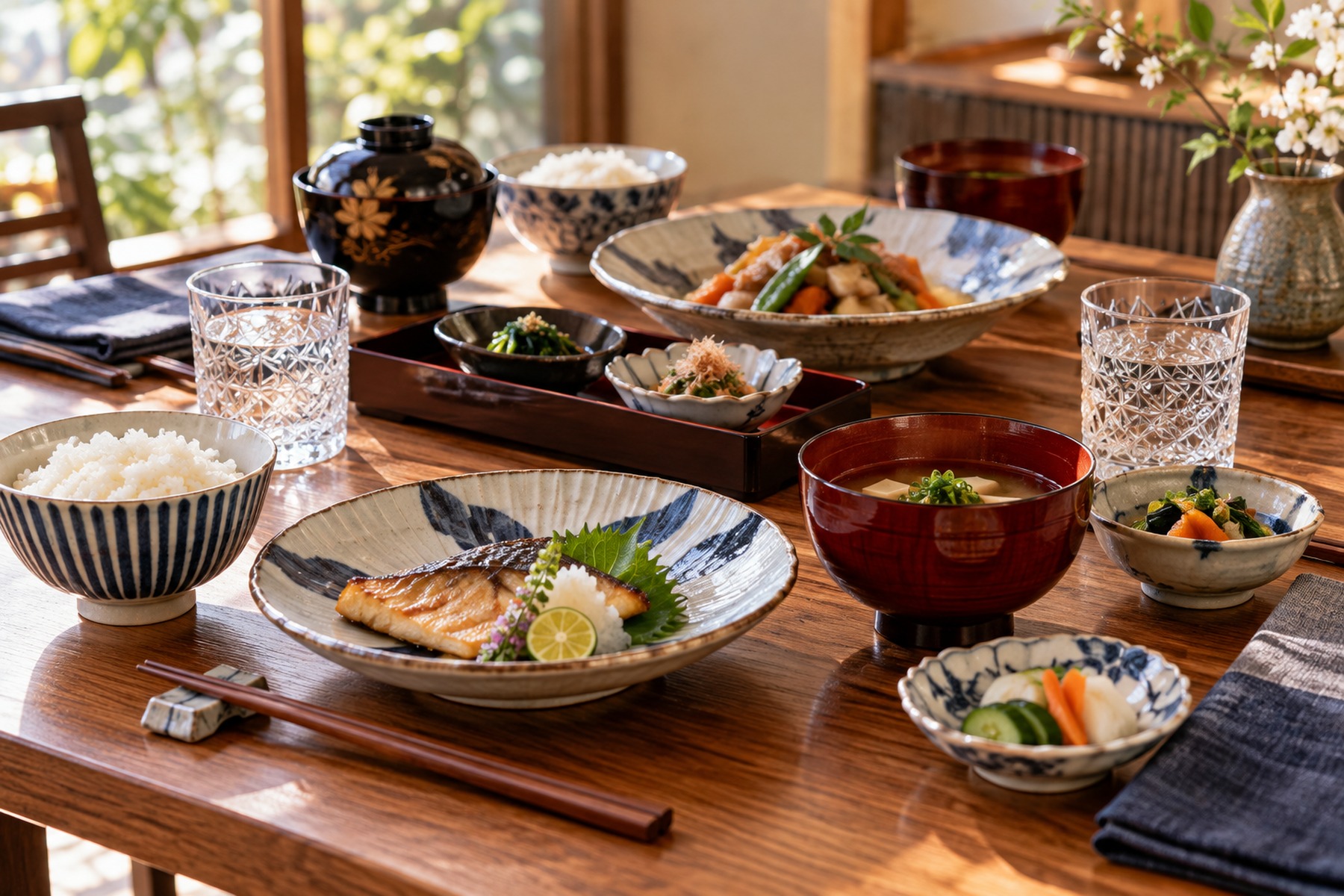
A useful tableware set starts with meal structure, not with a matching pattern. Japanese meals often use several smaller vessels at once: a rice bowl, soup bowl, main plate, one or more small dishes, chopsticks and a drinking glass or cup. That does not mean you need a large coordinated service. It means each piece should have a clear job and fit your storage, portion sizes and cleaning routine.
If you are buying your first set, prioritize the pieces you will use several times a week. A practical base is four to six dinner or medium plates, rice bowls, small side bowls and simple drinking glasses. Add specialized sake ware, lacquer trays, serving platters or highly decorative pieces later. This keeps the first purchase useful even if your taste changes.
For overseas buyers, this approach also reduces breakage and shipping waste. A smaller group of versatile pieces is easier to inspect, pack and replace than a large set built around one pattern.
- Buy for your normal meals before buying for display.
- Favor repeat-use shapes over oversized presentation pieces.
- Treat a 'set' as a coordinated system of useful pieces, not necessarily one manufacturer or pattern.
- Check cabinet depth and shelf height before ordering tall bowls, stemware or large platters.
Ceramic Sets: The Most Versatile Everyday Base
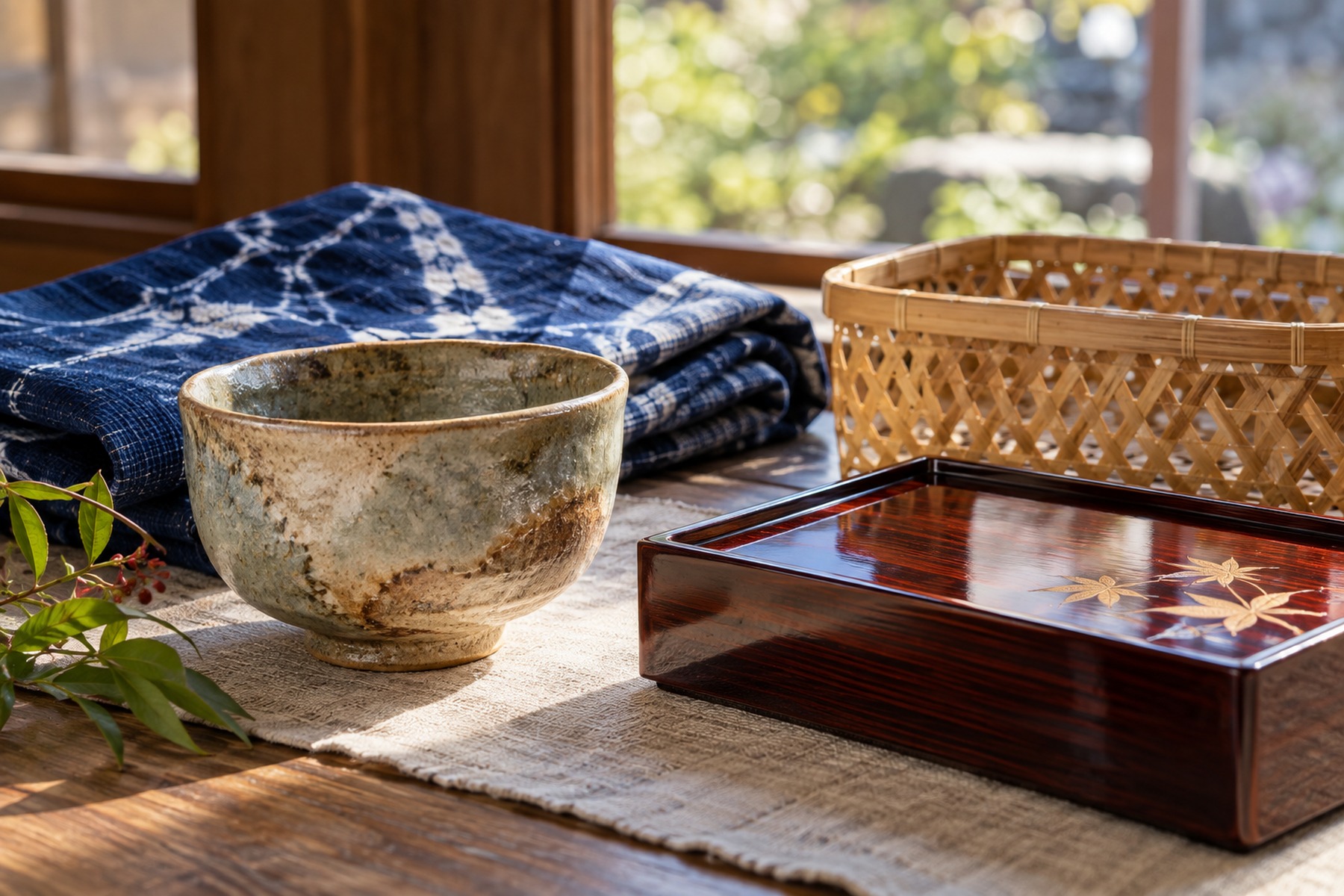
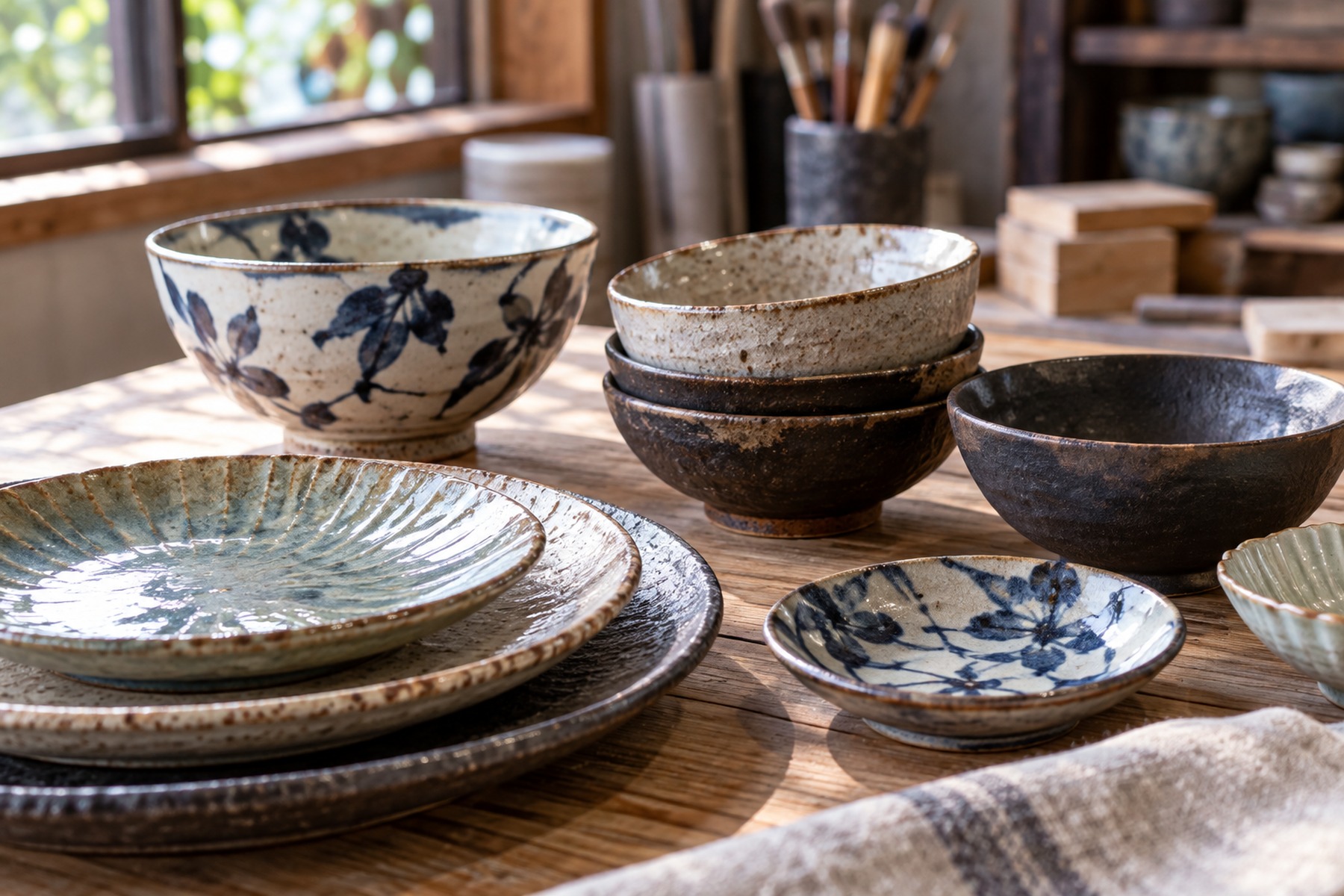
Ceramic is the easiest material around which to build an everyday Japanese table. Japan has many pottery and porcelain traditions, and the Association for the Promotion of Traditional Craft Industries lists Imari-Arita ware among the designated ceramic crafts of Saga Prefecture. The important point for a buyer is not that one region is automatically better; it is that Japanese ceramics span very different bodies, glazes, decoration styles and vessel shapes.
For daily use, look for sizes that match your food rather than relying on generic 'small' or 'large' labels. A plate around your usual main-course size, rice bowls that feel stable in the hand, and side dishes shallow enough to stack efficiently will get far more use than a visually dramatic set that does not fit your routine.
Care compatibility varies by actual product. Some ceramic pieces are designed for modern microwave and dishwasher use; others have metallic decoration, delicate overglaze work, crackle surfaces or maker-specific restrictions. Treat the maker's care instructions as the authority for the exact item.
- Best role: everyday plates, rice bowls, side dishes and serving bowls.
- Check exact diameter, height and capacity rather than judging from photos.
- Confirm microwave, dishwasher and oven guidance on the exact product listing.
- If you want replacements later, favor shapes or lines that are likely to remain available.
Lacquerware: Best as Lightweight Bowls and Serving Accents
Traditional Japanese lacquerware is not simply a glossy decorative coating. Official traditional-craft references describe Wajima nuri as a wood-based craft reinforced in vulnerable areas and built through multiple coating stages; they also note that damaged pieces can be repaired. Kishu shikki is another designated tradition with a strong everyday-use orientation, including trays and tableware.
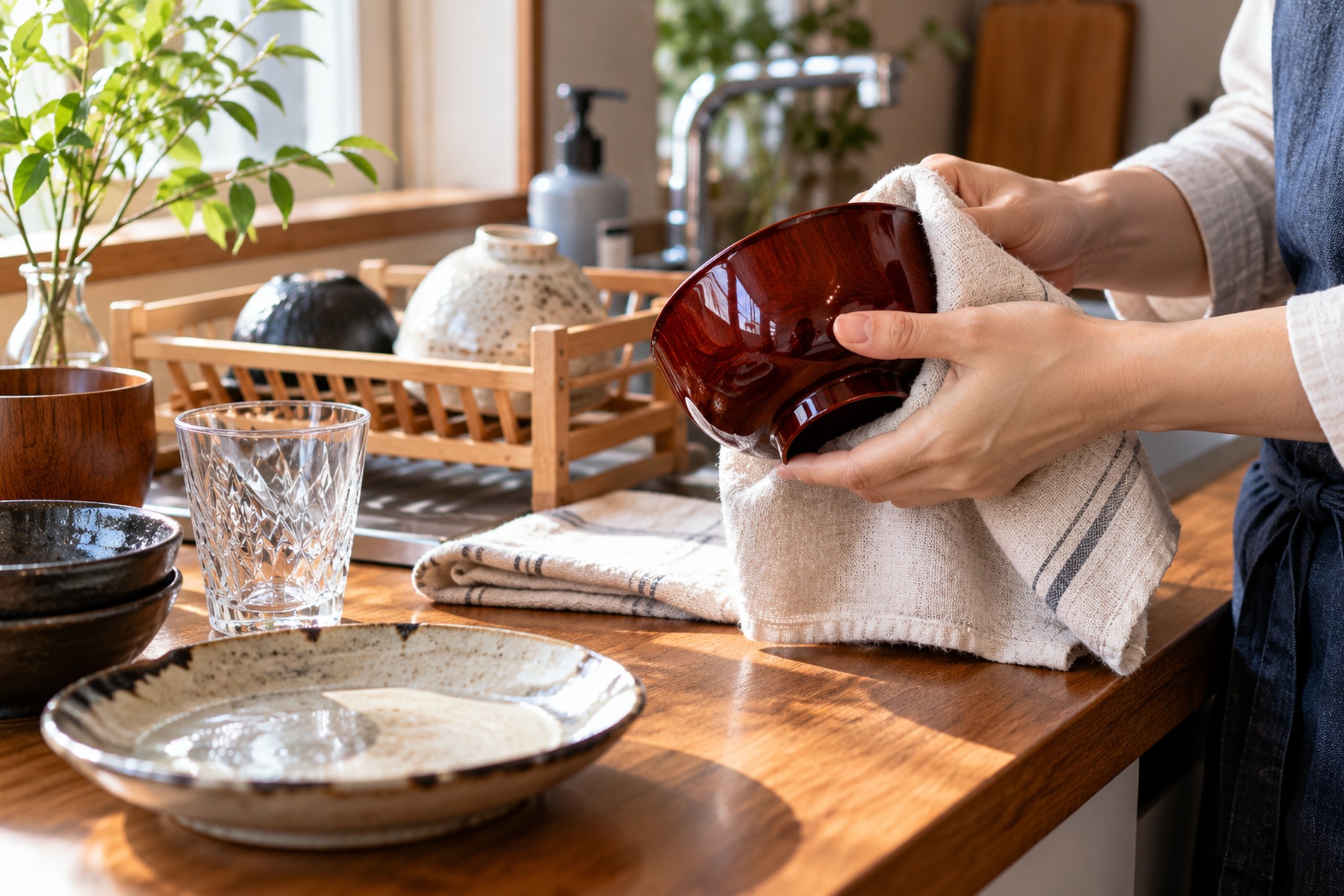
For a modern home, lacquerware works especially well as soup bowls, serving bowls and trays because it adds warmth and a different tactile quality beside ceramic. You do not need every piece at the table to be lacquered. Two or four bowls can create a clear material contrast without turning the entire setting into a formal arrangement.
Natural lacquer, modern synthetic coatings and lacquer-style molded products are not interchangeable. Read the material description carefully. Care rules also vary, so do not assume dishwasher, soaking or high-heat compatibility unless the maker explicitly says so.
- Best role: soup bowls, trays, serving accents and gift pieces.
- Check whether the body is wood or another substrate and whether the finish is natural urushi or a different coating.
- Follow the maker's washing and drying instructions rather than applying one universal rule to all lacquerware.
- For gifts, prioritize clear material and maker information over decorative packaging.
Glass: Best for Drinks, Sake and Visual Contrast
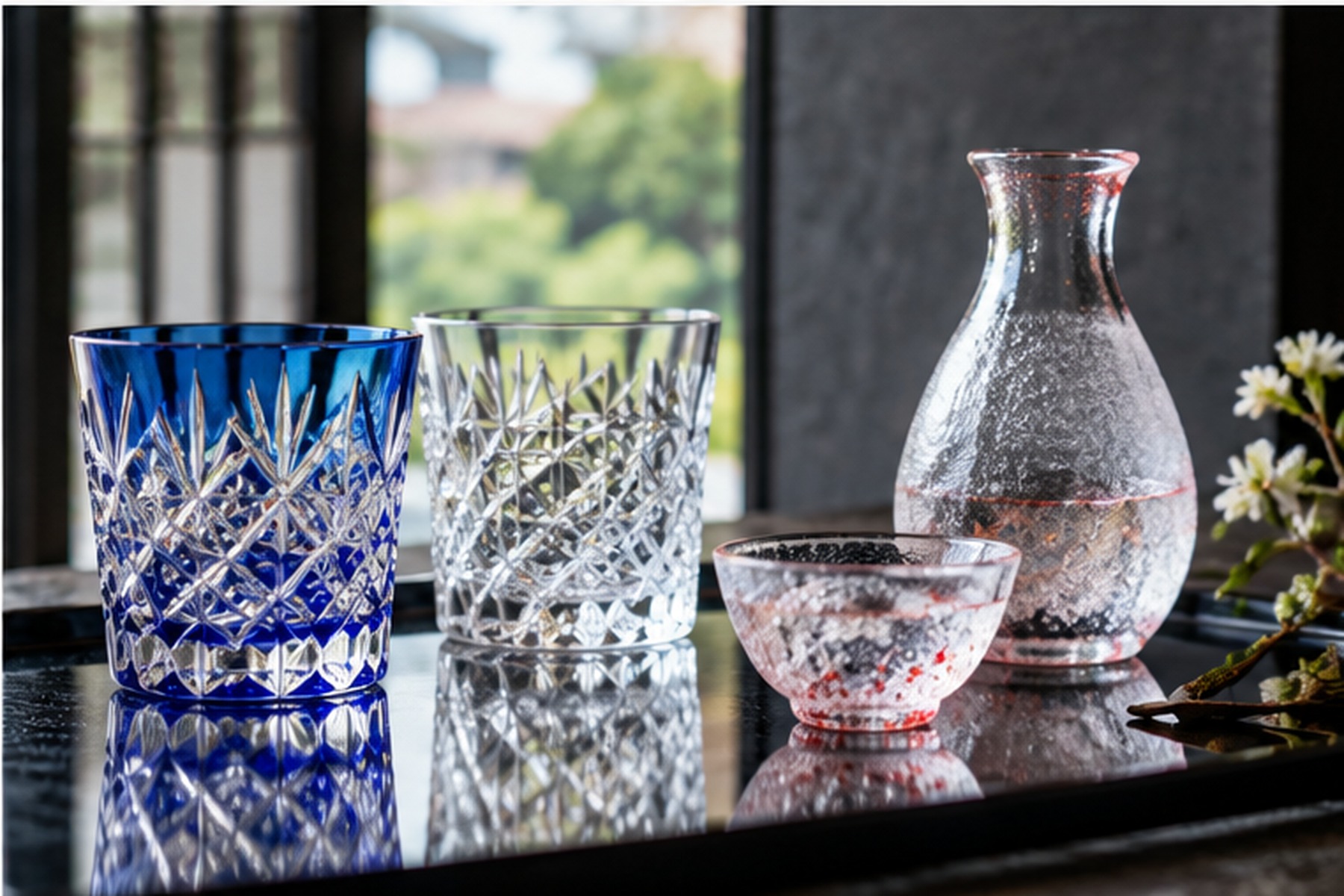
Glass gives a Japanese table visual lightness that ceramic and lacquer cannot. The designated Edo Kiriko tradition is a useful example: official craft documentation describes it as hand-cut glass and lists tableware, sake sets and dining utensils among its products. The same source notes that the base material can be crystal glass or soda glass.
That does not mean every Japanese glass set should be ornate cut glass. Clear tumblers, simple sake cups and small serving bowls can be easier to combine with heavily patterned ceramics. Decorative cut glass is most effective when the rest of the table gives it room to stand out.
As with ceramics, heat tolerance and dishwasher suitability depend on the specific glass composition and product design. A beautiful glass is not automatically suitable for hot tea, sudden temperature changes or machine washing. Check the maker's stated use before treating it as all-purpose drinkware.
- Best role: water glasses, sake ware and transparent serving accents.
- Choose simple glass if your ceramics already carry strong patterns.
- Choose cut glass as a focal point rather than trying to match every vessel.
- Verify temperature and dishwasher guidance for the exact glass.
How to Mix Ceramic, Lacquerware and Glass Without Making the Table Look Random
The easiest way to mix materials is to hold one variable steady. You can repeat a color, keep most shapes simple, or use one dominant material and two accents. For example, neutral blue-and-white ceramics can carry the main meal, dark red or black lacquer bowls can handle soup, and clear glass can disappear visually until it catches the light.
Avoid trying to match every motif. Japanese table settings often feel coherent because of proportion and rhythm rather than identical decoration. A restrained palette also makes replacement easier: when one piece breaks, you can add another vessel with a compatible color and scale instead of hunting for the exact discontinued pattern.
If you are uncertain, start with an approximately 70/20/10 material balance: ceramic as the main body of the set, lacquerware as the secondary element, and glass as the light accent. The exact ratio is not a rule; it is a practical way to prevent three materials from competing equally.
- Repeat one color across different materials.
- Use simple shapes when patterns are already strong.
- Keep decorative cut glass or elaborate lacquerware to a few focal pieces.
- Buy replacement-friendly basics first, collectible statement pieces second.
What 'Japanese' Actually Means When Shopping Online
The phrases 'Japanese tableware,' 'Japanese style' and 'made in Japan' do not mean the same thing. A seller can use Japanese-inspired styling without the item being made in Japan, and a Japanese brand may manufacture some lines elsewhere. If origin matters to you, look for an explicit country of manufacture, production area, maker or kiln, material specification and product-specific care information.
Traditional-craft names such as Imari-Arita yaki, Wajima nuri and Edo Kiriko refer to defined craft traditions, not generic decoration. Official traditional-craft references can help you understand what a recognized production tradition actually involves, but the presence of a familiar word in a marketplace title is not, by itself, proof of origin or certification.
For expensive pieces, compare the seller's claims with the maker, cooperative or recognized craft organization. Clear maker identity and material disclosure are more useful buying signals than vague phrases such as 'artisan inspired' or 'premium Japanese design.'
- Look for explicit country of manufacture, not just a Japanese-looking brand name.
- For regional crafts, verify the maker or production area when authenticity matters.
- Do not treat a marketplace title as proof of traditional-craft status.
- For high-value pieces, save the maker and care information with your purchase records.
Size, Weight, Stackability and Compatibility Checks
Online tableware disappointments often come from scale rather than quality. A bowl that looks generous in a styled photo may be much smaller than your usual cereal or noodle bowl. A thick handmade plate may be heavier than expected. A beautiful irregular rim may prevent efficient stacking. These are practical characteristics, not defects, but they matter in a small kitchen.
Before buying, convert every listed dimension into units you actually use and compare them with a plate or bowl already in your cabinet. Check weight when available, especially if you are buying a full service. For cups and glasses, confirm usable capacity rather than relying on external height alone.
Also check how the pieces interact with appliances and furniture. Measure dishwasher rack clearance, microwave turntable diameter and cabinet shelf depth if those features matter. If the product page does not state compatibility, do not assume it.
- Compare listed dimensions with a vessel you already own.
- Check total set weight if you have limited storage or mobility concerns.
- Think about stack height, not only individual piece height.
- Treat microwave, oven and dishwasher safety as product-specific claims that require confirmation.
Care, Shipping and Breakage: What to Confirm Before Buying
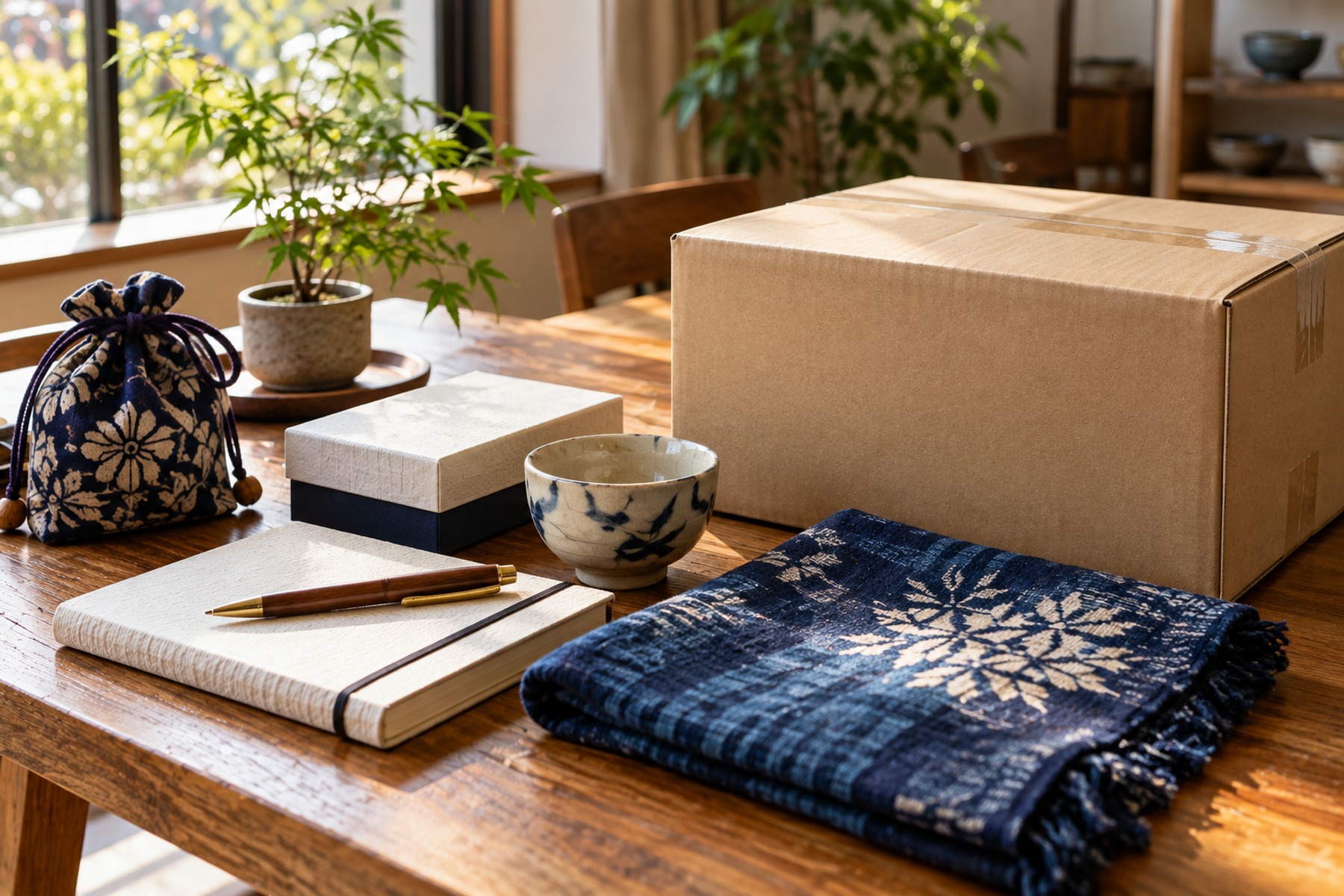
Fragile tableware becomes more complicated when it crosses borders. The item's own price is only one part of the decision; packing quality, parcel size, international shipping, import charges, damage procedures and return feasibility can materially change the value of a set. Heavy ceramic and glass can be costly to ship, while an oversized box can push shipping into a higher dimensional-weight band.
If a Japanese shop does not offer direct international checkout, a proxy route can sometimes provide access to the product. That adds another handling and shipping stage, so it makes the most sense for Japan-only pieces that are difficult to buy directly. For ordinary export-ready tableware, direct purchase can be simpler if the seller already provides reliable overseas shipping.
When the parcel arrives, inspect it before discarding the packaging. Photograph visible box damage, check every piece, and follow the seller or carrier's claim procedure promptly. For handmade ceramics or glass, distinguish normal variation in glaze, shape or bubbles from actual chips, cracks and transit damage by reading the maker's description before ordering.
- Check how fragile items are packed and whether damage claims are documented.
- Compare direct international shipping with any proxy or forwarding route on total landed cost.
- Keep packaging until you have inspected every piece.
- Read the maker's notes on handmade variation before treating visual differences as defects.
FAQ
- What type of Japanese tableware is best for everyday use?
- For most homes, ceramic is the easiest everyday base because it covers plates, rice bowls, side dishes and serving pieces. Add lacquerware for soup bowls or trays and glass for drinks rather than forcing every material into a complete matching service.
- Is Japanese lacquerware dishwasher safe?
- Do not assume so. Lacquerware construction and finishes vary widely, including natural urushi and other coatings. Follow the care instructions for the exact maker and item; if dishwasher use is not explicitly stated, hand washing is the safer default.
- Can Japanese ceramics go in the microwave?
- Some can and some should not. Metallic decoration, certain glazes and maker-specific construction can change the answer. Check the exact product's microwave guidance instead of relying on the fact that it is ceramic or porcelain.
- How can I tell whether Japanese tableware is actually made in Japan?
- Look for an explicit country of manufacture, named maker or kiln, production area, material details and maker-level documentation. 'Japanese style' describes appearance, not manufacturing origin.
- Should I buy a complete matching set or mix pieces?
- A mixed set is often more practical. Start with compatible sizes and a restrained color palette, then combine ceramic, lacquerware and glass by function. Matching every pattern is less important than storage, care, replacement and how the pieces work with your meals.
Official References
Shipping Risk Changes the Best Tableware Choice
Ceramic: versatile but breakable; verify protective packing and replacement availability. Lacquerware: lighter for international shipping but requires material-specific care. Glass: visually distinctive but usually the highest breakage risk in a mixed parcel.
Before ordering a full set, compare dimensions and weight against your cupboards, dishwasher and typical meals. A smaller mixed set can be more useful than a large coordinated set that is expensive to ship and difficult to replace.
For Japan-only tableware, Remambo is one tracked proxy route. Ask what packing options are available and compare the total landed cost before committing to fragile goods.
Final Thoughts
The strongest Japanese tableware set is not the one with the most pieces or the most famous regional name. It is the one whose sizes, materials and care requirements fit the way you actually eat. For most buyers, ceramic should do most of the work; lacquerware can add lightness and warmth where it is genuinely useful; glass can add clarity and contrast. Verify maker, origin, dimensions, care and shipping before you buy, then build the set gradually enough that every piece earns its place at the table.