Watoria Guide
Pilot vs Platinum vs Sailor: Japanese Fountain Pens for First-Time Buyers
Pilot, Platinum and Sailor all make beginner-friendly Japanese fountain pens, but they solve the first-pen problem differently. Compare nib choices, sealing, size and ink systems before you choose.
- Quick Answer
- What You’ll Learn
- Start with the use case, not the brand name
- Pilot Kakuno: best when you want to learn what nib size you like
- Platinum Prefounte: best when you worry about the pen drying out
- Sailor Lecoule: best when you want one simple nib choice and classic styling
- Nib choice matters more than beginners often expect
- Cartridge first, converter later is the easiest learning path
- Paper can change your opinion of the pen
- How to buy without overcomplicating the first purchase
- FAQ
- Related Guides
- Official References
- Final Thoughts
- Keep exploring Japanese culture
- Continue to the best buying / booking route
- Continue exploring
- Useful guides
- Discover more Japan
- Primary sources
Quick Answer
Choose Pilot Kakuno if you want the widest beginner-friendly nib choice and a lightweight pen designed to make fountain-pen basics easy to learn. Choose Platinum Prefounte if you value a simple adult-looking body and Platinum’s Slip & Seal cap system for reliable starts after periods of non-use. Choose Sailor Lecoule if you want a compact resin pen with a single MF stainless-steel nib choice and a more traditional Sailor look. There is no universal winner: the best first pen depends on how much nib choice, storage reliability and styling matter to you.
What You’ll Learn
- How Pilot Kakuno, Platinum Prefounte and Sailor Lecoule differ as first fountain pens
- Which nib choices each current model offers
- How cartridge and converter options affect ink choice and running cost
- Which pen suits note-taking, journaling or occasional use
- What to check when buying Japanese fountain pens from overseas sellers
Start with the use case, not the brand name
For a first fountain pen, the practical questions matter more than prestige: how fine a line you want, how often the pen may sit unused, whether you want bottled ink, and how much you care about body shape and styling.
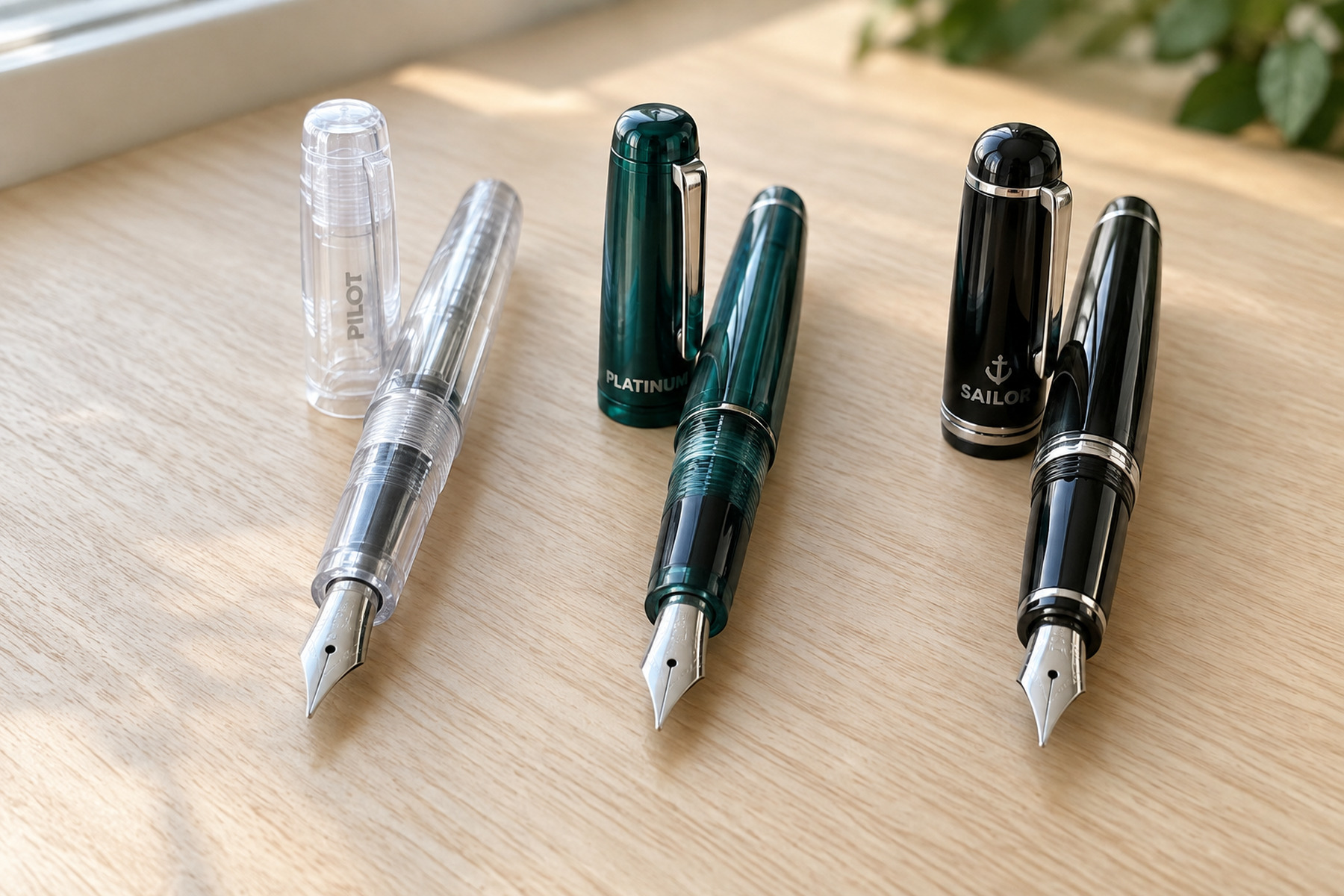
Pilot, Platinum and Sailor all have entry-level models that are explicitly suitable for beginners. For a clean comparison, this guide uses three current representative pens: Pilot Kakuno, Platinum Prefounte and Sailor Lecoule.
- Pilot Kakuno: most nib-choice flexibility in this comparison
- Platinum Prefounte: strongest emphasis on cap sealing and easy everyday storage
- Sailor Lecoule: simplest nib decision and the most compact body of the three representative models
Pilot Kakuno: best when you want to learn what nib size you like
Pilot positions Kakuno as a simple, easy-to-use fountain pen for first-time users. The current Japanese lineup includes EF, F and M nib options on applicable colors, giving a beginner more room to discover whether they prefer very fine everyday writing or a broader line.
Kakuno is also the lightest of the three representative models here at about 11 g, and Pilot lists both CON-40 and CON-70N converters for current Kakuno variants. That makes it a useful first pen if you expect to experiment with bottled ink later.
- Good fit: students, note-takers and anyone unsure which nib width they prefer
- Current nib choices include EF, F and M on applicable variants
- Current Kakuno variants support Pilot cartridges and specified Pilot converters
- Avoid it if you want a more traditional, dress-pen appearance from the start
Platinum Prefounte: best when you worry about the pen drying out
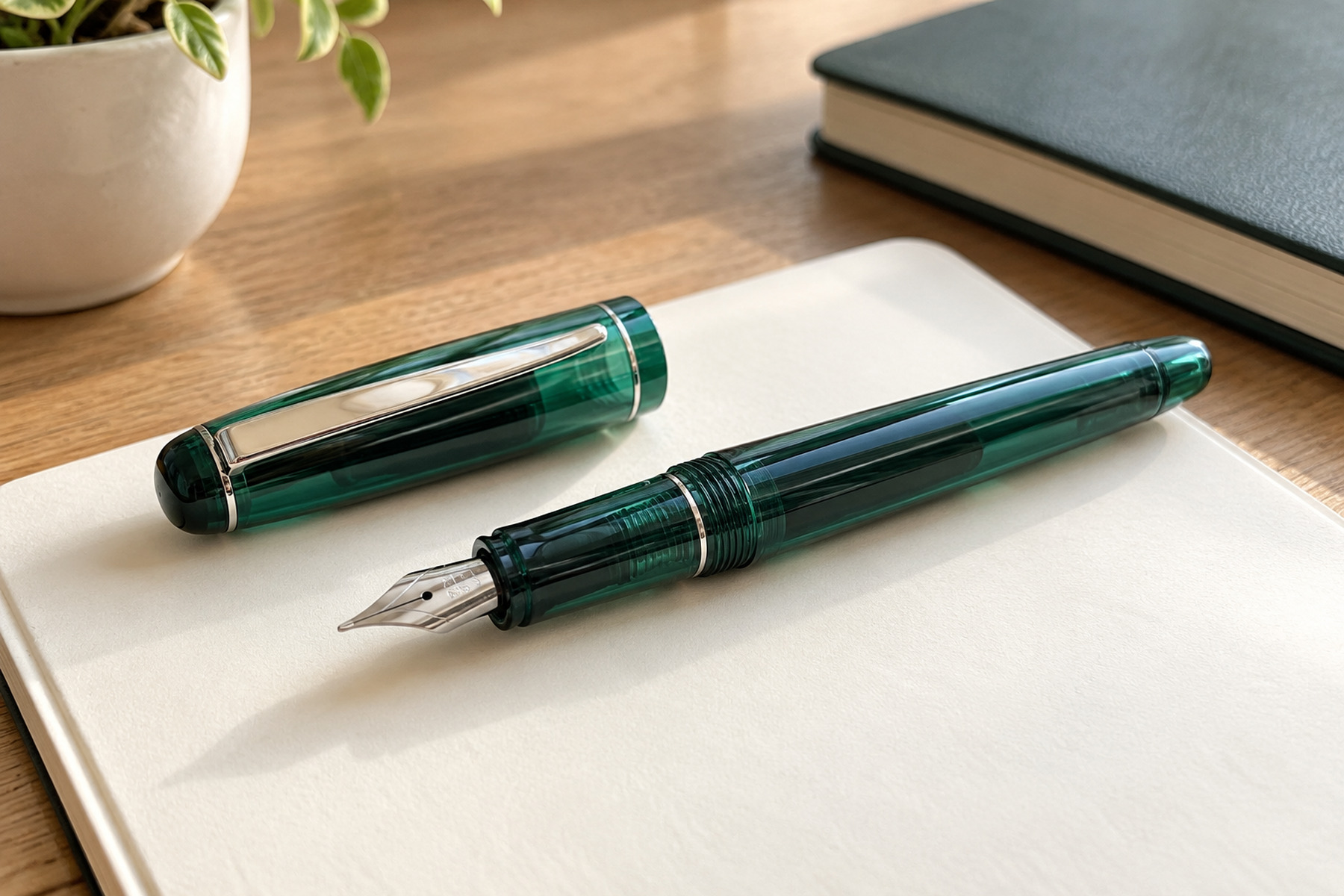
Platinum describes Prefounte as an adult-oriented entry fountain pen that keeps the basic performance of Preppy while using a calmer transparent resin body and metal clip. It is offered with 03 fine and 05 medium stainless-steel nibs.
Its biggest practical advantage is Platinum’s Slip & Seal mechanism. The maker says the cap system is designed to keep ink from drying even after long periods with the cap closed, which is valuable for beginners who may not use a fountain pen every day.
- Good fit: occasional writers and people who want low-fuss storage
- Nib choices are simpler than Kakuno: 03 fine or 05 medium
- Transparent resin styling is more subdued than many playful starter pens
- Use Platinum-specified cartridges or converters rather than assuming cross-brand compatibility
Sailor Lecoule: best when you want one simple nib choice and classic styling
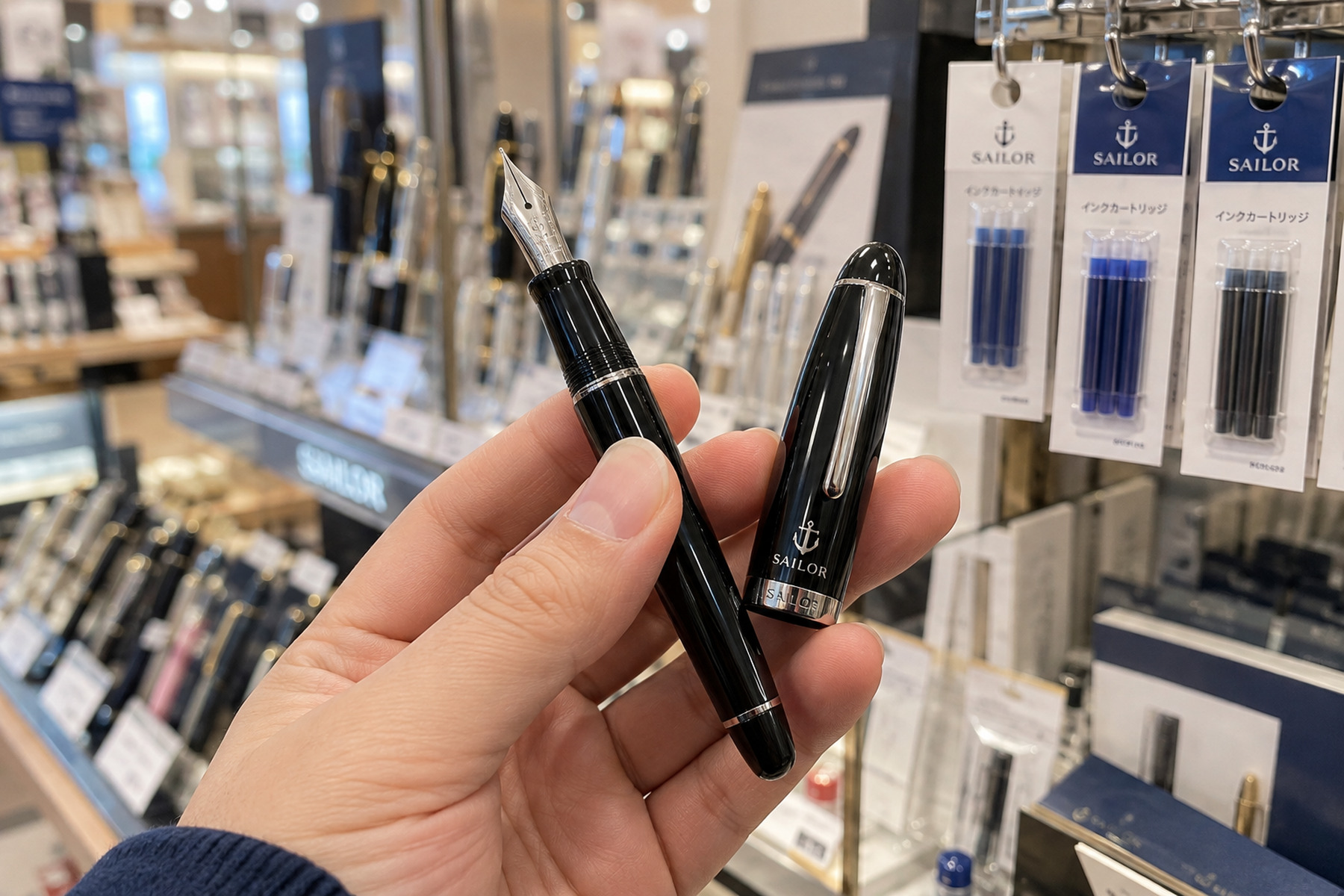
Sailor explicitly describes Lecoule as easy to write with even for beginners. The current model uses a stainless-steel MF nib and a cartridge-and-converter ink system, so you do not have to choose among several nib grades before you have learned what those differences mean in practice.
At about 123 mm long including the clip and 12.4 g, Lecoule is the shortest of the three representative models in this guide. Its resin body and metal trim give it a more conventional fountain-pen silhouette than Kakuno.
- Good fit: first-time buyers who want a compact pen and a simple nib decision
- Current Lecoule uses one MF stainless-steel nib option
- Supports Sailor cartridge and converter filling
- Check authorized-market availability because Sailor notes that specifications and availability can vary by market
Nib choice matters more than beginners often expect
Do not assume that an F or M label from one manufacturer will feel or write exactly like the same letter from another. Nib geometry, tipping, ink and paper all affect the line you see.
If your handwriting is small or you write on planners and ordinary office paper, a finer option is usually easier to control. If you journal on fountain-pen-friendly paper and want to see more ink color and shading, a broader option can be more expressive.
- Small handwriting and tight forms: start toward the finer end
- General notes: a fine or medium-fine style is a safe starting point
- Journaling and ink color: a broader nib can show more of the ink
- Lecoule simplifies the choice with MF; Kakuno gives the widest range here
Cartridge first, converter later is the easiest learning path
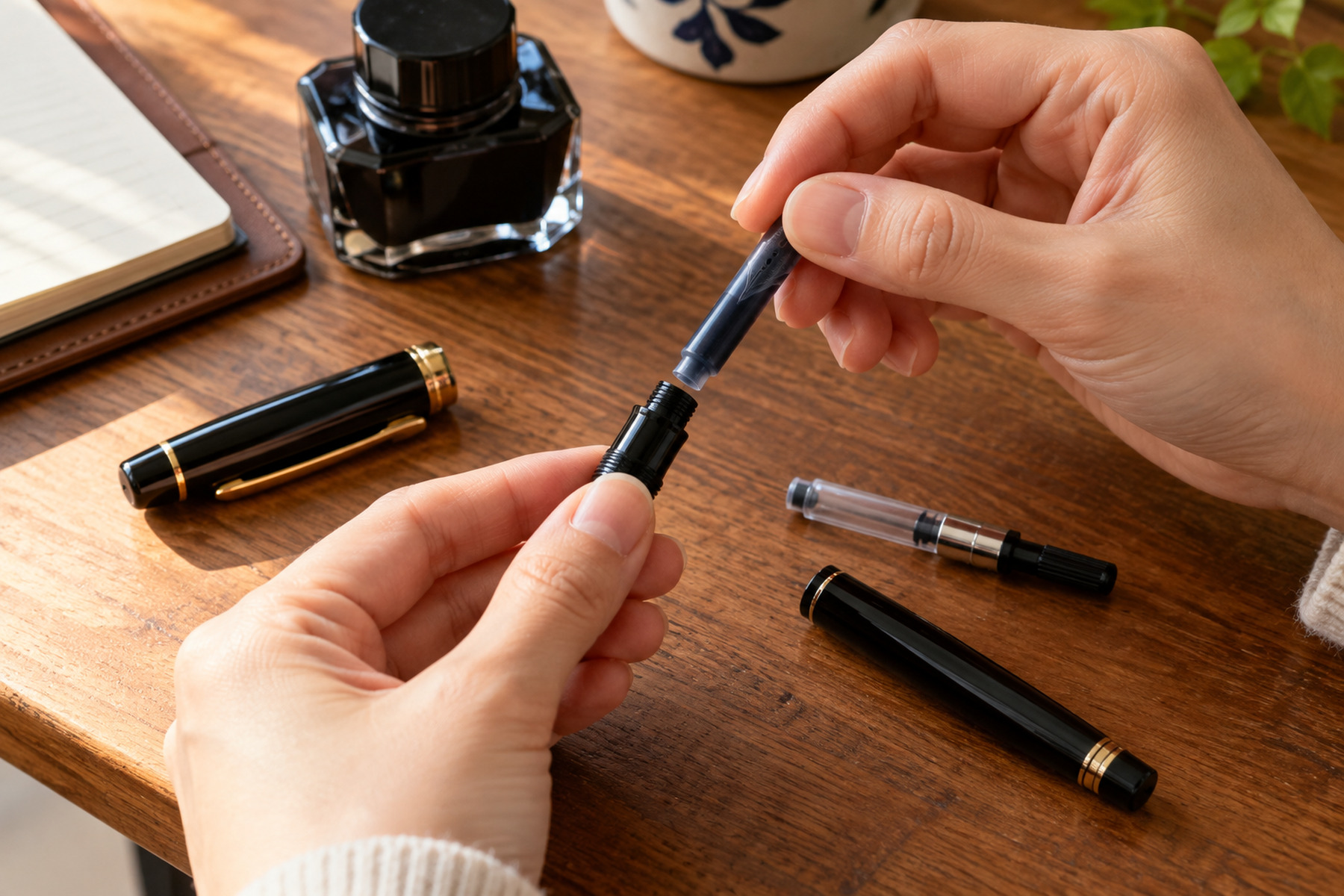
All three representative pens can be used with cartridges, which keeps the first setup simple. Once you are comfortable with filling, cleaning and basic maintenance, a compatible converter lets you use bottled ink.
The converter is not a universal part. Pilot lists specific converters for Kakuno, Platinum specifies its own converter system in its fountain-pen instructions, and Sailor sells its own fountain-pen converter. Buy the refill system specified by the maker for the exact pen you own.
- Start with the included or maker-specified cartridge if you want the least setup
- Move to a converter when bottled-ink choice becomes important
- Do not assume cartridges or converters interchange across Pilot, Platinum and Sailor
- Flush the nib section with clean water when changing inks or when flow becomes unreliable
Paper can change your opinion of the pen
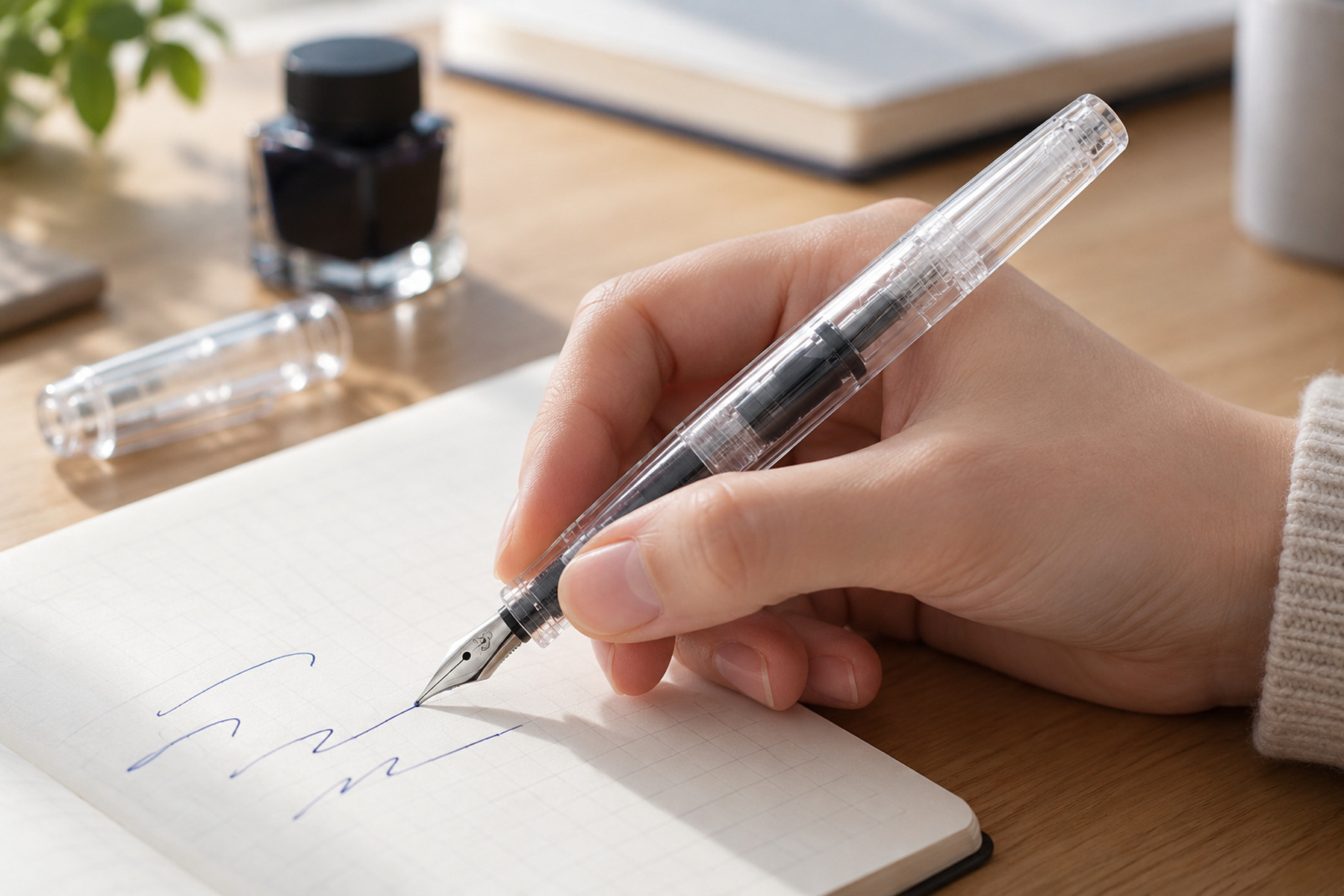
A first fountain pen can seem too wet, too broad or too feathery when the real problem is the paper. Fountain-pen-friendly paper controls spreading and bleed-through better than many cheap notebooks.
Before replacing a pen or nib, test it on more than one paper type. A modest starter pen on good paper can be much more satisfying than an expensive pen used on paper that cannot handle liquid ink.
- Test on a known fountain-pen-friendly notebook before judging the nib
- Use the existing Watoria paper guide when choosing notebooks for fountain pens
- Change one variable at a time: pen, ink or paper, not all three at once
How to buy without overcomplicating the first purchase
For a first pen, buy from the manufacturer’s listed dealers or a seller that clearly identifies the exact model, nib, included cartridge and return conditions. Avoid vague listings that mix model names, old packaging and stock photos without a clear nib specification.
If you are ordering from Japan, check destination shipping, import charges and whether the exact nib or color is available in your market. Watoria is an editorial guide, not a seller, so purchase and shipping conditions must be confirmed with the actual retailer or proxy service before ordering.
- Confirm model name and nib before paying
- Check that replacement cartridges are obtainable where you live
- Do not pay a premium just because a color is described as rare without verification
- Use a proxy only when the model or color you want is genuinely restricted to Japanese shops
FAQ
- Which is easiest for a complete fountain-pen beginner: Pilot, Platinum or Sailor?
- Pilot Kakuno is the easiest if you want to learn nib sizes because the current range includes EF, F and M options. Platinum Prefounte is easiest if storage reliability is your main concern, while Sailor Lecoule simplifies the decision with one MF stainless-steel nib.
- Is Platinum Prefounte the same as Preppy?
- Platinum describes Prefounte as keeping the basic performance of Preppy while using a more adult-oriented transparent resin design and metal clip. It also uses Platinum’s Slip & Seal cap mechanism.
- Can I use bottled ink in these beginner pens?
- Yes, with the compatible converter specified by the manufacturer. Pilot lists compatible converters for Kakuno, Platinum publishes its own converter system, and Sailor offers a dedicated fountain-pen converter.
- Are fountain-pen cartridges interchangeable between Pilot, Platinum and Sailor?
- Do not assume they are. Use the cartridge or converter specified by the maker for the exact pen. This avoids poor fit, leaks and buying refills that cannot be used.
- Should a first-time buyer choose a fine or medium nib?
- Choose based on handwriting and paper. Fine is easier for small writing and tighter forms; medium shows more ink and can feel better for journaling. If you are unsure, test the pen on fountain-pen-friendly paper before deciding the nib is wrong.
Official References
Final Thoughts
Pilot, Platinum and Sailor each offer a sensible first step into Japanese fountain pens, but they emphasize different things. Kakuno gives you the most nib-choice flexibility, Prefounte makes occasional use less intimidating with its sealing system, and Lecoule keeps the buying decision simple with a compact body and MF nib. Pick the feature you will notice every day, then spend the rest of your attention on suitable paper, the right refill system and learning how your own handwriting behaves with liquid ink.