Watoria Guide
How to Choose a Yukata or Kimono Online: Size, Fabric and Accessories
A practical overseas-buyer guide to choosing a Japanese yukata or kimono online, with clear checks for sizing, fabric, accessories, authenticity, care, returns and international delivery.
- Quick Answer
- What You’ll Learn
- Kimono or Yukata: Start with the Occasion
- Size Comes Before Style: How to Read Measurements
- Fabric Changes Comfort, Formality and Care
- Ready-Made, Pattern Order or Custom: Which Route Fits You
- Accessories: What You Actually Need
- Authenticity and Listing Quality: What to Check Online
- Overseas Buying: Returns, Shipping, Duties and Color Accuracy
- Care, Storage and Respectful Wear
- FAQ
- Related Guides
- Official References
- Final Thoughts
- Keep exploring Japanese culture
- Continue to the best buying / booking route
- Continue exploring
- Discover more Japan
- Primary sources
Quick Answer
Choose the garment type first, then verify the seller’s actual garment measurements rather than relying only on S/M/L labels. For a first purchase, a cotton or cotton-linen yukata is usually the simplest route; a kimono can range from casual to formal and may require more underlayers and accessories. Before ordering overseas, confirm fabric composition, what is included, return conditions, care instructions, shipping method and possible import charges.
What You’ll Learn
- How to decide between a casual yukata and a kimono for a specific occasion
- Which measurements matter most when a Japanese retailer uses different sizing conventions
- How cotton, linen, silk and synthetic fabrics change comfort, formality and care
- Which accessories are essential and which are optional for a beginner
- How to judge listing quality, authenticity, returns and overseas-buying risk before paying
Kimono or Yukata: Start with the Occasion
The safest way to buy traditional Japanese clothing online is to begin with use, not pattern. Yukata are generally casual, unlined garments associated with warm weather, festivals, summer outings and relaxed wear. Kimono is a much broader category: depending on the garment, fabric, motif, crest, obi and styling, it can range from everyday or artistic casual wear to highly formal dress.
That difference matters because a beautiful product photo does not tell you whether the garment suits your intended setting. A beginner who wants something easy to wear at home, at a summer event or for a casual cultural experience will usually find a yukata more forgiving. If you are buying for a wedding, tea gathering, formal event, photography session or another occasion with a dress code, the exact kimono type and coordination matter much more.
Treat kimono and yukata as clothing systems rather than costumes. The garment, obi, underlayers, footwear and seasonal context work together. If a listing uses only vague words such as “traditional Japanese robe” without naming the garment type or explaining its construction, pause and look for a seller that provides more precise information.
- Choose yukata for the simplest casual entry point, especially in warm weather.
- Choose kimono only after checking the level of formality and intended occasion.
- Do not assume every floral or ornate garment is interchangeable across formal and casual settings.
Size Comes Before Style: How to Read Measurements
Kimono sizing is different from Western fitted clothing because the garment wraps and is adjusted while dressing. That gives some flexibility, but it does not make size irrelevant. For online buying, the most useful starting points are your height and hip measurement plus the seller’s actual garment dimensions. Major Japanese kimono retailers commonly publish height and hip guides for ready-made or pattern-order garments, and custom ordering may also use measurements such as bust and yuki, the length from the base of the neck across the shoulder to the wrist area.
Pay particular attention to mitake or body length, yuki or shoulder-to-sleeve reach, sleeve length, and the front and back widths. A women’s kimono can often be adjusted vertically with the ohashori fold, but a garment that is significantly too short, too narrow through the hips or too short in yuki is harder to correct elegantly. For men’s garments, the fitting logic differs and the finished length is especially important because the same ohashori adjustment is not normally used in the same way.
Never rely on a marketplace label such as “one size” without checking centimeters. Retailers may update their size systems, and two products labeled M can have different finished measurements. If you are between sizes, compare the actual garment dimensions and ask the seller which measurement should control the choice.
- Record your height, hip and bust measurements before shopping.
- Check the seller’s finished garment measurements in centimeters.
- Compare yuki carefully if you have long arms or broad shoulders.
- For expensive formal wear, prefer a specialist seller that can confirm fit or offer made-to-measure options.
Fabric Changes Comfort, Formality and Care
Fabric is not a decorative detail; it changes how the garment feels, drapes, breathes and must be maintained. Yukata are commonly offered in cotton, cotton-linen blends and linen, with some modern synthetic options. Kimono can be made from silk, synthetic fibers, wool, cotton and other textiles. A seller should state the fiber composition clearly rather than making you infer it from appearance.
For a first overseas purchase, washable cotton or an easy-care synthetic fabric can reduce anxiety about maintenance. Linen and cotton-linen can feel airy in hot weather but wrinkle more readily. Silk can offer beautiful drape, luster and refinement, but it also raises the stakes for cleaning, moisture control and stain treatment. Dye techniques and surface treatments matter too: shibori and other textured or color-sensitive fabrics may need more careful professional handling than a basic machine-washable garment.
The care label and the maker’s instructions outrank generic internet advice. Some yukata can be washed at home; others are better hand-washed or professionally cleaned. Specialist kimono retailers explicitly separate care methods by material and construction, which is a useful signal that “yukata” alone does not determine the washing method.
- Confirm the exact fiber composition before purchase.
- Check whether the item is lined or unlined and whether it is intended for summer wear.
- Read the laundry symbols and care notes before assuming the garment is washable.
- For silk, shibori, metallic decoration or uncertain dyes, plan for specialist care.
Ready-Made, Pattern Order or Custom: Which Route Fits You
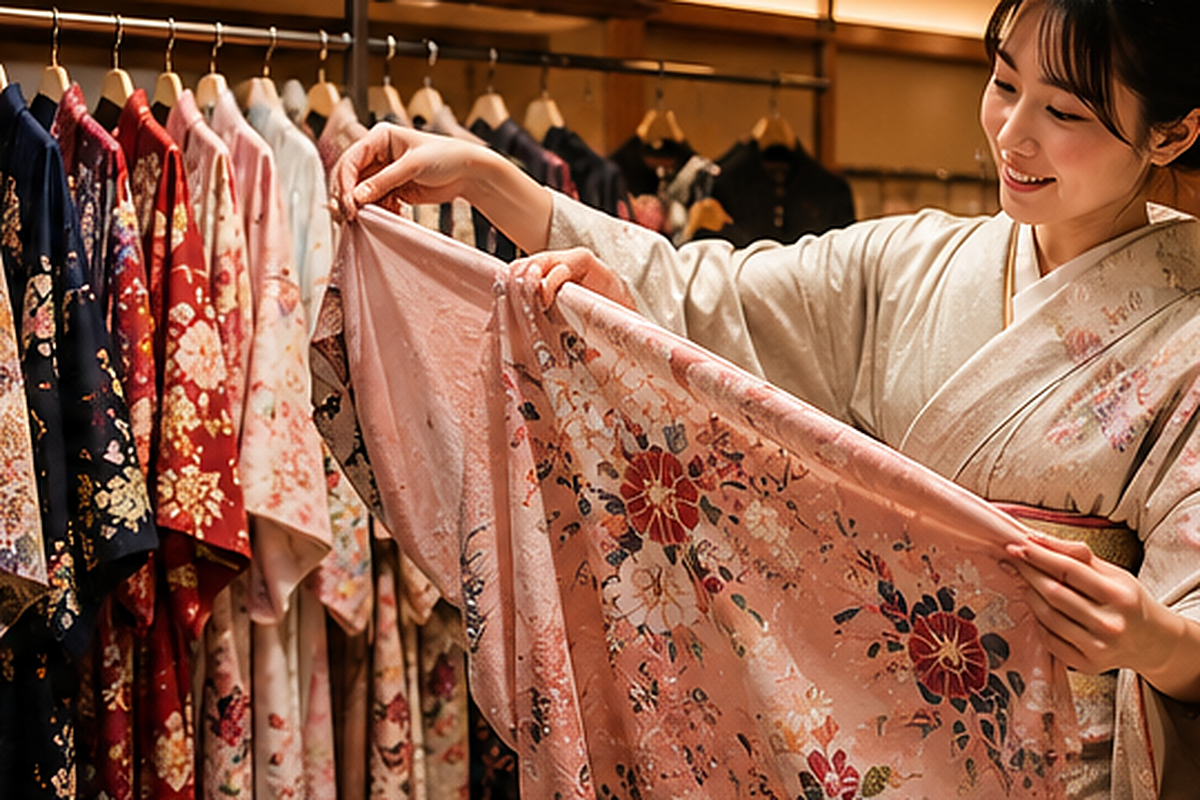
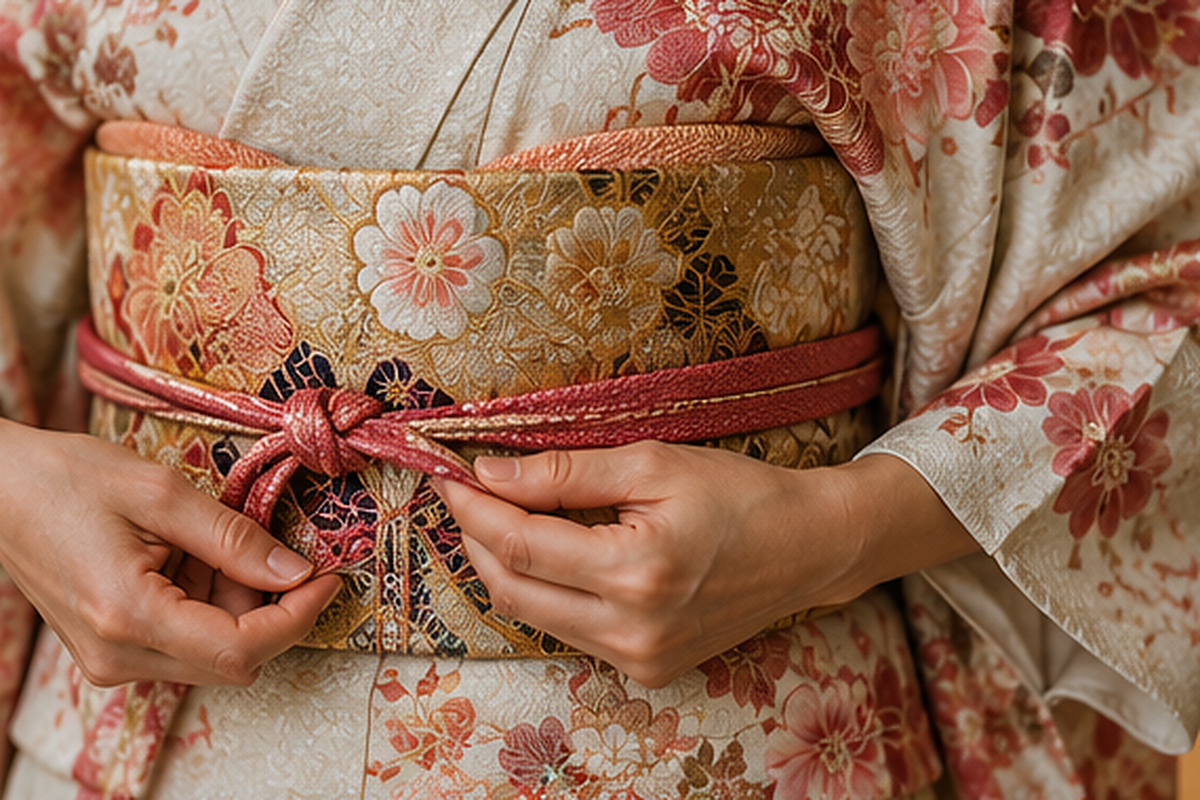
Online kimono sellers may offer ready-made garments, pattern-order sizing or full custom tailoring. Ready-made is fastest and easiest to understand, but the fit range is fixed. Pattern order gives you a controlled set of size combinations and can be a good middle ground when standard ready-made proportions do not match your height or hips. Custom tailoring offers the best chance of matching your body but requires accurate measurements and usually has stricter cancellation or return conditions.
For an inexpensive first yukata, ready-made can be perfectly reasonable if the dimensions and return policy work for you. For a higher-value kimono, especially when sleeve reach or hip width is difficult, the ability to submit measurements or consult a specialist can be more valuable than a lower sticker price.
Also check whether the listing is for a finished garment, a bolt of fabric, or a made-to-order item. Japanese kimono shops frequently sell all three, and a product photo may look complete even when tailoring is a separate step. The words “with tailoring,” “ready made,” “pattern order” and “my size” can represent materially different purchases.
- Ready-made: simplest, quickest, fixed measurements.
- Pattern order: choose among preset proportions using body measurements.
- Custom: best fit potential, but requires careful measurement and may limit returns.
- Verify whether tailoring is included before comparing prices across sellers.
Accessories: What You Actually Need
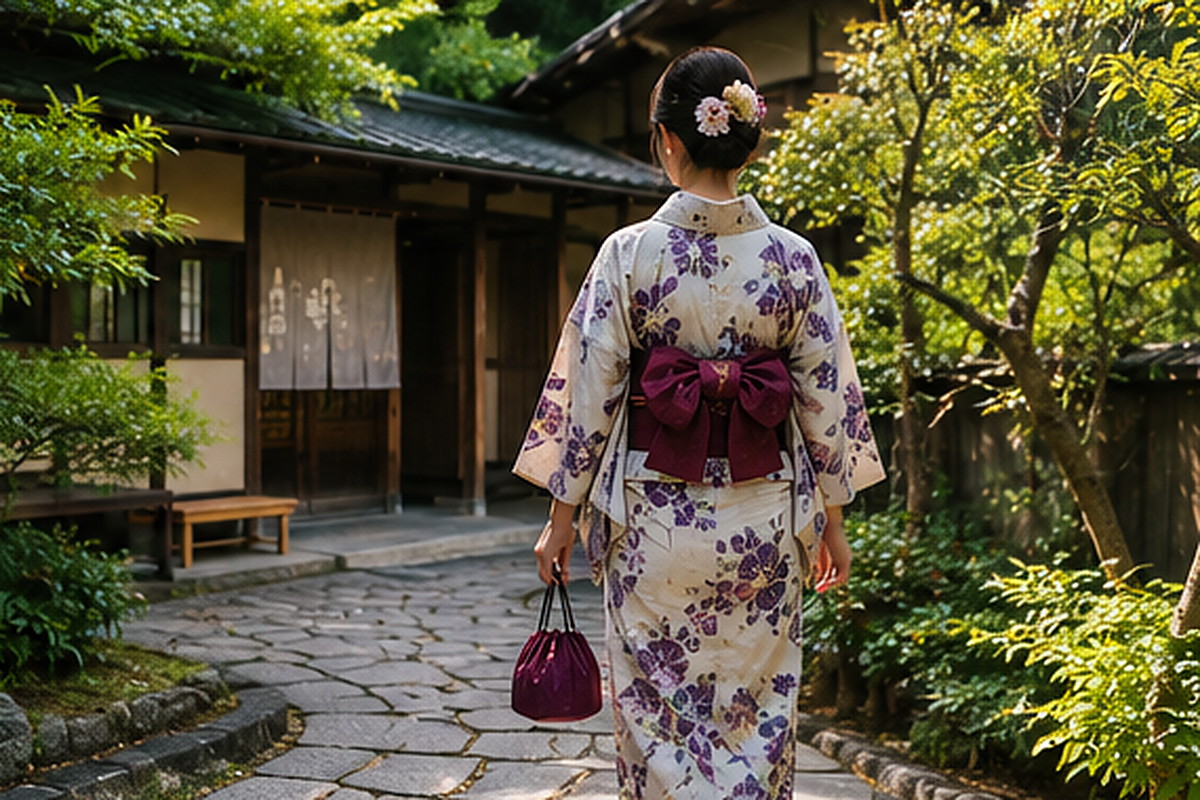
A garment-only listing can create a false sense of completeness. Yukata coordination is comparatively simple, but you will still need a way to secure and shape the garment and an obi to finish it. Beginner sets may include a yukata, hanhaba obi and geta, while dressing aids such as koshihimo ties, a datejime or elastic belt and an obi-ita may be sold separately. A drawstring bag is useful but not required.
Kimono usually involves more layers and accessories. Depending on the style and occasion, that can include a nagajuban under-kimono, haneri collar, obi, obiage, obijime, tabi socks and zori footwear, plus dressing ties and supports. Formal coordination can be much more specific than casual coordination, so a beginner should resist buying a beautiful kimono first and trying to reconstruct the rest of the outfit afterward.
The safest online workflow is to make an included-items checklist. If the seller uses a styled model photo, identify exactly which items are included in the price. Japanese retailers often note that obi and accessories shown in coordination photos are sold separately.
- Confirm whether the obi is included.
- Check whether dressing ties and supports are included or separate.
- For kimono, confirm the underlayer and footwear requirements for your intended formality.
- Treat bags, hair ornaments and decorative accessories as optional unless the occasion requires them.
Authenticity and Listing Quality: What to Check Online
Authenticity is not one simple label. A legitimate Japanese-style garment can be made from imported fabric, sewn outside Japan or produced by a modern brand. Conversely, a listing can misuse Japanese terminology while giving little information about construction or materials. Instead of chasing a vague promise of “authentic,” look for verifiable product details.
A strong listing names the garment type, material, finished measurements, tailoring state, country of origin when relevant, care method and what accessories are included. It should also show clear photos of the full garment and close-ups of the fabric. For vintage kimono, ask about stains, fading, odor, seam damage and previous alterations; older garments can be beautiful, but condition matters as much as age.
Be cautious with unusually low prices, copied photos, inconsistent size information, no physical business details, or a seller that cannot explain what type of kimono it is selling. For expensive purchases, specialist retailers and established makers provide a better information trail than anonymous marketplace listings.
- Look for precise terminology, measurements and fiber content.
- Confirm whether the item is new, vintage, deadstock, sample or rental resale.
- Use detailed condition photos for vintage pieces.
- Do not equate “Japanese style” with “made in Japan.”
Overseas Buying: Returns, Shipping, Duties and Color Accuracy
Before paying, read the seller’s return policy with the same attention you give the garment. Made-to-order and altered items are often harder to return than untouched ready-made items. Check the return window, who pays return shipping, whether international returns are accepted, and whether trying on the garment affects eligibility.
International shipping adds another layer of cost and risk. Confirm the carrier, tracking method, insurance or compensation terms, and whether the seller ships directly to your country. Import duties, VAT or other taxes may be charged by the destination country and are separate from the Japanese retail price. If you are comparing several shops, compare the total landed cost rather than the item price alone.
Color is another common online-shopping problem. Monitors, phone screens and lighting can shift subtle kimono colors. Prefer listings with multiple photos, close-ups and neutral lighting, and read any seller warning that screen colors may differ from the physical garment. If an exact shade matters for an existing obi or formal coordination, ask for additional guidance before ordering.
- Check international return eligibility before buying.
- Confirm tracking and the seller’s responsibility for loss or damage.
- Budget for destination-country taxes or duties.
- Do not judge subtle color matches from one product photo alone.
Care, Storage and Respectful Wear
After wearing, let the garment release heat and moisture in a clean, shaded place before long-term storage, unless the maker gives different instructions. Store it dry, away from direct sunlight and excessive humidity. Traditional folding methods help reduce unnecessary creasing, but the priority is to follow the garment’s construction and care guidance rather than forcing every textile into the same routine.
For stains, act carefully rather than aggressively. Rubbing can spread a stain or damage dyed silk. Specialist kimono care services distinguish between dry cleaning, sweat treatment, spot treatment and yukata washing because different problems require different processes. If the garment is expensive, silk, vintage, shibori or heavily decorated, professional assessment is usually the safer choice.
Respectful wear is mostly about treating the garment as clothing with its own conventions. Dress it securely, keep the collar and hem tidy, choose an obi appropriate to the garment and setting, and follow any event-specific dress expectations. You do not need to imitate a stereotype; good fit, clean coordination and awareness of the occasion matter more.
- Follow the garment’s laundry symbols and seller care instructions.
- Do not store a damp or sweaty garment immediately after wear.
- Avoid harsh DIY stain treatment on delicate silk or dyed textiles.
- Choose professional cleaning when the material, dye or construction is uncertain.
FAQ
- Is a yukata easier than a kimono for a first-time buyer?
- Usually, yes. A yukata is generally more casual, often uses fewer layers and accessories, and is widely available in cotton or other easy-care summer fabrics. A kimono can be equally wearable, but the correct type, underlayers, obi and formality require more decisions.
- Can I choose kimono size using only my height?
- Height is a useful starting point but not enough on its own. Check hip width and the garment’s actual dimensions, especially body length, yuki and front/back widths. Sellers may use different size systems, so compare centimeters rather than relying only on S/M/L labels.
- Are all yukata machine washable?
- No. Washing depends on the fiber, dye, construction and care label. Some cotton or synthetic yukata are home-washable, while shibori, color-sensitive or delicate garments may need hand washing or professional care.
- What should be included in a beginner yukata set?
- At minimum you need the yukata and an obi, plus ties or dressing aids to secure the garment. Geta, an obi-ita, a bag and hair accessories may be useful but are not always essential. Check the listing because model photos often show accessories that are sold separately.
- Is “made in Japan” the same as an authentic kimono?
- Not exactly. Country of manufacture, fabric origin, garment type and traditional technique are different questions. Judge the listing by precise terminology, construction, measurements, materials, seller transparency and intended use rather than one marketing phrase.
Official References
- Association for Promoting the National Costume Culture of Japan — organization and kimono culture activities
- KIMONO ACADEMY — yukata learning and cultural context
- Kimono Yamato — product measurements, terminology and laundry symbols
- Kimono Yamato — kimono and yukata cleaning and care
- Kimono Yamato — sizing and care FAQ
Final Thoughts
A good online kimono or yukata purchase is mostly a verification exercise: choose the right garment category, confirm real measurements, understand the fabric, list every required accessory, and read the seller’s care and return terms before paying. For a first purchase, simplicity is an advantage. A correctly sized, well-documented yukata or casual kimono from a transparent seller will teach you more—and be worn more often—than an elaborate garment bought on appearance alone.