Watoria Guide
How to Choose a Matcha Starter Set for Your First Bowl
A practical beginner’s guide to choosing a matcha starter set: what tools you actually need, which extras are useful, how to compare bowl and whisk quality, and how to care for the set after use.
A practical beginner’s guide to choosing a matcha starter set: what tools you actually need, which extras are useful, how to compare bowl and whisk quality, and how to care for the set after use.
This is a research-based guide to choosing tools, not a ranking of kits we have tested. Read our editorial policy.
- Quick Answer
- What You’ll Learn
- Choose a setup around the drink you want to make
- What a Complete Beginner Matcha Set Should Include
- How to Choose the Bowl, Whisk, Scoop and Sifter
- Try one bowl before buying more accessories
- Understand the utensils without confusing a kit with tea practice
- Care is part of the purchase decision
- Matcha Included or Tools Only?
- Buying Route for Overseas Readers
- Common Beginner Mistakes
- FAQ
- Related Guides
- Official References
- Final Thoughts
- About this guide
- Keep exploring Japanese culture
- Continue to the best buying / booking route
- Continue exploring
- Discover more Japan
- Primary sources
Quick Answer
For most beginners, the best matcha starter set is not the biggest box—it is a simple kit with a comfortable matcha bowl (chawan), a well-made bamboo whisk (chasen), a bamboo scoop (chashaku), and ideally a fine sifter. A whisk stand is useful for drying and shape retention, while a decorative box, extra cups, or multiple accessories are optional. Choose a set that makes preparation easy, gives the whisk enough room to move, and does not force you to pay for pieces you will rarely use.
What You’ll Learn
- Which tools are essential in a beginner matcha starter set and which are optional.
- How to compare the bowl, bamboo whisk, scoop and sifter before buying.
- Which starter-set type best fits daily matcha, gifting or latte-focused use.
- How included matcha changes the value of a set and what to check before using it.
- How to clean, dry and store the whisk and other tools so the set lasts.
Choose a setup around the drink you want to make
The table below is an editorial decision aid. It compares routines, not the performance of individual products.
| Your routine | Useful setup | What you may already have | What to check before buying |
|---|---|---|---|
| Plain matcha at home | Bamboo whisk, stable bowl, fine sifter and a way to measure tea and water. | A suitable bowl, fine kitchen strainer, measuring cup or scale. | Can the whisk move inside the bowl without repeatedly striking its sides? Are the bowl’s dimensions actually listed? |
| Matcha lattes | A bowl or mixing vessel that is easy to pour from, plus whisk and sifter. | Your drinking glass or mug; it need not be part of the set. | Prepare the tea with water first, then add milk. Do not assume the whisk is intended for mixing directly into milk. |
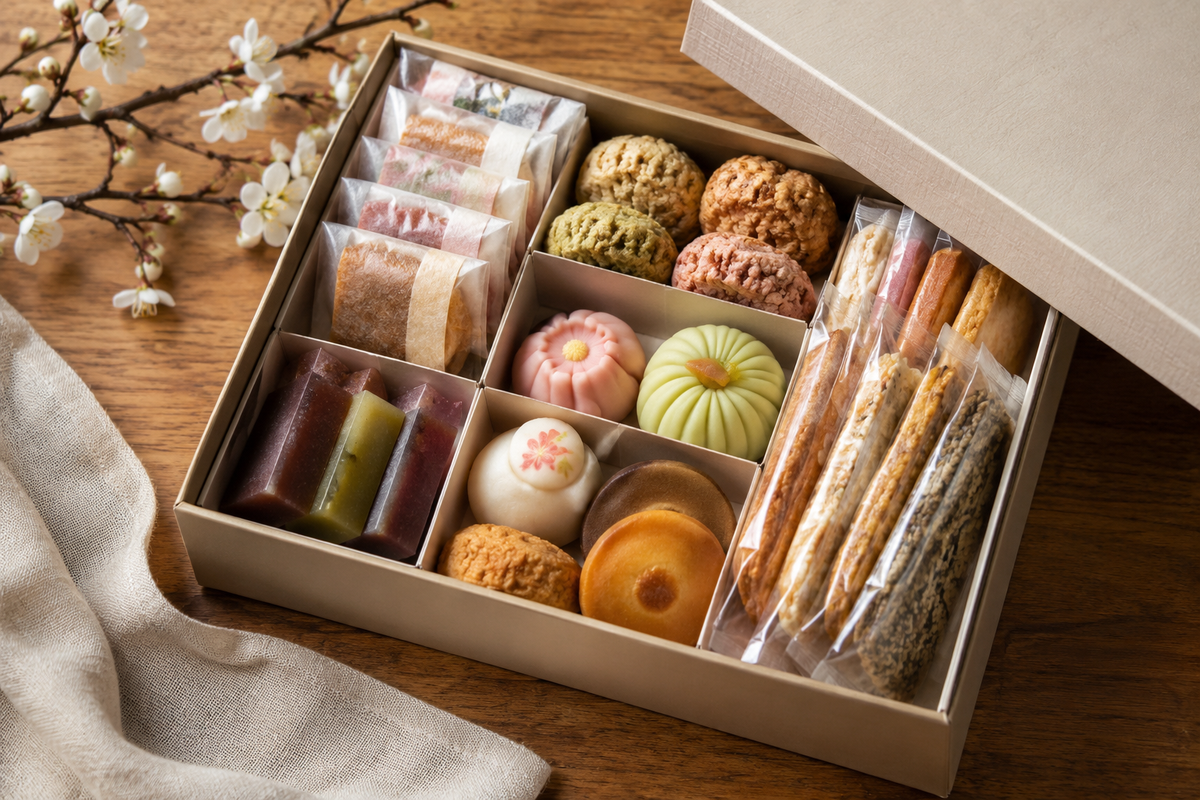
| A gift for a beginner | A usable preparation setup, clear care instructions and, optionally, a small sealed pack of tea. | Ask what the recipient owns before paying for duplicate tools. | Check the tea separately: named producer or seller, package size and storage directions. Attractive packaging does not establish tea quality. |
| Starting formal tea lessons | The utensils your teacher recommends for that lesson. | Do not buy a large ceremony bundle in advance. | A retail starter kit is not a guarantee that its contents suit a particular school’s practice. |
What a Complete Beginner Matcha Set Should Include
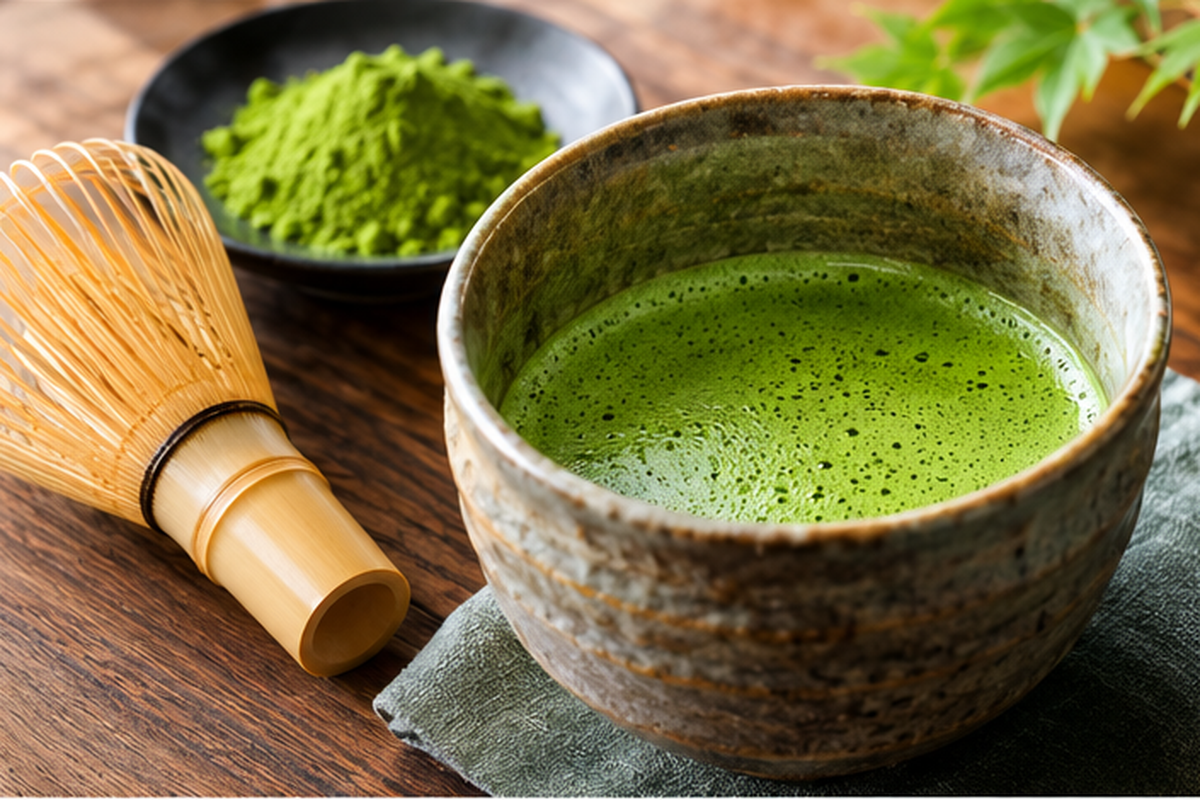
Traditional matcha preparation centers on a small group of tools. Official preparation guidance from Japanese tea makers commonly shows a bowl, bamboo whisk, bamboo scoop or measuring spoon, and a fine sifter as the practical preparation set. A measuring cup or cooling vessel can also help control water amount and temperature, but you may already own one.
The sifter deserves more attention than it usually gets in gift-style sets. Matcha clumps easily, and sifting before adding water makes the powder easier to disperse. For a beginner, a simple fine-mesh tea sifter can improve consistency more than an extra decorative accessory.
- Chawan or bowl: wide enough to whisk without hitting the sides constantly.
- Chasen: bamboo whisk with even, intact tines and no obvious splitting.
- Chashaku or measuring spoon: useful for repeatable portions.
- Fine sifter: highly useful for reducing clumps before whisking.
- Whisk stand: optional but useful for drying and shape retention.
How to Choose the Bowl, Whisk, Scoop and Sifter
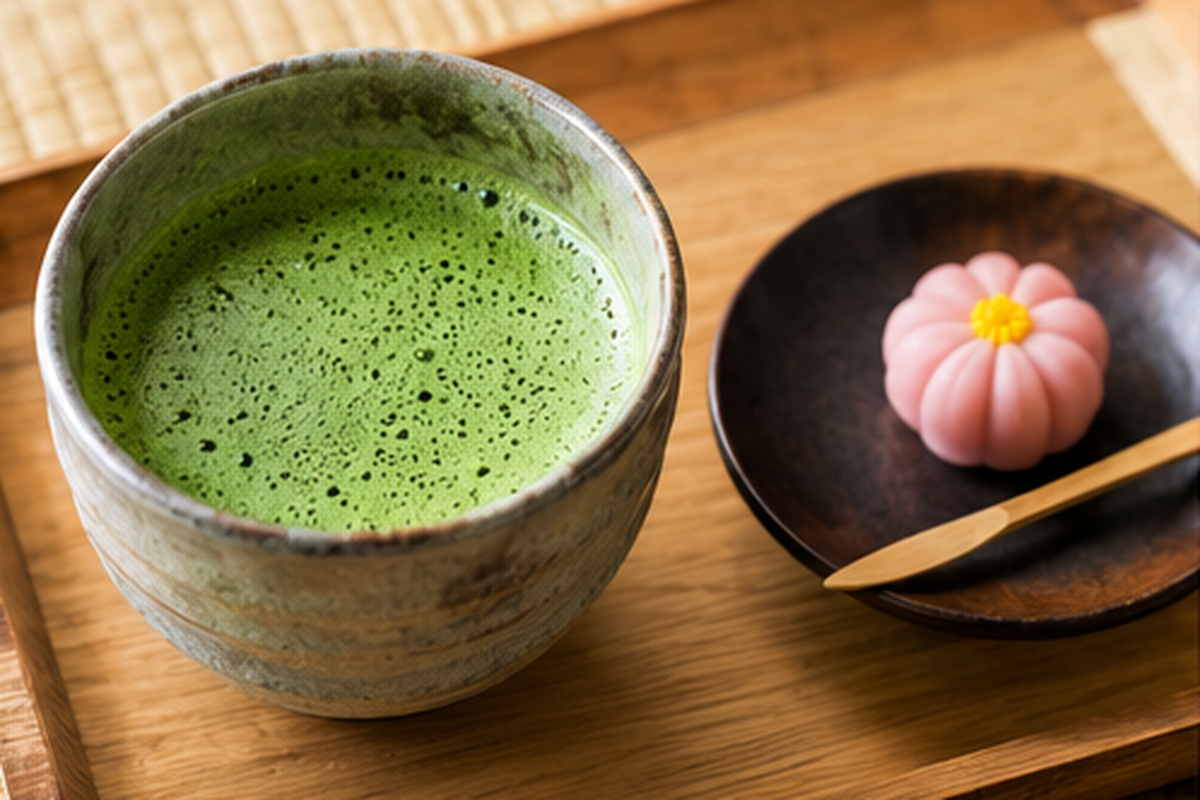
Start with the bowl because it controls how easy the set feels to use. A beginner-friendly bowl should be stable, easy to hold, and wide enough for quick back-and-forth whisking. Very narrow or very tall bowls can look elegant but make whisking harder. A bowl with a comfortable rim and enough interior space is usually easier than a highly sculptural design.
The bamboo whisk matters more than most accessory pieces. Look for a whisk with evenly spaced tines, clean finishing and no obvious cracks. The scoop does not need to be elaborate, and a simple fine-mesh sifter is enough for home use. The best starter set puts money into these functional pieces before adding trays, towels or decorative packaging.
- Bowl: stable base, comfortable rim and enough interior width for whisking.
- Whisk: even tines, clean bamboo surface and no visible breakage.
- Scoop: simple and smooth is enough; exact decoration is secondary.
- Sifter: fine enough to break up dry matcha clumps without excessive effort.
Try one bowl before buying more accessories
For a concrete starting point, Marukyu Koyamaen’s preparation guide uses approximately 1.5 g of sifted matcha and 70 ml of water. Its seasonal guidance spans 70–85°C. These are that tea maker’s suggested starting conditions, not a universal rule for every matcha.
- Measure and sift the powder into a warmed, dry bowl.
- Add the measured water and whisk back and forth, keeping the whisk slightly above the bottom.
- Assess what made preparation difficult. If powder clumped, check sifting before purchasing more utensils. If pouring into a latte glass was awkward, a pouring lip may be more useful to you than a decorative tray.
The first two steps follow the maker’s method; the final step is our suggested way to decide which equipment would be useful in your own kitchen.
Understand the utensils without confusing a kit with tea practice
A chawan is the tea bowl, a chasen the bamboo whisk, and a chashaku the tea scoop. Knowing their names helps you read a contents list, but buying them does not by itself teach the sequence or etiquette of a tea gathering. For home preparation, focus on function. For lessons, follow your teacher’s instructions rather than treating the retailer’s accessory count as a curriculum.
Care is part of the purchase decision
Ippodo’s chasen care instructions recommend wetting the tips for about one to two minutes before use, rinsing with water without soap afterwards, and drying in the open air. The guide warns against leaving a damp whisk in its case and recommends replacement when the tips break. It also says to use the whisk with water and matcha, adding milk afterwards for lattes.
A whisk stand can help retain the shape while drying, but it does not replace airflow. Before buying a boxed set, decide where the whisk will dry; the presentation case is not the place to put it away wet.
Matcha Included or Tools Only?
Some starter sets include matcha and others sell only the utensils. A tools-only set gives you more control over the tea you buy and avoids paying for a powder you may not prefer. A set with matcha is convenient for gifting or for a first trial, but the tea should not be treated as automatically high quality just because it comes in a polished box.
For beginners, a smaller fresh package is usually more practical than a very large quantity because opened matcha gradually loses aroma and vivid freshness. Use the maker’s storage instructions, and treat the matcha and the tools as two separate buying decisions: the best whisk set does not guarantee the best tea, and the best tea does not require an expensive accessory bundle.
- Tools-only: best when you already know which matcha you want to buy.
- Set with matcha: convenient for gifts and first-time use, but check the tea separately.
- Avoid paying extra for large quantities of tea you may not finish promptly.
- Do not assume decorative packaging is evidence of better matcha.
Buying Route for Overseas Readers
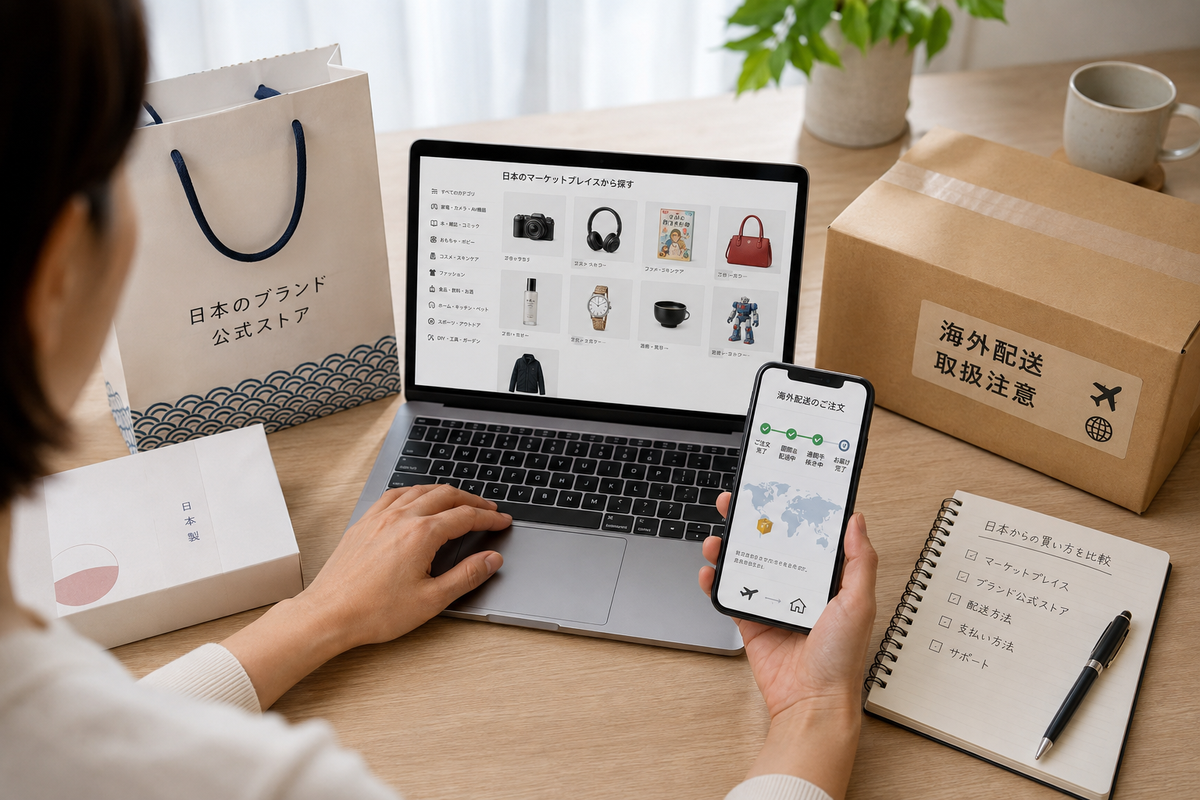
Matcha starter sets are sold through Japanese tea makers, brand stores, marketplaces and international retailers. For authenticity and clear tool descriptions, a maker or established Japanese tea specialist is often the easiest place to understand what each item is. Marketplaces can offer more variety, but you should verify the seller, item contents and shipping route before ordering.
Overseas buyers also need to separate the tools from the food product. Ceramic and bamboo utensils usually travel more simply than matcha powder, which is a food item and may be subject to destination-country import rules. If a marketplace listing ships from Japan, confirm whether international delivery is direct or whether a forwarding route is involved, then check the final landed cost rather than the headline item price.
- Confirm exactly which tools are included; do not rely only on lifestyle photos.
- Check whether the seller is the tea maker, an authorized shop or a third-party marketplace merchant.
- For overseas orders, review food-import and carrier restrictions for the matcha itself.
- Compare total shipping cost before paying for a heavy ceramic bowl in an oversized gift box.
Common Beginner Mistakes
The most common mistake is buying a visually impressive set without checking whether the bowl is comfortable to whisk in. Another is choosing a large accessory bundle and discovering that the only frequently used pieces are the whisk, bowl and sifter. A third is treating whisk care as optional and storing the chasen while it is still damp.
A good starter set should make the first ten bowls easier, not make the shelf look busier. If the set gives you a stable bowl, a functional whisk, a scoop and an easy way to sift the powder, you already have what you need to build a reliable daily routine.
- Do not choose a bowl only for appearance; check whether it gives the whisk room to move.
- Do not skip the sifter if you dislike clumps.
- Do not store the whisk damp or compressed in its original shipping tube.
- Do not pay extra for duplicate accessories you already own.
FAQ
- What should a beginner matcha starter set include?
- At minimum, a beginner-friendly set should give you a suitable bowl, a bamboo chasen whisk and a scoop. A fine sifter is the most useful extra because it helps remove clumps before whisking. A whisk stand is helpful for care but is optional.
- Do I really need a bamboo chasen to make matcha?
- You can mix matcha with other tools, but a chasen is designed specifically for dispersing powdered tea in a bowl and is the standard tool used in Japanese matcha preparation. If you want the traditional preparation experience, it is the tool worth prioritizing.
- Do I need a chasen stand?
- No. You can air-dry a whisk without a stand, but a stand can help support its shape while it dries. The important part is to rinse the whisk after use and let it dry fully in open air.
- Is it better to buy a starter set with matcha included?
- It depends. A set with matcha is convenient for a first try or a gift, while a tools-only set lets you choose the tea separately. Judge the included matcha on its own maker, packaging and storage information rather than assuming it is better because it comes in a set.
- Can I use a normal kitchen bowl instead of a matcha bowl?
- Yes, if it is stable and wide enough for comfortable whisking. A traditional chawan is pleasant to use, but beginners should prioritize interior space and stability over formality.
Official References
Final Thoughts
For a first matcha setup, functional simplicity wins. Buy the bowl and whisk that make preparation easy, add a sifter if the set does not already include one, and treat decorative extras as optional. Once you can make a smooth bowl consistently and care for the whisk properly, you will know much more clearly which specialty tools—or better matcha—you actually want next.
About this guide
Watoria is a HASHILO brand. About Watoria · Editorial Policy · Report a correction · Affiliate Disclosure · Privacy