Watoria Guide
Japanese Denim Guide: Selvedge, Weight, Fit and Care
Choose Japanese denim by fit, fabric weight, selvedge construction, finish and care needs, with practical sizing and overseas-buying checks.
- Quick Answer
- What You’ll Learn
- What the Reader Needs: Fit First, Fabric Second
- Step 1: Understand Selvedge Without Treating It as a Quality Guarantee
- Step 2: Read Fabric Weight as Feel, Not as a Ranking
- Step 3: Compare Fit Through Waist, Rise, Thigh and Hem
- Key Differences and Trade-offs: Raw, One-Wash and Shrink Risk
- Care: Wash for Hygiene and Fabric Stability, Then Follow the Label
- Authenticity and Construction: Verify the Exact Model, Not the Myth
- Overseas Buying: Hemming, Returns and Sizing Risk
- Buying Route: Choose for Measurement Clarity and Aftercare
- FAQ
- Related Guides
- Official References
- Final Thoughts
- Keep exploring Japanese culture
- Continue to the best buying / booking route
- Continue exploring
- Discover more Japan
- Primary sources
Quick Answer
Choose Japanese denim in this order: fit first, fabric second, care third. Start with the actual garment measurements—waist, hip, thigh, rise, inseam and hem—because tagged size alone is not enough across brands. Then decide whether selvedge construction matters to you, what fabric weight feels practical, and whether the jeans are raw, one-wash or otherwise finished according to the maker. Selvedge describes the self-finished fabric edge traditionally associated with shuttle-loom weaving; it does not automatically guarantee that a pair will fit better or be more durable. Fabric weight is only one part of feel: Japan Blue Jeans currently sells denim from lightweight 9.4oz fabrics through 14oz and 14.8oz selvedge options, and construction, yarn and finish change how those weights feel. For care, follow the exact label. Current Japan Blue guidance warns that washing can cause some shrinkage, recommends avoiding tumble drying on specific jeans because it may cause significant shrinkage, and advises washing separately to reduce color transfer. Overseas buyers should verify exact model, finish, measurements, hemming status and return rules before purchase.
What You’ll Learn
- Why fit and actual garment measurements should be checked before selvedge, weight or fade potential.
- What selvedge denim means and why vintage shuttle looms are associated with Japanese denim production.
- How ounce weight changes fabric feel without acting as a universal quality score.
- How one-wash, shrink risk and care instructions affect sizing decisions.
- Which measurements matter most when comparing Japanese jeans online.
- What overseas buyers should verify before hemming, importing or committing to a final sale.
What the Reader Needs: Fit First, Fabric Second
Japanese denim is easiest to choose when you separate fit from fabric. A famous mill, selvedge edge or heavy ounce rating cannot rescue a rise that is too low, a thigh that is too tight or a hem that is wider than you want. Start with the silhouette and actual measurements, then choose the fabric construction and finish that match the way you want the jeans to feel and age.
Japan Blue Jeans currently publishes waist, hip, thigh, hem, rise and inseam measurements on its product pages and provides a separate measurement method. That is a useful model for any overseas purchase: compare an existing pair you like with the seller's exact garment measurements rather than relying only on the number printed on the waistband.
Once fit is established, compare selvedge versus non-selvedge, fabric weight, stretch content, raw or washed finish, dye behavior and care. Those features change the wearing experience, but they should come after the basic question of whether the pattern suits your body and daily use.
- Choose the silhouette before choosing a fabric story.
- Compare actual garment measurements with a pair you already wear.
- Treat tagged size as a label, not a universal measurement.
- Check finish and care before deciding whether to size around possible shrinkage.
Step 1: Understand Selvedge Without Treating It as a Quality Guarantee
Selvedge denim gets its name from the self-finished edge of the woven fabric. In Japanese denim, it is strongly associated with older-style shuttle looms and narrow-width fabric. Japan Blue Jeans describes its current SELVEDGE line as woven on vintage shuttle looms in Kojima, Okayama, and emphasizes the texture created by slower, traditional production methods.
That construction is part of why selvedge has cultural and collector appeal, but it is not a universal quality certificate. A well-designed non-selvedge jean can fit better, feel better and be more practical than a selvedge pair that does not suit your body. Use selvedge as a construction preference, not as a shortcut for deciding that one jean is automatically superior.
When you want to verify selvedge, look for the finished fabric edge at an outseam or cuff and confirm the maker's fabric description. A decorative colored line alone should not replace the manufacturer's stated specification.
- Selvedge refers to the self-finished woven edge.
- Vintage shuttle looms are a common part of Japanese selvedge production.
- Selvedge can influence texture and fabric character but does not determine fit.
- Confirm the maker's specification instead of judging from a cuff photo alone.
Step 2: Read Fabric Weight as Feel, Not as a Ranking
Denim weight is commonly expressed in ounces per square yard. A higher number usually means more fabric mass, but the number alone does not tell you stiffness, softness, breathability or comfort. Yarn type, weave density, cotton, stretch fibers and finishing all change the result.
Japan Blue Jeans' current fabric lineup illustrates that range. Its FAQ describes 9.4oz lightweight denim, 11.5oz selvedge, several 12oz and 12.5oz options, 13.5oz Suvin-cotton selvedge, 14oz black denim and a 14.8oz hard selvedge fabric. The brand also describes a current 14oz selvedge jean as substantial in weight while still having a soft and airy hand because of the yarn and construction.
For practical use, lighter denim is easier in warm weather and for people who dislike stiffness; heavier denim can feel more substantial but may need more break-in and can be hotter. Those are tendencies, not fixed rules, so the exact product description matters.
- Do not equate heavier denim with automatically better denim.
- Use ounce weight as one clue to fabric mass and likely feel.
- Check cotton, stretch content, weave and finish alongside the weight.
- If climate or comfort is a priority, choose by real use rather than fade mythology.
Step 3: Compare Fit Through Waist, Rise, Thigh and Hem
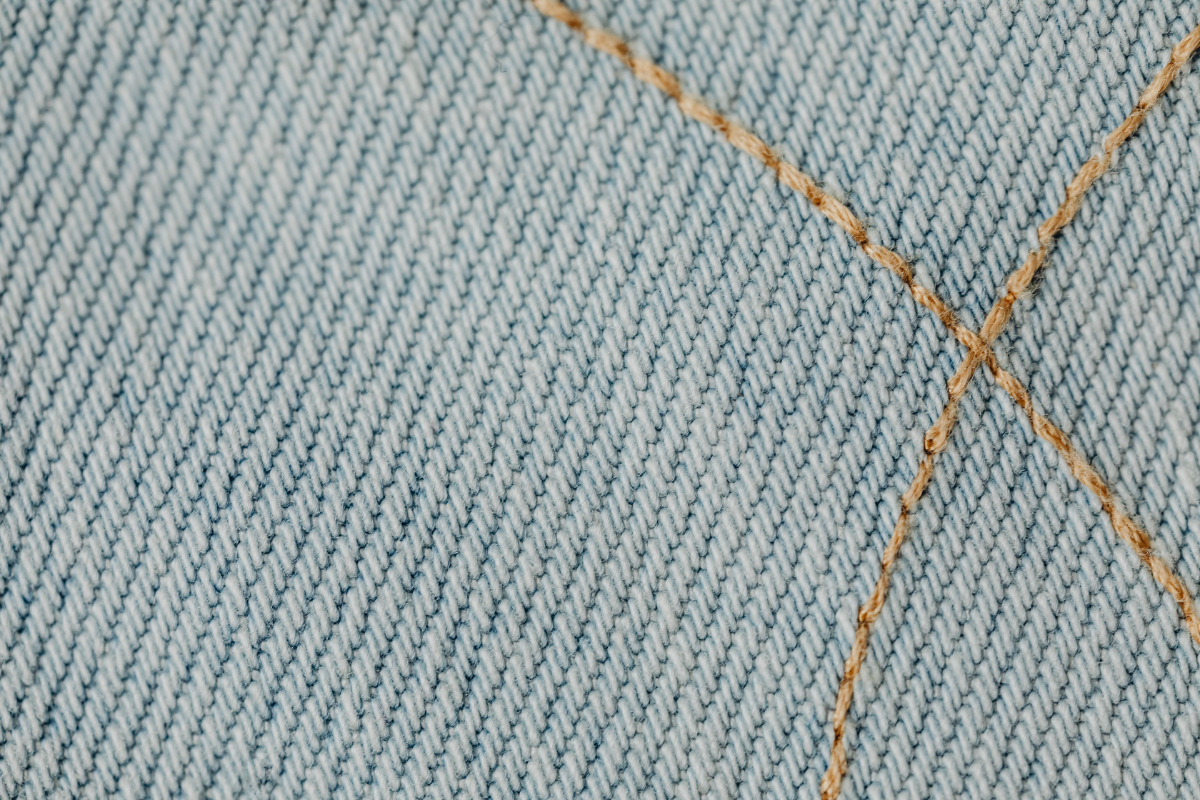
Fit names such as slim, straight and wide are only starting points. The measurements explain the actual silhouette. Rise changes where the waistband sits, thigh width controls mobility, and hem width determines how tapered or open the leg feels.
Japan Blue Jeans' current size charts show this clearly: a slim model and a wide model can carry the same nominal waist size while using very different thigh, rise and hem measurements. The brand's measurement FAQ instructs buyers to compare waist, rise, thigh, hip and inseam with individual product charts.
When buying online, measure a pair of jeans that already fits you. Use the seller's method as closely as possible because brands do not all measure in exactly the same way. If your reference pair differs from the target pair by a meaningful amount at the thigh or rise, a matching waistband number may not solve the fit.
- Waist: confirms the actual waistband circumference or brand-specific measurement.
- Rise: affects where the jeans sit and how much room you feel through the top block.
- Thigh: critical for comfort and mobility.
- Hem: shows how tapered, straight or wide the lower leg will feel.
- Inseam: determines usable length and whether hemming is required.
Key Differences and Trade-offs: Raw, One-Wash and Shrink Risk
Japanese denim listings often distinguish rigid or unwashed fabric from one-wash or other finished versions. The safest way to interpret those terms is product by product. A one-wash jean has already gone through a wash or rinse step before sale, but that does not mean it can never shrink again.
Japan Blue Jeans currently labels many selvedge jeans as One-Wash and still notes that slight shrinkage may occur during washing. Its FAQ says the care-label warning about shrinkage is included as a precaution against hot-water washing and dryer use.
Raw or rigid denim can involve more sizing uncertainty depending on the fabric treatment, so do not rely on generic internet rules about how many centimeters every raw jean will shrink. Use the maker's exact shrink notes, finish description and care label.
- One-Wash reduces some initial uncertainty but does not mean zero future shrinkage.
- Raw or rigid denim needs model-specific shrink guidance.
- Hot water and tumble drying can increase shrink risk on products that warn against them.
- Never size up or down from a generic 'raw denim rule' without checking the exact jean.
Care: Wash for Hygiene and Fabric Stability, Then Follow the Label
Denim does not need to be kept unwashed indefinitely to age attractively. Dirt, body oils and abrasion are part of real wear, and washing is normal garment care. The important point is to use the method specified for the exact jeans.
Japan Blue Jeans' current care instructions for a 12oz selvedge slim jean state that the garment is machine washable, may shrink slightly, should not be tumble dried because significant shrinkage may occur, and should be washed separately to reduce color transfer. The same page also warns that prolonged exposure to direct sunlight or artificial light can cause discoloration.
Turn the jeans inside out if the maker recommends it, use a mild detergent appropriate for the garment, avoid bleach unless explicitly allowed, and air dry when tumble drying is prohibited. If preserving size is important, measure the jeans before and after the first wash so you know how your specific pair behaves.
- Follow the sewn-in care label and current maker instructions.
- Avoid tumble drying when the maker warns that it can cause significant shrinkage.
- Wash dark indigo separately when color transfer is a concern.
- Store away from prolonged strong light when the maker warns about discoloration.

Authenticity and Construction: Verify the Exact Model, Not the Myth
Japanese denim attracts strong branding around mills, cottons, looms and regional craftsmanship. Those details can be meaningful, but they should be verified against the maker's own specification. Look for an exact SKU, fabric composition, finish, country of manufacture and size chart.
Japan Blue Jeans currently notes on some products that interior brand-tag specifications may vary by production lot. That is a useful reminder that a changed internal label does not automatically prove a jean is counterfeit. Packaging and trim can change, especially across production runs.
Avoid marketplace listings that use broad phrases such as 'Japanese selvedge' while omitting the maker, model and measurable specifications. Watoria's counterfeit guide covers broader seller and listing checks when product identity is unclear.
- Match the exact SKU or model to a current or archived maker page when possible.
- Confirm fabric composition, finish and stated country of manufacture.
- Do not treat a production-lot label change as automatic counterfeit evidence.
- Be cautious when a listing sells the story but omits the technical specification.
Overseas Buying: Hemming, Returns and Sizing Risk
The biggest overseas risk is often not authenticity but fit. International returns can be expensive, and hemming can make a return impossible under some retailer policies. Japan Blue Jeans' current store information, for example, offers hemming on selected jeans and states on referenced product pages that hemmed items are not eligible for return or exchange.
That means the order of operations matters: verify waist, rise, thigh and expected shrink behavior before requesting a permanent alteration. If you are uncertain, receiving the unhemmed jean first can preserve more options.
Also separate product price from landed cost. Shipping, duties, taxes and return shipping can materially change the value of a pair. Watoria's existing buying, shipping and customs guides cover those logistics in detail.
- Do not request hemming before you are confident in the top-block fit.
- Check whether altered items are returnable.
- Confirm duties, taxes and return-shipping responsibility.
- Save the size chart and product specification used at purchase.
Buying Route: Choose for Measurement Clarity and Aftercare
A brand-direct store or established specialist denim retailer is usually the easiest place to verify fit charts, fabric specifications and care instructions. A broad marketplace may offer more listings but can make model identity, returns and aftercare harder to evaluate.
If you are new to Japanese denim, prioritize a seller that explains measurements clearly and can answer fit questions. A sophisticated fabric is not useful if the listing leaves you guessing about rise, thigh or shrink behavior.
Watoria is an editorial guide, not a seller or proxy-buying service. Use the brand or retailer as the final source for current stock, price, alteration service, shipping and returns.
- Brand-direct: strongest source for current specifications and care.
- Specialist retailer: useful for comparative fit advice and measurement detail.
- Marketplace: higher burden to verify exact model and seller.
- Choose the route that makes a sizing mistake easiest to avoid or correct.
FAQ
- Is Japanese selvedge denim always better than non-selvedge denim?
- No. Selvedge describes fabric-edge construction and is often associated with shuttle-loom weaving, but it does not guarantee better fit, comfort or durability. Choose the jean as a complete garment.
- What denim weight is best for a first pair?
- There is no universal best weight. Lighter denim is generally easier in warm weather and for low-stiffness comfort, while heavier denim can feel more substantial. Japan Blue's current lineup spans roughly 9.4oz through 14.8oz examples, which shows how broad the category can be.
- Should I size up for raw Japanese denim?
- Only if the exact maker's shrink guidance supports it. Raw, one-wash and other finishes behave differently. Do not use a generic size-up rule; compare actual measurements and the product's expected shrinkage.
- How should I measure jeans before buying online?
- Use the seller's stated method and compare it with a pair you already own. Important measurements include waist, hip, thigh, rise, inseam and hem. Japan Blue publishes all of these on current product charts.
- Can I machine wash Japanese selvedge jeans?
- Many can be machine washed, but the exact care label controls. Japan Blue's current 12oz selvedge slim jeans are listed as machine washable while warning against tumble drying and recommending separate washing because of color transfer.
- Should I hem Japanese jeans before trying them on?
- Usually not if fit is uncertain. Hemming is permanent, and some retailers exclude hemmed items from returns. Confirm waist, rise, thigh and shrink expectations first.
Official References
Final Thoughts
Japanese denim becomes much easier to choose when you ignore the mythology long enough to solve the practical questions first. Find a rise, thigh and leg shape that fit; compare the actual garment measurements; then decide whether selvedge construction, heavier fabric, raw character or a one-wash finish adds something you genuinely want. Ounce weight is not a quality score, selvedge is not a fit guarantee, and raw denim does not remove the need for normal garment care. Verify the exact model, finish and care label, delay permanent hemming until fit is certain, and buy through a route that gives you enough specification and return clarity to manage an overseas sizing mistake.