Watoria Guide
Best Japanese Gardening Tools for Pruning, Bonsai and Everyday Use
A practical guide to choosing Japanese pruning shears, pruning saws and bonsai tools by task, hand fit, blade design, maintenance needs and overseas-buying risk.
- Quick Answer
- What You’ll Learn
- Start With the Cut, Not the Country of Origin
- Pruning Shears: Choose Size and Mechanism Before Finish
- Bonsai Scissors: Precision Matters More Than Raw Power
- Pruning Saws: Stop Squeezing When a Branch Needs Sawing
- Concave Cutters and Other Bonsai-Specific Tools
- Steel, Corrosion and the Maintenance You Will Actually Do
- How to Judge Quality Before Buying Online
- A Sensible First Kit for Different Gardeners
- FAQ
- Related Guides
- Official References
- Match the Tool to the Branch Before You Compare Steel
- Final Thoughts
- Keep exploring Japanese culture
- Continue to the best buying / booking route
- Continue exploring
- Useful guides
- Discover more Japan
- Primary sources
Quick Answer
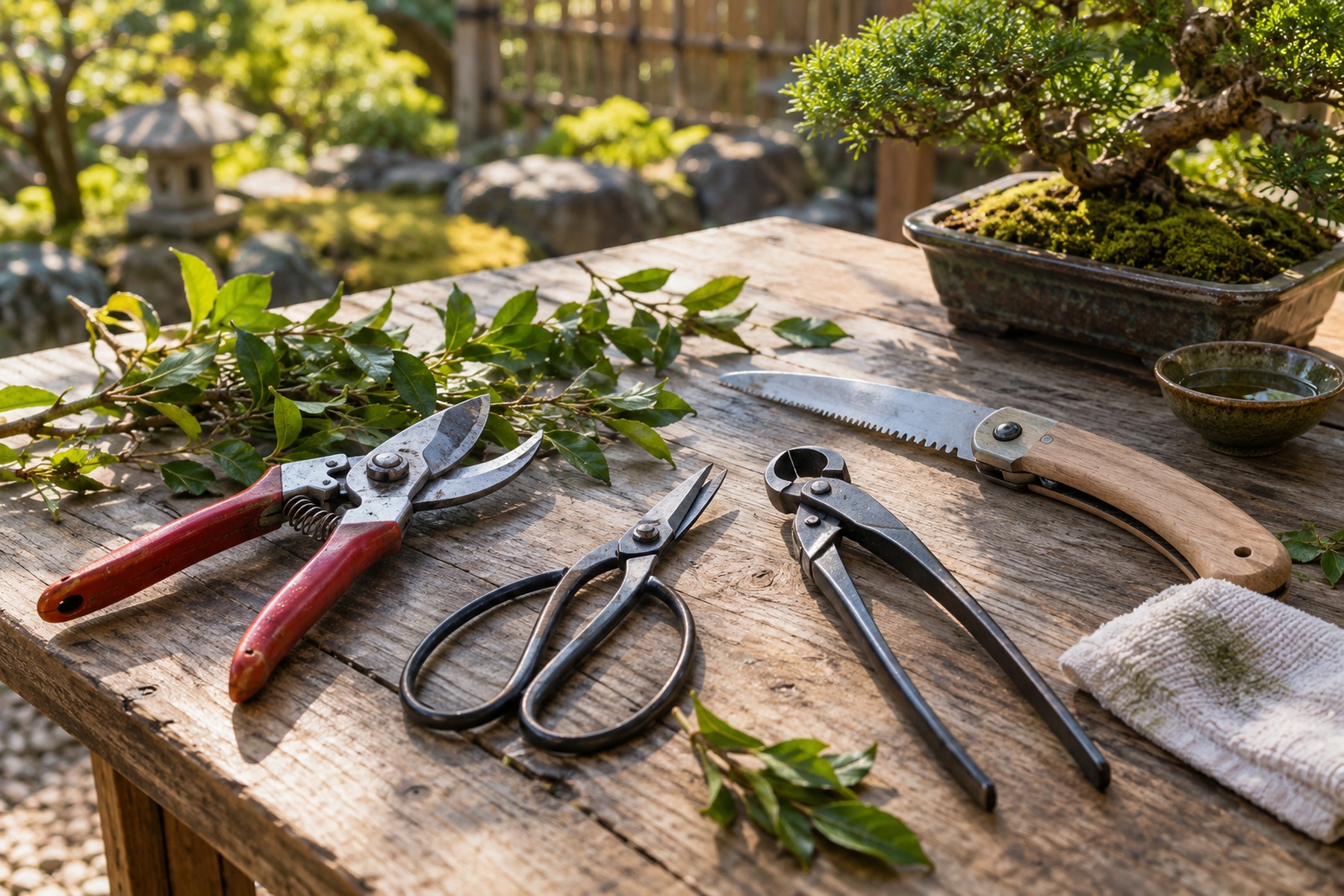
The best Japanese gardening tool is the one matched to the cut. Use bypass-style pruning shears for routine live stems, a pruning saw when the branch is too large for comfortable one-hand cutting, bonsai trimming scissors for fine shoots and needles, and specialist bonsai cutters only when their shape solves a specific structural task. Prioritize hand fit, blade geometry, serviceability and a realistic maintenance routine over collecting a large set.
What You’ll Learn
- Which Japanese cutting tool fits pruning, bonsai and general garden work.
- How hand size, blade style and branch thickness change the right choice.
- When a pruning saw is safer and more effective than forcing hand shears.
- Which bonsai tools are genuinely specialized rather than decorative extras.
- How to clean, oil, store and evaluate tools before ordering from overseas.
Start With the Cut, Not the Country of Origin
Japanese gardening tools cover very different jobs, from one-handed pruning to fine bonsai work. A well-made tool can still be the wrong tool if its blade shape, size or leverage does not match the material you are cutting.
For most buyers, the useful first decision is simple: identify the thickest branch you routinely cut, the amount of precision you need, and whether the tool must work in tight foliage. That narrows the field much faster than shopping by appearance or by the broad label “Japanese garden tool.”
- Routine green stems and small woody growth: pruning shears.
- Branches that require force or repeated squeezing: pruning saw.
- Fine bonsai shoots, needles and detailed trimming: bonsai scissors.
- Branches removed close to a bonsai trunk: concave cutter or another purpose-built bonsai cutter.
- General flowers, herbs and light stems: lighter garden or floral scissors may be easier to control.
Pruning Shears: Choose Size and Mechanism Before Finish
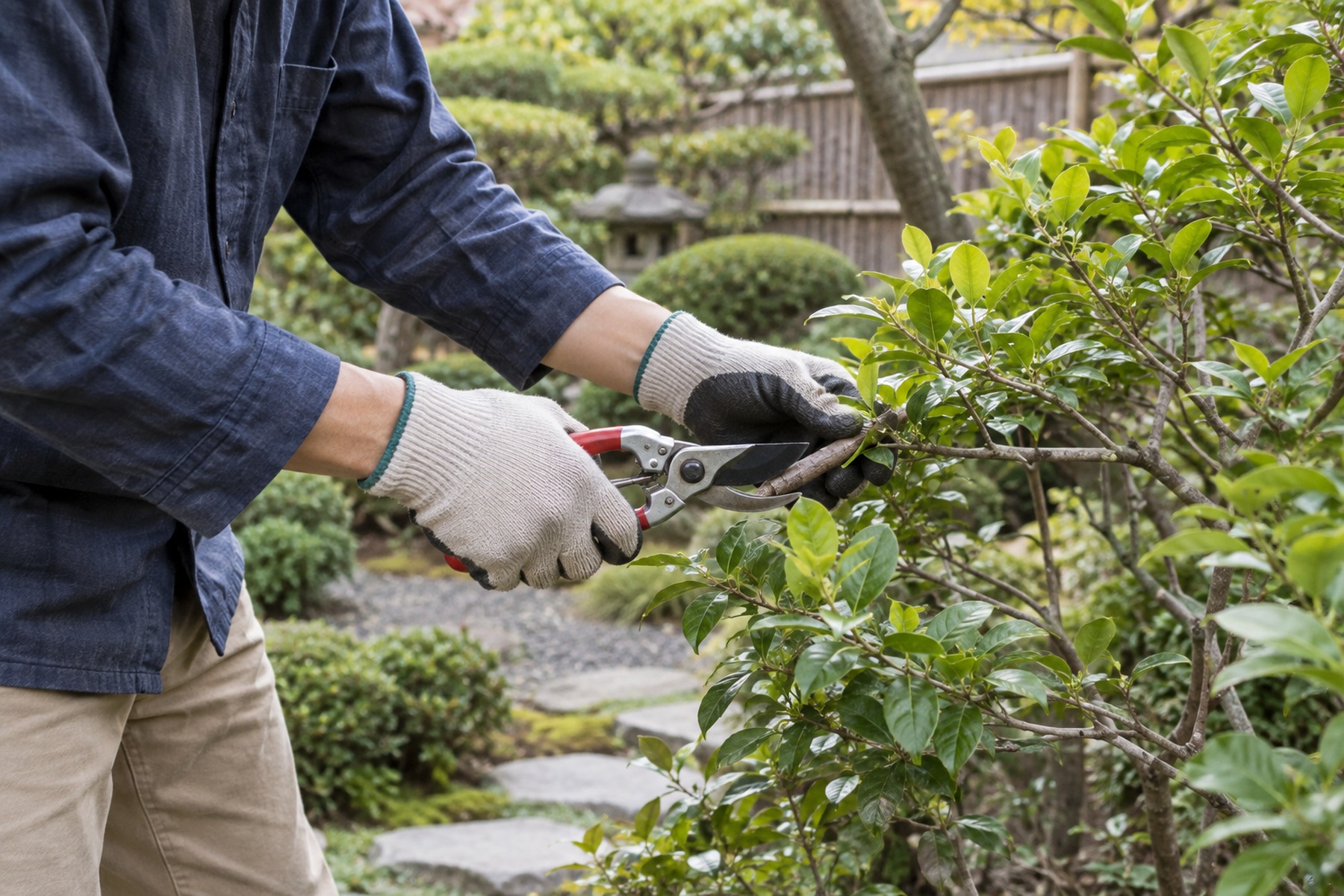
A conventional pruning shear uses a cutting blade against a receiving blade and a spring-assisted handle action. Current ARS ranges show multiple body lengths and blade sizes, which is a reminder that hand fit is not cosmetic: oversized handles can reduce control, while undersized tools invite users to force cuts beyond the tool’s comfortable range.
For living stems and routine garden pruning, a clean bypass-style action is the most versatile starting point. Replaceable-blade designs can be valuable for long-term ownership because a worn cutting edge does not necessarily mean replacing the whole tool.
- Match overall handle length to your hand before comparing premium steels or finishes.
- Check the maker’s stated cutting capacity rather than estimating from blade length alone.
- Prefer a lock that is easy to operate with your normal grip.
- If replacement blades or springs matter to you, confirm the exact model still has parts support.
Bonsai Scissors: Precision Matters More Than Raw Power
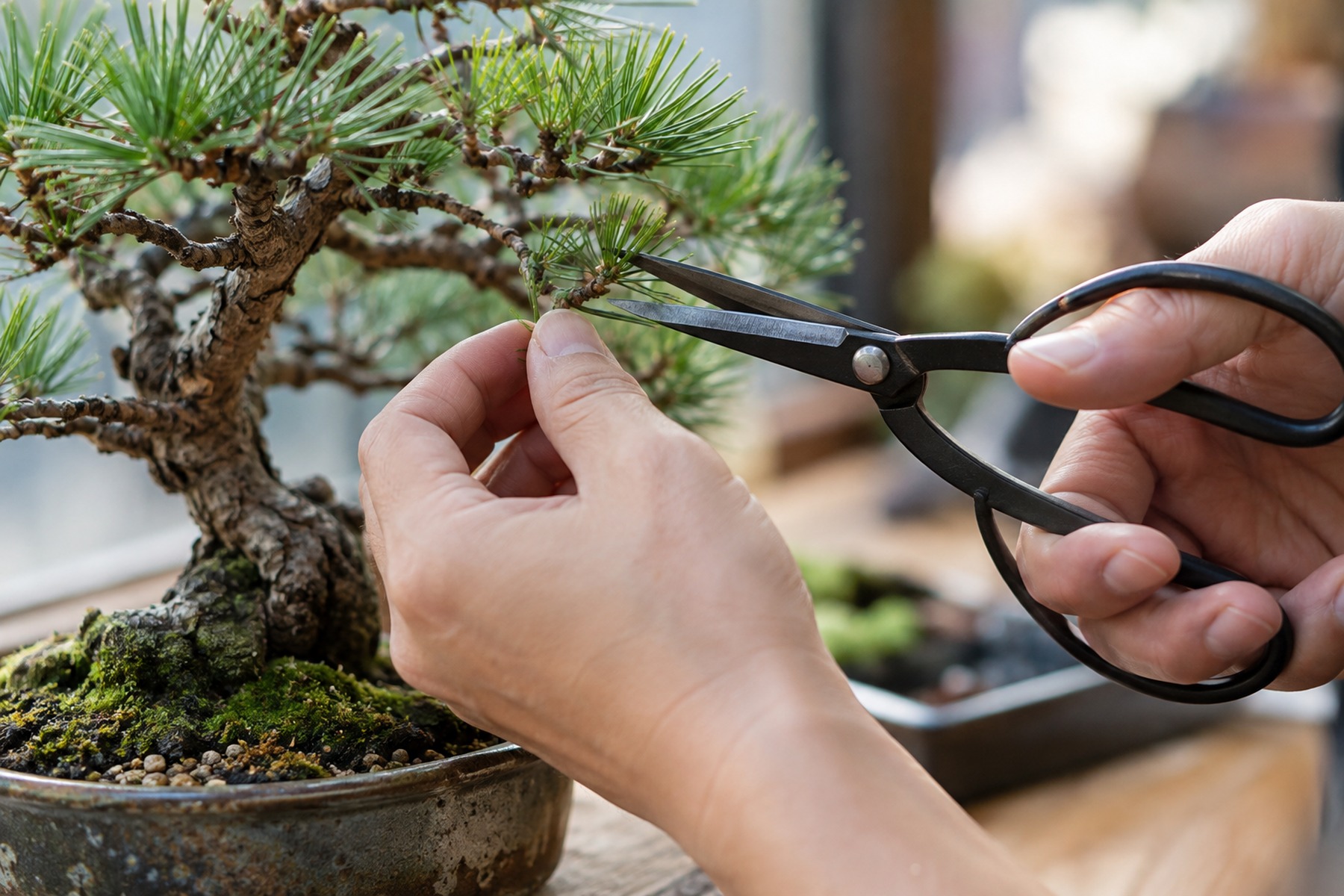
Bonsai scissors are shaped for access and control around dense growth. Kaneshin’s current catalog separates trimming scissors by length, blade form and material, including compact tools and specialist thin-bladed designs. That specialization is useful when the work involves small shoots, needles or crowded branch structures.
Do not treat bonsai scissors as miniature pruning shears for every job. Their advantage is precise access, not heavy leverage. Forcing a fine pair through thick woody growth can damage the edge and makes control worse.
- Shorter, narrower scissors suit tight work and smaller trees.
- Longer handles or blades can improve reach but may feel less controlled in very compact canopies.
- If you are left-handed, check for a true left-handed model rather than assuming a symmetrical-looking tool cuts the same way.
- Buy a specialist shape only when it solves a repeated task you actually perform.
Pruning Saws: Stop Squeezing When a Branch Needs Sawing
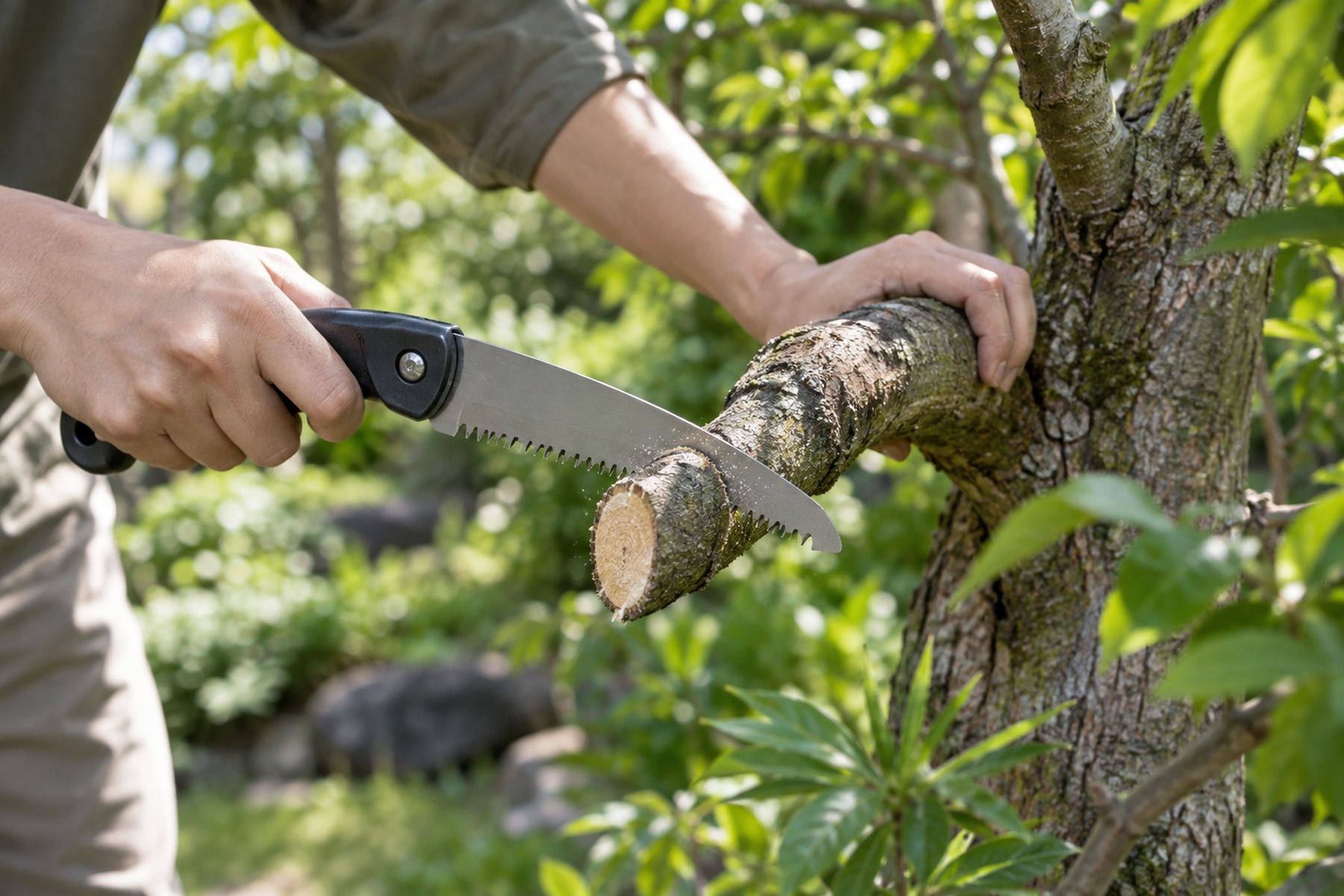
When a branch is too large to cut smoothly with one hand, moving to a pruning saw is usually more sensible than applying excessive force to shears. ARS currently lists folding and fixed pruning saws in several blade lengths, giving buyers options for compact carry, reach and branch size.
For occasional home use, a compact folding saw is easy to store. For repeated orchard or tree work, a longer fixed or curved blade may cut faster and keep the wrist in a better position. The right answer depends on access, branch diameter and how often you use it.
- Choose a blade long enough to make a comfortable stroke through the branches you actually cut.
- Check how the blade locks or is sheathed before buying for travel or compact storage.
- Replace or service a dull blade rather than compensating with more force.
- Keep your supporting hand away from the cutting path and do not brace the branch where a sudden finish cut can trap fingers.
Concave Cutters and Other Bonsai-Specific Tools
Concave cutters are not general-purpose garden cutters. Their jaw shape is designed for removing a branch close to the trunk or parent branch and for working where ordinary trimming scissors may not have enough access or leverage. Kaneshin describes the concave cutter as one of the common specialist tools for structural bonsai work.
Other bonsai tools—wire cutters, root cutters, tweezers and branch splitters—can be valuable, but they are not automatic starter purchases. Add them when your bonsai practice creates a repeated need that ordinary tools cannot handle cleanly.
- Start with trimming scissors before building a large specialist kit.
- Add a concave cutter when branch-removal work justifies it.
- Use a dedicated wire cutter if you routinely wire trees; cutting wire with fine trimming scissors risks edge damage.
- Treat heavy branch splitters and root cutters as task-specific tools, not status upgrades.
Steel, Corrosion and the Maintenance You Will Actually Do
Japanese makers offer carbon-steel, alloy-steel and stainless options across different tool families. The practical question is not which steel sounds most prestigious, but how much corrosion care, sharpening and storage discipline you will realistically maintain.
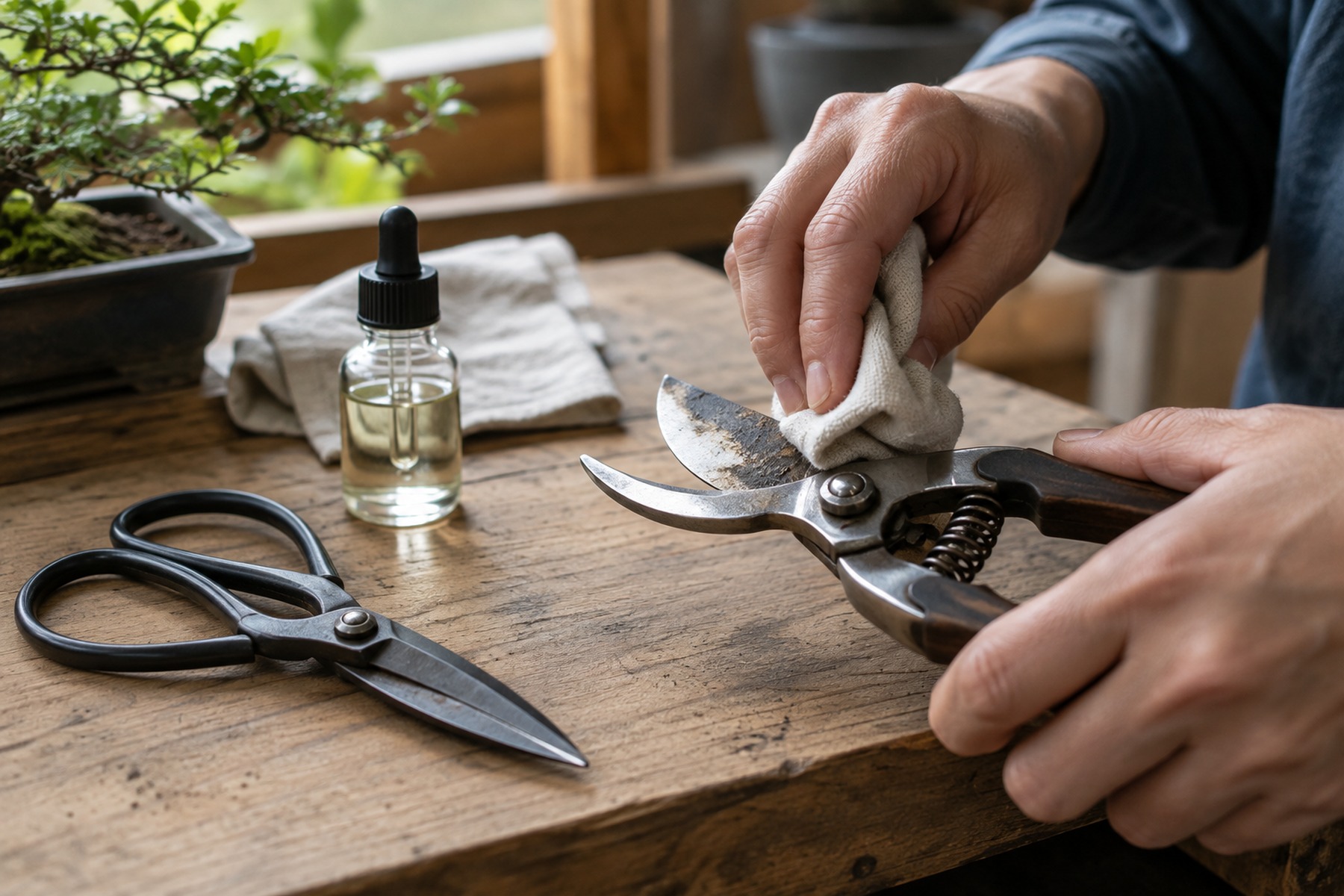
Kaneshin’s maintenance guidance recommends wiping tools after work and using camellia oil to help prevent rust; it also addresses sap or rust removal and sharpening. That is especially relevant for buyers in humid climates or anyone storing tools for long periods.
- Remove sap and plant residue before it hardens on the blade.
- Dry tools fully before storage.
- Apply a light protective oil where appropriate for the tool and steel.
- Sharpen only when you understand the bevel and blade geometry; poor sharpening can change how the blades meet.
- Inspect the pivot, spring and lock while cleaning, not only the cutting edge.
How to Judge Quality Before Buying Online
A useful online listing should let you verify the exact model, overall length, blade or jaw type, intended task and replacement-part situation against the maker’s own information. If a seller uses only generic phrases such as “Japanese steel” without a model, dimensions or manufacturer identity, comparison becomes much harder.
For overseas buyers, also check the seller’s return terms, destination eligibility and the carrier’s rules for sharp tools before payment. Shipping cost and import charges can change the real value of a tool that looks inexpensive at the product-page level.
- Match the listing’s model number and dimensions to an official manufacturer page when possible.
- Look for clear photos of the pivot, lock, blade meeting surfaces and handles.
- Confirm whether replacement blades, springs or cases are available for the same model.
- Do not rely on marketplace star ratings to determine whether the tool is the right size or mechanism for your work.
A Sensible First Kit for Different Gardeners
A small, task-matched kit is usually more useful than a large assortment. The goal is to cover the cuts you make repeatedly, then add specialist tools only when a real limitation appears.
For a mixed home garden, start with comfortable pruning shears and add a pruning saw for larger branches. For bonsai, start with good trimming scissors and add a concave cutter when structural pruning becomes routine. Gardeners who mostly grow flowers or herbs may get more value from lighter scissors than from heavy pruning hardware.
- Everyday home garden: pruning shears + compact pruning saw.
- Bonsai beginner: trimming scissors + cleaning/oiling supplies; add a concave cutter later.
- Woody shrubs and small trees: pruning shears + pruning saw; consider loppers only if branch size demands them.
- Flowers, herbs and balcony plants: light garden scissors may be the most-used tool in the kit.
FAQ
- Are Japanese pruning shears automatically better than non-Japanese ones?
- No. Manufacturing quality matters, but fit, blade geometry, cutting capacity, serviceability and maintenance matter more than country of origin by itself. Compare the exact model and task rather than buying on nationality alone.
- Do I need bonsai scissors if I already own pruning shears?
- If you only make ordinary garden cuts, probably not. Bonsai scissors earn their place when you need precise access around fine shoots, needles and dense branch structures where larger shears are awkward.
- When should I use a pruning saw instead of shears?
- Move to a pruning saw when the branch cannot be cut smoothly with comfortable one-hand pressure. Repeated squeezing or twisting is a sign that the tool is being pushed beyond the job it handles well.
- Should I choose carbon steel or stainless garden tools?
- Choose based on your maintenance habits and environment. Carbon-steel tools can be excellent cutting tools but generally reward careful drying and rust prevention; stainless options can be easier for buyers who want lower corrosion maintenance.
- What should an overseas buyer verify before ordering?
- Confirm the exact model, dimensions, intended task, seller return policy, replacement-part availability and whether the seller and carrier accept the destination for sharp garden tools. Check shipping and import costs before treating the listed item price as the total cost.
Official References
Match the Tool to the Branch Before You Compare Steel
Use hand pruners for live stems that fit comfortably within the tool’s rated capacity, a pruning saw when the branch is too large for clean hand pressure, and bonsai-specific cutters only when the shape of the cut actually matters.
This order prevents a common buying mistake: choosing a premium-looking tool first and then forcing it into the wrong job. Hand size, cutting capacity, corrosion care and access to replacement parts matter more than decorative finish.
For overseas buying, check destination rules and carrier restrictions before ordering edged garden tools. A Japan-only product is not useful if it cannot be shipped legally or safely to you.
Final Thoughts
Buy the smallest set that matches your real work. Comfortable pruning shears, the right saw for larger branches and one genuinely useful bonsai tool will outperform an oversized collection of specialist cutters that rarely leave the drawer. Verify the exact model, maintain the edge and pivot, and add tools only when a repeated task proves you need them.